
BBVA, HSBC & the Race to Crack Sustainable Aviation Fuel

The global energy transition has long grappled with the issue of decarbonising aviation.
Unlike road transport, where electrification has gained genuine traction, commercial flying remains almost entirely dependent on liquid fuels.
With each passing year, the lack of progress made on decarbonising planes becomes even more concerning.
According to Our World in Data, the aviation sector accounts for 2.5% of all global carbon emissions, while it has contributed to 4% to climate change to date. If a solution is not found soon, that figure is only set to grow.
So, why exactly has sustainable aviation been such a tough nut to crack?
The weight and energy density required for long-haul routes makes battery-powered flight economically unworkable at scale, pushing the industry's attention firmly towards low-carbon liquid alternatives.
Chief among these is sustainable aviation fuel, more commonly known as SAF.

The funding gap holding back clean fuel
Despite strong demand signals from airlines and tightening regulatory requirements in Europe and the US, SAF production has been constrained by two persistent barriers These are:
- A lack of large-scale financing
- The slow pace of policy implementation
Bridging that gap requires the kind of complex, blended capital structures that have historically been difficult to assemble.
A new transaction involving BBVA and HSBC suggests that is beginning to change. BBVA has arranged a US$1.5bn financing package for Acelen Renováveis, a Brazilian renewable fuels developer backed by Mubadala Capital, to fund construction of one of Latin America's first major SAF and hydrotreated vegetable oil (HVO) biorefineries.
"Beyond its scale, the project reinforces SAF as a key lever for the decarbonisation of air transport and helps position Brazil as a market with significant potential in sustainable fuels," says Carlos López Rabadán, Managing Director at BBVA responsible for Project Finance in South America.
"Our participation underscores the bank's ability to structure highly complex financial solutions and to support our clients in projects with long-term impact," he adds.
Financing clean aviation
The deal draws together international commercial banks and development finance institutions, with HSBC and the International Finance Corporation (IFC) – a member of the World Bank Group – among the co-financiers.
Its structure relies on a blended finance framework, combining instruments designed to absorb the risks inherent in large-scale energy infrastructure.
This kind of public-private coordination is becoming a defining feature of the energy transition finance landscape, as capital-intensive clean technologies require more sophisticated risk-sharing than conventional project finance can provide alone.
"By supporting one of the first SAF facilities in Latin America at this scale, we seek to demonstrate commercial viability, reduce risks, and lay the groundwork for replicable investments in the region," says Olaf Schmidt, Regional Director for Manufacturing, Agribusiness and Services for Latin America and Europe at IFC.
"The Acelen Renováveis project is an example of how industrial innovation and sustainable development – including, significantly, in the agribusiness sector – can mutually reinforce each other, generating quality jobs, strengthening agricultural value chains, and accelerating Brazil's transition to a more resilient economy."
A new energy hub takes shape in Brazil
The biorefinery will be built on an established industrial site in Bahia, in northeast Brazil, with a projected output of 20,000 barrels of SAF and HVO per day.
The facility is expected to generate up to 3,600 direct and indirect jobs, while Acelen Renováveis plans to cultivate around 1,440 square kilometres of degraded land – with 20% of that allocated to partnerships with family farms and small producers.
"This model seeks to combine productive regeneration, social inclusion, and decarbonisation, aligned with global best practices in sustainability and low-carbon development," the company says.
"The structuring of this financing confirms the technical, financial, and socio-environmental robustness of the project. We are now entering a new phase of large-scale industrial execution," says Luiz de Mendonça, CEO of Acelen Renováveis.
"BBVA has been a key strategic partner in structuring and enabling this financing, demonstrating deep commitment to the project and to the advancement of sustainable finance," he adds.
"Together, we are advancing one of the most relevant initiatives for the future of aviation and contributing meaningfully to the acceleration of the global energy transition."
A market hungry for green fuel
The plant's output is primarily destined for European and US markets, where demand for SAF is being driven by both corporate net zero commitments and regulatory mandates.
The EU's ReFuelEU Aviation regulation, for instance, requires growing blending targets for SAF over the coming decades, creating a structural pull for new production capacity.
Brazil's combination of agricultural land, established bioenergy infrastructure and feedstock availability positions it well to become a significant supplier in the global SAF market.
This transaction marks a step towards integrating that potential into an international clean energy supply chain.
"This operation reinforces our commitment to supporting clients and partners in the energy transition, connecting global financing to transformational projects with long-term economic, social, and environmental impact," says Alexandre Guião, CEO of HSBC Brazil.
From pledges to projects
For BBVA, the deal represents its first global transaction in the SAF segment, reflecting a broader shift in how financial institutions are approaching net zero alignment – moving away from general sustainability commitments and towards targeted, technology-specific project finance.
"This transaction represents a significant step for BBVA in advancing its commitment to the energy transition within an emerging market such as SAF," adds Carlos López Rabadán.
The deal signals that the commercial case for SAF infrastructure is maturing, and that the financing mechanisms needed to build it at scale are beginning to follow.



Executives
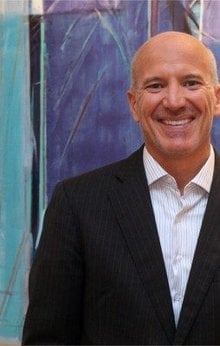
Alexandre Guião
CEO, Brazil
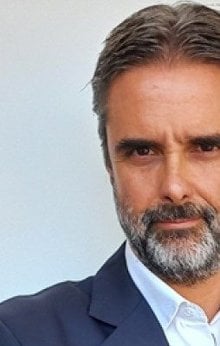
Carlos López Rabadán
MD, Head Project Finance South America
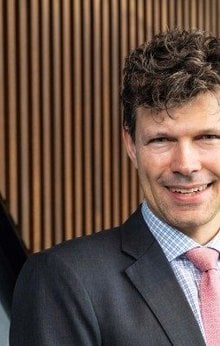
Olaf Schmidt
Regional Director for Manufacturing, Agribusiness and Services for Latin America and Europe