BMW: The Importance of Recycling Old EV Batteries
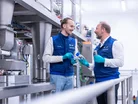
BMW Group is stepping up efforts to reduce the energy intensity of battery production, partnering with Encory to launch a new recycling facility in Bavaria, Germany.
The Cell Recycling Competence Centre (CRCC) reflects a growing push across the energy sector to cut emissions and resource use linked to electrification.
Developed by BMW Group, the site will deploy a direct recycling method that removes the need for highly energy-intensive thermal processing. The approach is designed to close material loops while lowering the overall energy footprint of battery manufacturing.
Electrified vehicles made up 26% of BMW Group’s global sales in 2025, with fully electric models accounting for roughly 18%.
In Europe, fully electric vehicle sales rose by 28.2%, underscoring the increasing energy demand tied to battery production and supply chains.

Why recycling batteries is so important
Encory, a joint venture between BMW Group and environmental services firm Interzero Group, focuses on recovering and reprocessing vehicle components. At the new CRCC facility in Salching, Bavaria, the company is applying a process that directly supports more energy-efficient battery material recovery.
Rather than relying on energy-heavy chemical or thermal stages, the system mechanically separates valuable materials such as lithium, nickel and cobalt from both battery cell manufacturing scrap and end-of-life cells. These materials are then reintroduced into production with minimal additional processing.
"With this competence centre, we are taking a major step toward a circular economy," says Alexander Maak, Managing Director of Encory.
"Through direct recycling, we can efficiently recover the active materials from the battery cells and integrate them directly into the battery cell manufacturing process.
"This avoids complex preparation processes or additional extraction of critical metals such as lithium, cobalt and nickel, creating a true circular economy.”
The BMW Group expects the CRCC to process recycled battery materials at mid double-digit tonnes annually once fully operational, contributing to reduced upstream energy demand for raw material extraction.
Recovered materials from the CRCC will be reused in pilot production at BMW’s Cell Manufacturing Competence Centre in Parsdorf, helping to create a more energy-efficient closed-loop system.
Scaling circular energy systems for EV batteries
As electrification accelerates, the energy implications of battery lifecycles are coming into sharper focus.
McKinsey estimates that more than 100 million EV batteries will reach end of life over the next decade, creating both a challenge and an opportunity for energy-efficient recycling.
According to McKinsey, innovative recycling processes like direct recycling can increase recovery rates while reducing energy consumption, reagent use and environmental impact.
With pressure mounting to decarbonise supply chains, direct recycling is expected to become a critical lever in lowering the energy intensity of battery production.
By reducing dependence on newly mined materials, it offers a more sustainable pathway for scaling EV adoption.



Executives
Alexander Maak
Chief Executive Officer
Dr. Markus Fallböhmer
Bereichsleiter Produktion Hochvoltspeicher, Energiemodul