Iberdrola's Plan to Expand its Renewables Footprint in Italy
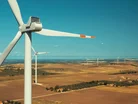
Iberdrola has agreed to acquire a 40MW wind farm in the Basilicata region of southern Italy, currently jointly owned by Belenergia, an Italian renewable energy group, and RGREEN INVEST, a French investment firm specialising in green infrastructure.
The transaction is, at first glance, quite modest in scale. After all, 40MW is not a headline-grabbing number in an era of gigawatt-scale offshore projects.
But the deal's significance is less about wattage than in what it represents for Iberdrola's bigger picture.
From that angle, this acquisition is about the consolidation of Iberdrola's position in Italy – a market where the Spanish utility has been gradually building its portfolio for a number of years.
The Basilicata wind far was first commissioned in 2018 and has since benefits from a long-term incentive scheme that has guaranteed its owners a stable flow of cash.
As such, Iberdrola's latest purchase has already proven itself to be a value generator.
- Founded: 1992
- HQ: Bilbao, Spain
- Installed capacity: Nearly 60GW
- CEO: Pedro Azagra Blázquez
- Employees: 45,400
The importance of the geography
The wind farm is located just up the road from Iberdrola's Lucania Complex, where the company is currently building and developing several power plants including the 20MW Montelungo PV project.
Taking this proximity into account helps make sense of the company's broader plan.
By concentrating its energy assets in southern Italy, Iberdrola is hoping to reduce its costs when it comes to grid connection, while also simplifies operations and building its case for future development in the area.
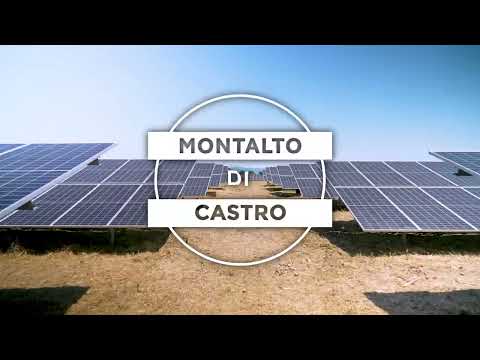
The acquisition also adds to the Etruria Complex, which already holds a capacity of 174MW following the recent purchase of a solar photovoltaic plant in Lazio, and to Fenix – a 243 MW solar photovoltaic project that stands as the largest of its kind to date in Italy – bringing Iberdrola's renewable capacity in the country to around 450MW.
The south of Italy is also a perfect locale for renewable installations such as these, with its vast Mediterranean coastline and hot climate boosting the outputs of both wind and solar arrays, while its mountainous topography makes it perfect for hydropower projects too.
Taken together, those three clusters in Lucania, Etruria and Fenix, make up a footprint that is enviable to other developers.
The sellers' perspective
For Belenergia, the sale is itself less of an exit than a pivot.
"The proceeds will be redeployed into the development of several new wind farms in southern Italy, reinforcing our long-term commitment to this territory," says Belenergia's CEO, Jacques Édouard Levy.
That is an important part of the story. The money is staying in the region, suggesting the pipeline of southern Italian wind development remains active and that further consolidation opportunities may follow.
RGREEN INVEST, meanwhile, exits a mature asset, consistent with the recycling logic typical of infrastructure funds that deploy capital into early-stage projects before selling into more stable ownership structures.
Fitting the strategic template
The acquisition sits squarely within the broader framework Iberdrola has set out in its current strategic plan.
At the end of the first quarter of 2026, Iberdrola's total installed capacity stood at 58,877MW, up 3.8% year-on-year, with renewables accounting for 46,741MW – predominantly onshore wind at 21,320MW.
Italy, while a secondary market relative to Spain or the US, fits the group's template of targeting countries with investment-grade credit ratings and predictable regulatory environments.
The Italian government's long-term incentive mechanism, under which the Basilicata wind farm operates, is precisely the kind of contracted revenue structure Iberdrola has repeatedly said it prioritises over merchant exposure.
This is reflected in the words of the team's leadership group, including COO Danielle Jarski.
"This acquisition reflects what we in Iberdrola stand for as a company: disciplined growth, long‑term value creation and a clear commitment to energy security and competitiveness through renewables in," she explains.