McKinsey: Changing Capital for the Rise in Cleantech

Clean technology finance is entering a phase where large-scale deployment and commercial discipline matter more than growth alone. According to McKinsey, the firm analysed more than 11,000 cleantech companies globally and found that investors now reward sustainable business models over expansion at any cost.
Annual cleantech funding stabilised at US$70bn between 2023 and 2025, nearly four times the pre-2020 average. The key change goes beyond the amount of capital being raised to the way it is structured.

Debt replaces venture capital
Cleantech finance is moving from speculative venture capital to institutional debt. According to McKinsey, debt now makes up about 25% of post-boom funding, up from 10% in previous periods.
This increase could show that lenders have greater confidence in the maturity of technology. Of the US$80bn in debt deployed since 2015, two-thirds was raised in the past three years.
As technology models mature, financing is moving to support companies ready for large-scale deployment. Regional differences are emerging in how this capital is structured.
In Europe, start-ups rely heavily on public funding, which accounts for 30% of venture capital, compared with 4% in the US. This reliance leaves European firms more vulnerable to changes in public policy and security priorities, which have reduced funding for sustainability, according to McKinsey.
Europe faces scaling challenge
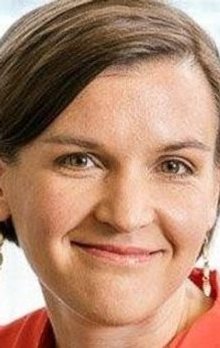
"Our research suggests that Europe's challenge is now less about innovation and more about scaling," says Anna Granskog, Partner at McKinsey. "To compete globally, European scale-ups will likely need to combine public funding with greater access to private growth capital and strategic partnerships."
"While capital deployment today is still skewed toward the US, the funds being raised are increasingly concentrated in Europe, which suggests there is investor appetite and the potential for greater clean-tech investment and deployment in the region," says Anna.
The path to scale requires meeting the standards of project finance and debt markets, rather than relying on ongoing equity rounds. According to McKinsey, 90% of the largest equity raisers since 2015 remain operational, and almost all have matured from the lab into revenue-generating companies.
Collectively, these companies have raised approximately US$166bn in equity, representing 45% of all cleantech equity raised since 2015 by more than 11,000 companies considered in the analysis.
Cost parity drives adoption
The period of depending on ideological buyers or premium pricing for environmental benefits has ended, according to McKinsey. In today's market, the most successful firms offer solutions that are less expensive than conventional alternatives.
Investors now focus on companies with a clear value proposition that goes beyond climate impact. "Our research suggests that funding growth to date has been strongest in technology areas where clean solutions are already becoming competitive with conventional alternatives," says Anna.
"As the 'green premium' declines or disappears, adoption can accelerate because customers increasingly do not have to choose between sustainability and economics. As a result, we would expect to see continued strong funding for companies whose solutions are not dependent on earning a green premium," says Anna.
"At the same time, funding is unlikely to grow evenly across all climate technologies, as investors are becoming more selective and prioritising companies with a credible path to profitability, rapid scaling and strong demand," says Anna.
Funding is now twice as high in areas where clean technologies have reached cost parity or better, such as light EVs, solar power and sustainable fertilisers. Companies succeed by offering a product while using scale and vertical integration to reduce upfront costs, according to McKinsey.
Models such as solar-as-a-service or battery-swapping subscriptions are moving cleantech from large capital purchases to more affordable service models. This shift could mean that energy solutions become accessible to a broader customer base.
A common risk occurs when capital growth outpaces operational readiness. McKinsey cites the collapse of battery manufacturer Northvolt to illustrate this.
The company raised about US$1bn between 2017 and 2019, but its operations did not keep pace. Production delays led to cancelled customer orders, and the funding gap and production instability resulted in bankruptcy in 2025.
Leadership now requires balancing capital growth with technical progress to ensure the business model matches the strength of the underlying science.
Company portals

Executives
Anna Granskog
Partner