GRolls: The Energy-Efficient, Low-Carbon Future of Mining
A South Australian innovation could soon make mineral extraction a cleaner, more energy-efficient process – reinforcing the mining sector’s role in the global push for sustainable resources.
Across recent years, soaring demand for critical minerals has fuelled new projects worldwide.
As governments and businesses race to secure materials for clean technology and renewables, the pressure has mounted for miners to reduce their energy use and carbon footprint.
In response, the industry has been investing heavily in technology capable of lowering consumption and improving productivity.

Energy-efficient mining
South Australian firm Gyratory Roller Solutions Pty Ltd (GRolls) is developing a new kind of crushing technology, now being examined by researchers at Adelaide University.
Early trials are showing major gains in energy performance and cost reduction compared to traditional systems.
The shift aligns with the wider transition towards net zero. From copper and gold to lithium and aluminium, these materials are essential for renewable infrastructure, electric vehicles, and energy storage.
Yet mineral recovery remains energy-intensive and often emission-heavy – a challenge the industry must confront to meet future sustainability goals.
Transforming an energy-hungry process
Copper, increasingly designated a critical mineral, plays a central role in the clean energy transition. Its extraction, however, requires comminution – the grinding and milling process that frees valuable minerals from surrounding rock.
This stage alone accounts for a major share of global mining energy use.
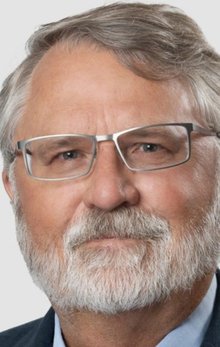
GRolls’ technology aims to cut this consumption dramatically. According to Mark Drechsler, GRolls Director and Adelaide University PhD candidate, the new system can eliminate the need for grinding and milling in copper and gold ore processing.
“Ore crushing and grinding are traditionally one of the most energy-intensive processes in mining, accounting for more than 1% of global energy use and up to 80% of a mine’s site power consumption,” he explains.
Proof of performance
The technology uses pulsed compression, tension and shear forces to break ore apart. By blending these actions, it cuts over 40% of particles to less than 425 microns in a single pass, with only 14% ending up as fines smaller than 75 microns.
Its advantages are clearest with finer ore feeds below 2.36mm.
Mark adds, "Our testing shows that GRolls can process hard porphyry copper-gold ores while using significantly less energy and no grinding, making it more sustainable and cost-effective.”
Testing alongside a conventional copper-gold operation in NSW showed a 20% drop in energy use and nearly halved the total comminution cost.
"These are significant savings. Not only do you reduce power use, but you eliminate the cost of grinding minerals. There are also potential savings in water usage and a reduction in greenhouse gas emissions," Mark says.
Paving the way for a more sustainable kind of mining
This new crushing approach comes as ore bodies become more complex and lower grade, often requiring more energy per tonne mined.
Dr George Abaka-Wood, Future Industries Institute metallurgist and supervisor of the GRolls project, notes: “The team is committed to showing the downstream benefits of using dry crushing technology in collaboration with other innovative technologies to address the need for more energy-efficient and higher processing efficiencies within mineral processing flowsheets."
Scaling across future operations
Compact yet scalable, the GRolls system can integrate with existing circuits or work as a standalone unit. It supports wet or dry use, making it adaptable for different sites and mineral types.
“This could be a game changer for mineral processing,” says Professor Bill Skinner, Co-author of the study and Research Leader of Minerals and Resource Engineering at the Future Industries Institute.
“It offers an opportunity to simplify processing circuits while improving sustainability across the board."
GRolls plans to commercialise the technology later this year, boosted by a AU$300,000 (US$211,400) South Australian Government Seed-Start grant.
If successful, the system could redefine mineral processing – proving that smarter, energy-efficient innovation is essential for mining’s sustainable future.


Executives
Mark Drechsler
Director