
How the National Grid is Embracing Sustainability

The National Grid has set out a new roadmap to accelerate the UK’s energy transition which encompasses the company's environmental priorities and social impact.
The firm oversees the maintenance and renovation of one of the world's oldest nationwide electrical systems. For the past few years, the UK's power network has been undergoing a significant revamp referred to as the "Great Grid Upgrade".
An important piece of this puzzle is the National Grid's Social and Environmental Action Plan (SEAP) for 2026–2031.
It represents a shift in how it aligns infrastructure investment, operational performance and community outcomes with the demands of a rapidly evolving energy system.
By integrating these priorities, the National Grid is looking to strengthen grid resilience while supporting the expansion of low-carbon electricity and meeting rising demand.
Structured around four pillars – Climate Action, Nature Positive, One Planet Living and Social Value – the plan is designed to support the delivery of a modern, flexible and decarbonised energy network.
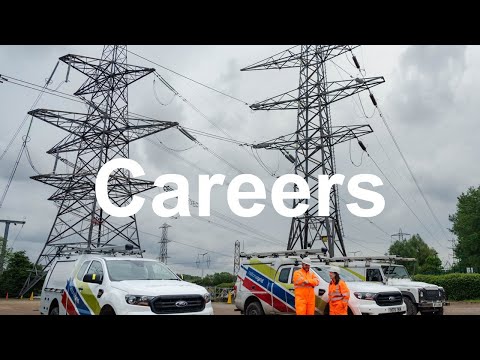
Electrifying operations for a low-carbon grid
A central component of the strategy focuses on decarbonising operational assets, starting with fleet electrification.
To this end, the National Grid is working towards ensuring that all its new light and medium-duty vehicles are Zero Emission Vehicles (ZEVs) by 2031.
The firm has made good progress to date, including a 60% transition rate for light-duty vehicles during the RIIO-T2 regulatory period, with a further 37% expected to electrify during RIIO-T3, subject to supply constraints.
The remaining share (primarily heavy goods vehicles) is expected to shift to alternative fuels after 2030 as technology matures.
“We have both a duty and an opportunity to manage our business in an environmentally and socially responsible manner,” says Alice Delahunty, the President of Electricity Transmission at the National Grid.
“Building on a strong track record of leadership, we recognise that environmental and social issues are complex and interconnected and that their effective management demands an integrated approach," she adds.
“For the first time, we are bringing together our environmental commitments and our social impact ambitions under one plan, recognising that long-term business success depends on delivering positive outcomes for both people and the planet.
“This Action Plan is designed to inspire, activate and lead us in our planning, decision-making and target-setting so that we not only meet today’s needs, but also safeguard tomorrow.”
Boosting efficiency across the electricity network
Improving how energy is managed across the network is another key priority, particularly as electricity demand rises and renewable generation increases.
On this point, the National Grid is targeting a 20% improvement in energy efficiency across its substation estate by 2031, using 2022/2023 as a baseline.
This will be delivered through a combination of behavioural change initiatives, upgraded heating and control systems, enhanced building performance and the rollout of solar PV installations across around 66 sites.
Alongside these upgrades, the company is also aiming to prevent energy loss in the grid. This has been a critical issue in recent years with more power flowing through the system.
Efforts are also underway to replace diesel-powered maintenance and back-up systems with cleaner energy solutions wherever viable.
“The Great Grid Upgrade is a once-in-a-generation opportunity to upgrade and strengthen the UK’s electricity network,” says Carl Trowell, President of Strategic Infrastructure at the National Grid.
“As electricity demand grows and more renewable energy comes online, we are delivering a grid that will connect cleaner, home-grown and more affordable power, driving economic growth, creating skilled jobs and helping communities thrive across the regions," Carl adds.
“As we deliver our projects, we want to ensure environmental, social and economic benefits are felt by the people and places that host them.
“This includes cutting carbon and improving biodiversity, to providing local opportunities and skills to support the next generation.
“This Action Plan sets out our aspirations to 2031 and demonstrates how, through collaboration across our teams, supply chain, partners and communities, we are building a cleaner and fairer energy system for everyone.”
In an effort to improve the transparency of its supply chain, the National Grid has adopted EcoVadis as its core ESG assessment platform, aligning with wider utility sector standards in both the UK and the US.
Securing low-carbon materials for energy infrastructure
With the expansion and improvement of the grid well underway, the carbon impact of construction materials is becoming a growing focus for both the National Grid and the UK Government.
To address this, the company is tweaking how it sources and uses materials like steel and concrete, both of which are utterly essential for energy infrastructure but traditionally emissions-intensive.
Through its commitments to SteelZero and ConcreteZero, the National Grid has pledged that 50% of these materials will be low-emission by 2030.
While the energy transition will increase demand for critical minerals such as cobalt, the bulk of National Grid’s material requirements through to 2050 will remain concentrated in steel, aluminium and copper.
The longer-term target is to achieve 100% net zero emissions across steel and concrete procurement by mid-century.
“Every project we undertake must reflect our commitment to sustainability,” the National Grid states.
"This means embedding environmental stewardship into every stage of delivery, from design and procurement to construction and operation."
Recognising the cost implications of low-carbon materials, Ofgem has approved a 0.3% increase in baseline project investment during the RIIO-T3 period to enable their adoption.
At the same time, National Grid is working towards eliminating diesel use in construction by 2035 and reducing emissions linked to other key components, including cabling and aluminium.
Together, these measures position the company to support a faster, more sustainable build-out of the UK’s future energy system.
Company portals

Executives

Alice Delahunty
President of Electricity Transmission

Carl Trowell
President of Strategic Infrastructure