
Water, Waste & Energy: Inside Veolia's Data Centre Offering
The data centre industry has a resource problem, and Veolia believes that it has the answer.
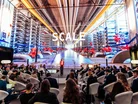
The French environmental services firm, best known for managing water and waste infrastructure across five continents, held an event in the heart of London on 14 April where it set out its ambition to make the sector more sustainable.
At the capital’s Outernet venue, the firm unveiled its brand new Data Center Resource 360 offering, a suite of services designed to help hyperscalers manage the water, energy and waste demands of their facilities.
What is Data Center Resource 360?
Veolia says that its newest offering will help data centre operators to achieve three main goals: carbon neutrality, water positivity and circularity.
According to the firm’s estimates, Data Center Resource 360 could help operators achieve a reduction in water footprint of up to 75%, energy efficiency improvements of up to 20% and waste recycling rates of up to 95%.
So, how exactly does it work? Behind these headline figures is Hubgrade, Veolia's existing digital platform, which uses AI and predictive analytics to monitor water consumption, energy performance and maintenance operations in real time.

Richard Kirkman, Veolia’s newly appointed CEO for Northern Europe, was direct about the economics involved.
"Around 50% of the cost of AI infrastructure comes from water and power consumption," he said. As such, a more efficient approach to resources and energy could cut the cost of running data centres significantly.
“Having innovation deliver that resource efficiency is critical,” he added.
It is safe to say that the world’s leading hyperscalers are interested.
Veolia is already working with some of the most recognisable names in the world of technology, including Google, AWS, TSMC, Samsung, Intel and Micron, across more than 100 facilities globally.
The numbers
The scale of the challenge Veolia is trying to address is not trivial.
Water scarcity is becoming a more realistic, more frightening prospect each year, with its effects already visible around the world, including in the unfolding war in the Gulf.
“Water has erupted as a centre of conflict in the Middle East, important as oil, if not more,” Estelle Brachlianoff, Veolia’s CEO said at the event.
The tech sector is set to feel the squeeze.
By 2030, the combined water consumption of data centres and semiconductor manufacturing is expected to equal that of 46 million people, an amount roughly equivalent to the combined populations of the New York, Los Angeles and Paris metropolitan areas.
Meanwhile, global data centre capacity is projected to nearly triple over the same period, with facility numbers growing at around 11% per year through 2034.
The semiconductor industry tells a similar story, with chip manufacturing expected to grow by 26% in 2026 alone.
This, at least in part, is due to a global trend towards domestic manufacturing, as countries look to reduce their reliance on trade with traditional electronics powerhouses like China.
But while the critical minerals that go into semiconductors are scarce, water scarcity is also increasingly becoming a constraint on the AI and computing revolution.
Today, nearly half of all planned or under-construction data centre facilities currently face potential permitting delays, driven primarily by concerns over water consumption and energy use.
This is a regulatory bottleneck that Veolia is trying to help its clients overcome.
The AWS partnership
One of the most notable aspects of Tuesday’s event was the presence of Will Hewes from AWS, who took part in a panel discussion alongside several of Veolia's leadership team, giving a perspective from one of Veolia’s most important clients.
During the discussion, he outlined AWS's own sustainability commitments, noting that the company has more than 700 carbon-free energy projects worldwide and is actively working to eliminate the use of potable water for cooling across its data centre estate.
The firm is also committed to returning more water to communities than it consumes.
“We’ll have, in the next couple of years, over 120 data centres around the world using recycled water,” he said, adding that AWS has also announced more than 45 water replenishment projects to date.
Tech companies like AWS, however, cannot manage such initiatives without the expertise of a specialist like Veolia.
“We’re really good at operating data centres but we are not water treatment or wastewater treatment operators,” Will said. “We have some really complementary skillsets here with Veolia that can help us expand our ability to use recycled, instead of potable, water.”
Veolia’s practical, boots-on-the-ground experience of such projects is invaluable in partnerships such as these.
“We’ve got the experience of not only developing new technologies but also that ‘deployment magic’. That’s often where projects fall down and dreams fall apart,” Richard explained.
“Our mantra is to get the solution on the ground, running quicker, on time and affordably.”