What Canada's Critical Minerals Plan Means for Global Energy
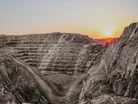
Canada is positioning itself at the heart of the global energy transition, seeking to expand production of critical minerals essential for electrification and clean energy infrastructure.
Yet, according to new analysis from the Royal Bank of Canada (RBC), the country must close a significant capital gap if it is to compete internationally.
As Western economies look to build supply chains independent of China, Canada’s efforts to strengthen local sourcing could prove pivotal.
Developing a viable domestic industry would not only secure its own energy economy but also support wider moves to diversify global minerals supply chains.

Rising demand from clean tech and electrification
Critical minerals underpin many modern technologies that drive the clean energy transition. While national definitions vary, materials such as copper, lithium, cobalt and nickel appear on nearly every list due to their central role in batteries, renewable power systems and grid storage.
Demand growth is largely energy-led. The surge in electric vehicle production has driven a sharp rise in lithium consumption, while expanding renewable infrastructure has increased demand for both copper and nickel. Governments are therefore rethinking sourcing strategies and prioritising domestic extraction and processing.
The critical minerals industry could expand two- to threefold globally by 2040, the International Energy Agency (IEA) estimates, requiring as much as US$600bn in new investment.
Most of that growth will come from energy-related sectors – from EVs and battery manufacturing to clean energy infrastructure and defence technology. RBC warns that Canada’s shortage of patient, risk-tolerant capital may limit its ability to seize this opportunity.
Geology meets investment challenge
Despite world-class geological potential, Canada’s role in the supply of critical energy minerals remains limited. RBC notes that the country currently represents about 2% of the global output of six key resources. Yet, if investment scales appropriately, that figure could climb to 14% over the next 15 years.
Geographically, Canada is well placed. In Quebec and Ontario, rich lithium belts support battery supply ambitions, while Manitoba’s nickel and British Columbia’s copper deposits offer energy transition value chains that are already in high demand.
Rare earth elements spanning Newfoundland and Labrador further reinforce this strategic potential.
However, capital constraints remain severe. Only 11% of mining investment over the last 25 years has targeted critical minerals, with most funding flowing to gold and precious metals instead. Australia, by comparison, has invested twice as much in building strategic materials capacity.
Canada also lacks diversified domestic producers and still depends on overseas partners for downstream processing. Today, Glencore’s Horne facility remains the nation’s sole active copper smelter – an illustration of how refining deficits can hinder energy supply ambitions.
Investing in corridors for a low-carbon economy
Recent initiatives show progress. The Canada Growth Fund (CGF) has backed projects such as Thompson Nickel Mines in Manitoba and Nouveau Monde Graphite in Quebec, signalling stronger state commitment to energy transition materials.
Yet, according to RBC, significantly more private and institutional investment is needed to secure long-term competitiveness.
Sharing infrastructure through mineral corridors could be transformative. Linked transport, processing and logistics networks would make regional projects more scalable and bankable. Lithium operations could anchor refining hubs that in turn support broader electrification initiatives.
Such collaboration would not only unlock capital efficiency but also align with Canada’s sustainability agenda.
The RBC report also highlights the value of deeper collaboration with allied economies. The United States is investing heavily in domestic energy and industrial capacity, offering Canada a chance to position itself as a trusted supplier. Partnerships with European and Asian nations would similarly help Canada distribute risk and strengthen resilience across energy supply networks.