How WBS Plans to Power one of Europe’s Largest Data Campuses
WBS Power, a fast-growing player in Europe’s renewable energy sector, is staking its claim on what could become one of the continent’s largest hyperscale data centre developments.
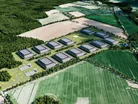
The project in question is a proposed 3.2GW data campus in northern Poland. It is being designed to power AI and high-performance computing workloads.
The facility will be known as the Baltic Data Center Campus and will be located in Lublewo, just outside the coastal city of Gdańsk.
WBS has this week announced that it has secured a grid connection for the full 3.2GW capacity of the site.
The scale of the project is considerable, even by the standards of a sector that has grown accustomed to eye-catching numbers.
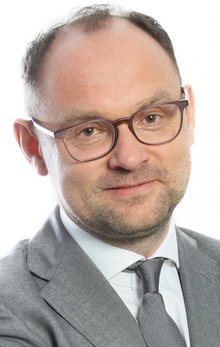
"This will be the largest project of its kind in Poland and one of the largest in Europe," says Maciej Marcjanik, the CEO of WBS Power.
The construction timeline, from now till 2029
The campus will be developed in four phases, each targeting 800MW of capacity. Preparatory work across all phases expected to wrap up by the end of next year.
The first data centre in the campus is expected to become operational sometime between 2028 and 2029.
Renewable energy and battery storage systems will be a central part of the project.
The site's location near one of Poland's largest power substations is central to the investment thesis, with the energy mix to draw initially from conventional sources supplemented by renewables, and in the longer term from nuclear generation.
“The digital revolution requires infrastructure on an entirely new scale,” says Hubert Bojdo, CFO of WBS.
“We selected the location for the Baltic Data Center Campus very carefully, ensuring access to large power capacities, a diversified energy mix already in place today, and the long-term prospect of stable supply supported by future nuclear generation.”
WBS’s growing role in AI infrastructure
WBS describes its role not as a data centre operator but as an energy infrastructure provider, responsible for designing and delivering the power systems that make large-scale AI workloads viable.
Though small, that semantic distinction matters in a market where reliable, low-emission power is increasingly the limiting factor for hyperscale expansion, rather than land or construction capacity.
“The rapid development of AI is driving demand for hyperscale data centres supported by advanced infrastructure and reliable access to large volumes of power,” says Maciej.
“The integration of renewable energy and energy storage with digital infrastructure will be a key pillar of competitiveness for next-generation hyperscale projects,” he adds.
For Hubert, the company’s move into the data centre sector is a logical next step, rather than a complete departure from its original business model.
“This is a natural step in our growth strategy,” he says, “enabling us to leverage the expertise and market experience we have developed over many years.”
“We are building the infrastructure that will underpin the next phase of the global digital transformation.”

Expansion beyond Poland
The Baltic campus is not WBS' only project in the world of digital infrastructure.
The firm is also advancing a 500MW data centre project in Finsterwalde, Germany – a market where demand for hyperscale capacity has been growing far faster than supply for a number of years.
With more than 15 years of experience in energy infrastructure including renewables, battery storage and high-voltage grid work, WBS is moving into data centre development from the power side.
While this approach differs from the traditional real estate and colocation-led models that have historically dominated entry into the European data centre market, it does not count against the company.
Whether WBS can convert its grid access and site control into operational megawatts at the scale it is projecting remains to be seen, but the fundamentals driving the investment – AI compute demand, European energy transition and the need for sovereign digital infrastructure – show little sign of easing.
"We are proud that a Polish company can contribute to Europe's energy and digital transformation, strengthening its economic competitiveness and technological sovereignty," Maciej explains.