Siemens and PGE: Accelerating Poland’s Energy Transition
Each country’s energy transition journey looks a little different, with alternate approaches taken depending on geography to accelerate this shift.
Analysis by Ember says that in 2023, Poland hit renewables records and noticed a strong coal decline, “paving the way for the new government to deliver a long awaited clean energy transition”.
“Contrary to common expectations, and assumptions behind the gas expansion plans of Poland’s previous government, the collapse in coal in the EU is not resulting in a rise in gas,” Pawel Czyzak, Regional Lead of CEE at Ember, says.
“In fact, gas generation fell by 15% (-82TWh) in 2023 to 452TWh, the fourth consecutive year of gas generation decline.
“On the other hand, generation from the EU’s wind fleet surpassed that from gas for the first time. In 2023, 44% of the EU’s electricity came from renewable sources.”
The energy transition in Poland
Polska Grupa Energetyczna (PGE) is one of Poland’s state-owned public power companies and the largest power producing company in the country.
It works closely with Siemens Energy on a number of projects in Poland, including the Baltica 2 offshore wind project and Rybnik gas and steam unit.
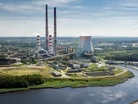
The newly-installed Siemens Energy SGT 9000HL turbine at Rybnik is the largest gas turbine installed on the Polish market and has been implemented by PGE.
The gas-steam unit in Rybnik represents a landmark investment in Poland's energy sector.
Boasting a capacity of 882.9MW and an impressive efficiency of nearly 64%, the state-of-the-art facility showcases significant environmental benefits, with CO₂ emissions three times lower than traditional 200MW coal-fired units and dust emissions reduced to almost zero.
And its benefits are not just energy-centric — the impact of this project extends beyond the energy sector, promising substantial benefits for the entire Silesian region, encompassing Poland, Germany and Czechia.
Its installation — Grzegorz Nalezyty, Vice President Eastern Europe & Managing Director at Siemens Energy Poland says — is “another key step in the realisation of an investment that will strengthen the security and stability of Poland's energy system”.
He adds: “This is an important investment not only for the energy sector, but also for the entire region.”
PGE’s 2050 climate neutrality pledge

PGE is aiming to produce net zero greenhouse gas emissions by 2050, focusing heavily on transitioning to renewable energy sources like wind and solar power to get there.
Decarbonising its current portfolio also plays into this goal, which it acknowledges will be a “complex process, requiring capital-intensive investments focused on low and zero-carbon generation only”.
More than 80% of PGE’s current generation portfolio is based on hard coal and lignite.
Speaking when he was President of the Management Board of PGE, Wojciech Dąbrowski said: “In the 2030 horizon, we intend to maintain our position as the leader in generation based on strengthening the portfolio of renewable generation sources and conversion of coal fuel to gas in district heating.
“Natural gas is a transition fuel and its use will remain possible for about 20 years. Subsequent investments in gas sources will depend on the pace of development of alternative technologies.
“In 2050 we will provide our customers with 100% green energy.”
In pursuit of this ambitious goal, PGE Group aims to significantly expand its renewable energy portfolio by 2030.
The company plans to develop 2.5GW of new offshore wind capacity, install 3GW of photovoltaic systems and increase its onshore wind farm capacity by a minimum of 1GW.
And with consumer interest in sustainable energy growing, PGE says it is committed to creating opportunities for customer participation in the ongoing energy transition.
To complement these large-scale renewable projects, the company will implement an energy storage programme with a capacity of at least 0.8GW, ensuring a more stable and flexible power system operation.
“Our long-term strategic goal is for 100% of the energy sold by PGE to come from renewable sources in 2050,” Wojciech added.
“Our customers expect energy produced in an environmentally friendly way. Therefore, we will implement an ambitious programme of building offshore and onshore wind farms and photovoltaics. We will also seek acquisition opportunities for further renewable projects.
“We know that the energy transition is a multidimensional process, therefore the construction of the RES market share, apart from large-scale investments, will be strengthened by long-term cooperation with our customers.”
Explore the latest edition of Energy Digital Magazine and be part of the conversation at our global conference series, Sustainability LIVE.
Discover all our upcoming events and secure your tickets today.
Energy Digital is a BizClik brand