Panthalassa: The Floating, Wave-Powered Data Centre Unicorn
If there were any doubt that necessity is the mother of invention, then the race to power AI has all but confirmed it.
Since the artificial intelligence boom began in earnest in 2022, one of the global economy’s biggest priorities has been finding ways to power the technology, with companies the world over vying to find solutions.
It is well known that AI programmes – and the data centres that prop them up – are huge consumers of energy.
In fact, the IEA projects that the sector’s energy consumption is expected to grow 30% a year until 2030, by which point AI will account for 3% of all the world’s energy use.
This huge spike in demand has led to some unusual, innovative developments in recent years, including rebooted nuclear power plants, satellite solar arrays and even investments in fusion reactors.
One particularly unconventional approach to the data centre dilemma has been wave power – an often overlooked form of renewable energy.
Panthalassa, an Oregon-based start-up that has spent a decade developing its wave energy technology, recently emerged as a frontrunner in this field.
It takes its name from the "superocean" that once surrounded Pangea before continental shaped the Earth as we know it today – an apt name for a company focused on harnessing the power of the sea.
This year, the firm raised US$140m in a financing round led by Peter Thiel, the venture capitalist behind Palantir and PayPal.
Such was the popularity of Panthalassa’s concept, the company is now valued at close to US$1bn including the new capital.
As well as Thiel, the funding round also drew support from the likes of Salesforce CEO Marc Benioff, PayPal and Affirm Co-Founder Max Levchin and veteran investor John Doerr, who was an early backer of Google, Amazon, Uber and Netscape.
How Panthalassa’s floating data centres work
The company's technology is, in engineering terms, deliberately unglamorous.
Its "nodes" are 85-metre-long solid-steel structures, roughly the height of London's Big Ben, and sit mostly beneath the ocean's surface.
The bobbing of the waves forces water through a turbine, generating electricity that powers AI chips housed in a hermetically sealed, seawater-cooled container.
There are no hinges, flaps or gearboxes. In fact, Panthalassa’s technology seems to include no components that might be particularly vulnerable to the hostility of open-ocean conditions whatsoever.
The nodes recirculate the same water internally to drive the generator, producing no direct emissions and requiring no engine.
Once towed horizontally out to sea, each structure flips upright and navigates to its destination using the hydrodynamic shape of its hull alone.
And because these floating data centres are so far from land, all the AI queries that go through them are handled via a SpaceX Starlink satellite connection.
This, the company suggests, is the only link back to shore that these structures will ever need.
The energy argument
Garth Sheldon-Coulson, Panthalassa's Co-Founder and CEO, was formerly an AI and energy researcher at hedge fund Bridgewater.
Since the start-up’s rise to prominence, he has made a case for why wave energy deserves a seat at the table alongside solar and nuclear.
"Energy from open-ocean waves is low-cost, sustainable, abundant and now we have the technology to make it accessible for people," he recently told the Financial Times.
By operating in remote, deep ocean areas rather than near coastlines, Panthalassa's nodes have the potential to avoid the constraints that have hampered previous wave energy projects, like land-sea connections and inconsistent waves.
"The waves are like a battery for sunlight and we can be capturing from it 24/7," he adds.
The company contends that wave and wind power are, alongside solar and nuclear, the only clean energy sources capable of producing "tens of terawatts" – the scale that AI infrastructure is increasingly demanding.
With the global demand for clean energy skyrocketing, this argument could pique the interest of both the private and public sectors.
'Go where the energy is'
That said, Panthalassa’s concept has one key thing that distinguishes it from most previous wave power projects: it has no intention of transmitting electricity back to shore.
The company's motto – "go where the energy is" – speaks to this notion.
"One of the key insights that we had was that it's very important to use the electricity in place," Garth Sheldon-Coulson explained to the FT.
That decision sidesteps one of the most intractable problems in offshore renewables, which is the huge cost and complexity of subsea transmission cables and interconnectors.
It also means the company's commercial viability depends on selling compute capacity, not electricity. In some ways, this makes it a far simpler proposition.

Panthalassa’s plans for the future
The new capital provided by Peter Thiel and co. will fund a pilot manufacturing facility in the US, with the firm looking at its first proper commercial deployments next year.
When it comes to manufacturing, Panthalassa says that its nodes are made using only "earth-abundant materials" like steel.
This, no doubt, will come as a relief to the world’s rare earth mineral and critical mineral sectors, which are already feeling the strain of the energy transition.
Meanwhile, the company has suggested that the supply chains its products will rely on are robust enough to facilitate a period of rapid scaling.
Thiel, who has previously championed the libertarian "seasteading" movement (which advocates for the construction of floating colonies in international waters) and backed Panthalassa through the Founders Fund as far back as 2018, sees the company’s mission as a widening of frontiers.
"The future demands more compute than we can imagine. Extraterrestrial solutions are no longer science fiction. Panthalassa has opened the ocean frontier," he told the FT.
While many of his ideas in this vein have been decried as a form of “tech neocolonialism”, his support will doubtless lend momentum to Panthalassa’s push towards the mainstream.
Company portals





Executives
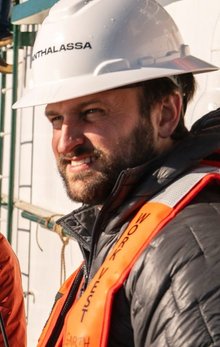
Garth Sheldon-Coulson
Co-Founder & CEO
Marc Benioff
Chair & CEO
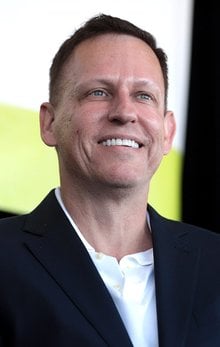
Peter Thiel
Co-Founder