IEA: AI’s Rising Power Demand Sparks Global Energy Debate
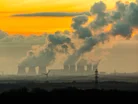
AI is transforming more than just digital systems — it is fast becoming one of the most powerful forces reshaping global energy.
As its development accelerates, its influence on electricity demand, infrastructure planning and sustainability policy has become too vast to overlook.
In response, the International Energy Agency (IEA) has published its inaugural 'Energy and AI' report, marking the first comprehensive global review of how AI intersects with energy systems.
IEA Executive Director Dr Fatih Birol says: “In recent years, AI has soared to the top of the political and business agenda. Once a mostly academic pursuit, it has evolved into an industry with trillions of dollars at stake.
"Despite significant uncertainties, it is now very clear: AI is coming. In many sectors, it is already here.”
Rising electricity demand from AI technology
One of the most striking challenges identified by the IEA is AI’s growing appetite for electricity.
Global data centres, which power AI systems, consumed around 415 TWh of electricity in 2024. That figure amounts to 1.5% of global electricity consumption.
Looking ahead, this demand could more than double to 945 TWh by 2030, a volume greater than Japan’s total electricity usage.
If efficiency trends fail to keep pace and AI adoption accelerates, demand could soar to 1,720 TWh by 2035. The United States is expected to see the largest share of this increase. There, data centres could use more electricity than the entire heavy industry sector.
This growth is driven by power-intensive digital workloads including AI model training, cloud computing and video streaming.
The hardware that enables AI also intensifies demand. Since 2015, servers equipped with specialised chips for AI tasks (known as accelerated servers) have become four times faster than standard ones, consuming proportionally more power.
To manage these pressures, the IEA outlines several mitigation strategies, including:
Locational flexibility: Placing data centres near renewable resources or cooler climates to cut cooling and transmission loads
Renewable energy integration: Boosting solar, wind and other sustainable sources in supply chains
Operational flexibility: Using AI tools to time-shift loads and improve demand response systems
These approaches could reduce emissions and temper the energy intensity of AI development.

AI’s role in enhancing sustainability and grid performance
Despite AI’s growing energy needs, the IEA also highlights its potential to strengthen sustainability and efficiency across the energy sector.
Used strategically, AI can optimise processes from mineral extraction to grid maintenance and emissions monitoring.
In upstream applications, AI supports better resource evaluation, automates production and aids in methane leak detection.
These tools enhance reliability while supporting sustainability goals.
In the electricity sector, AI forecasts variable renewable output, such as wind and solar, more accurately than traditional models.
It can also detect faults in power grids, cutting outage times by 30-50%.
If adopted more widely in manufacturing and industrial sectors, AI could deliver annual energy savings equal to the current national consumption of Mexico.
Buildings also stand to benefit. AI-driven improvements in heating, ventilation and cooling (HVAC) systems could save 300 TWh of electricity globally each year.
In transport, route optimisation and vehicle maintenance prediction powered by AI could boost system-level efficiency.
AI also plays an increasing role in cybersecurity. According to the IEA, AI can identify and respond to physical and digital threats to energy systems up to 500 times faster than conventional tools.
With infrastructure becoming more digitally integrated, this speed will be crucial to ensuring energy security.
By 2035, these improvements could reduce energy-related emissions by up to 5%, aiding efforts to meet global climate targets.
Planning for infrastructure, policy and collaboration
Dr Birol calls for a three-pronged approach to planning the future of energy with AI. “The first is the importance of finding the right mix of energy sources to deliver the uninterrupted power supply that data centres need to support AI,” he says.
The IEA’s analysis suggests roles for renewables, natural gas, small modular nuclear reactors and advanced geothermal, with technology selection guided by broader policy goals.
However, generation alone is not enough.
“To deliver the energy for AI, countries must also think about their infrastructure. That will mean accelerating investment in grids – and working to ensure that data centres, as well as the wider electricity system, are as efficient and flexible as possible,” he adds.
The third pillar is collaboration between the energy and tech sectors.
The IEA warns against policy inertia and siloed decisions, both of which risk creating bottlenecks. It advocates for joint planning, streamlined permitting and public-private partnerships that promote skills development and training.
The shortage of digital and AI expertise in energy is a concern.
To overcome this, the IEA calls on governments, universities and private firms to launch training initiatives and support workforce development.
“AI could also be an incredibly powerful tool for the energy sector. It is already helping energy companies optimise their approaches to exploration, production, maintenance and safety – and if AI tools are applied broadly, huge amounts of electricity transmission capacity could be unleashed without building a single new line,” says Dr Birol.
But these gains are not automatic.
For AI to help build a sustainable, secure and efficient energy future, the IEA underscores the need for shared frameworks that promote interoperability, policy alignment and targeted investment in low-carbon innovation.
As the global AI infrastructure expands and more countries adopt energy-hungry technologies, the intersection between sustainability and innovation becomes even more vital.
Governments and businesses must make deliberate choices to harness AI's full potential while safeguarding energy affordability and reliability.
Explore the latest edition of Energy Digital Magazine and be part of the conversation at our global conference series, Sustainability LIVE.
Discover all our upcoming events and secure your tickets today.
Energy Digital is a BizClik brand