
Wood Mackenzie: How Will Energy Grids Cope in the Age of AI?
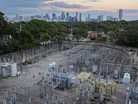
The energy sector is grappling with a demand shock unlike anything it has seen before. The rapid build-out of AI data centres across the US is placing extraordinary strain on power networks, and a new analysis from Wood Mackenzie makes clear that the electricity system is struggling to keep pace.
For years, the principal obstacles to data centre expansion were securing suitable land and sufficient water for cooling. Those constraints have not disappeared, but they have been overtaken by a more fundamental problem: getting enough power to where it is needed, when it is needed.
The result is a sector-wide scramble. Grid planners, energy developers and data centre operators are all racing to find solutions to a mismatch between electricity infrastructure and the pace of AI-driven load growth – and according to Wood Mackenzie, some of the fixes being deployed may be storing up new problems for the energy system.
"The power sector is fixated on data centre flexibility, but that is not the end-game for grid operators or data centre operators," says Ben Hertz-Shargel, Global Head of Grid Transformation and Large Loads at Wood Mackenzie.
"Firm grid service is the goal, backed by new transmission superhighways," he adds.
"But there is a lack of awareness throughout the power sector about the technical and regulatory risk confronting collocation projects, and the business risk of conditional interconnections."
Demand growth is outrunning generation capacity
The scale of the imbalance is starkest in deregulated energy markets. In the PJM Interconnection – which covers the mid-Atlantic and parts of the Midwest – the Wood Mackenzie report identifies 78GW of committed data centre load sitting in interconnection queues, set against only 36GW of accredited generation capacity in the development pipeline.
Texas presents a different picture, but the underlying tension is similar. Power prices in ERCOT currently sit well below the threshold needed to justify major new gas generation investment, even though significant capacity additions are forecast to be necessary over the coming decade as AI workloads continue to grow.
Chris Seiple, Vice Chairman, Energy Transition and Power and Renewables at Wood Mackenzie, said: "Load growth and affordability are in direct opposition in the deregulated markets.
"If prices rise to the level necessary to incentivise new generation, it will raise prices for all customers, prompting a political outcry," he adds.
That tension is beginning to reshape how electricity markets are structured. PJM is moving towards a two-tier pricing model that would allow large-load customers such as hyperscale data centre operators to contract directly with new generation at a premium rate, while existing assets remain on a lower pricing tier.
Wood Mackenzie cautions that this approach carries risks. Lower revenue for ageing gas and coal plant could accelerate retirements, creating fresh reliability concerns at a point when replacement capacity is still years from coming online. Texas has so far resisted equivalent intervention, relying instead on competitive market signals to draw in new investment.
The limits of building your own power supply
Faced with slow-moving grid connections, many data centre developers have opted to bring generation onto their sites rather than wait for utility-scale infrastructure to catch up. More than 90GW of co-located generation is now sitting in US interconnection queues.
Wood Mackenzie argues that this approach is workable only for a narrow group of large operators with the financial resources and engineering expertise to execute it. For most, the practical and technical barriers are formidable.
"Even for developers that see colocation as a viable bridging solution to grid power, the costs and technical challenges are formidable," Ben explains.

"Technology providers are only beginning to come to terms with this challenge, the mitigation of which is site-specific, making solutions hard to scale," he adds.
The engineering difficulties run deep. AI computing creates volatile swings in electricity consumption that place significant mechanical stress on gas turbines and reciprocating engines.
Battery storage can help to buffer those fluctuations, but frequent cycling degrades lithium-ion systems rapidly.
There are also problems associated with irregular GPU and cooling loads, including power harmonics and sub-synchronous oscillations that can destabilise transmission infrastructure at both a local and system-wide level.
Regulatory frameworks are struggling to keep up
Beyond the physical challenges, developers are confronting mounting regulatory uncertainty.
Grid operators across the country are introducing conditional interconnection frameworks intended to speed up data centre connections without compromising system reliability. But those same frameworks may undermine the business models underpinning some projects.
"PJM's and SPP's rules are understood to give the regional grid priority rights over collocated generation," Ben says.
"During shortages, data centres would be forced to reduce demand to their firm service level, even as their onsite generation was instructed to supply the grid. For some companies, this model is unworkable."
These are not abstract concerns. In 2024, sixty data centres in Virginia reportedly disconnected from the grid simultaneously following a minor disturbance, an event that came close to triggering a wider system collapse.
In response, ERCOT has been reviewing stricter ride-through requirements to prevent facilities from unnecessarily switching to backup power during short-duration disruptions.
Meanwhile, grid operators across the US are planning close to US$100bn in transmission investment, much of it tied to projected data centre demand. Who bears the cost of those upgrades remains unresolved.
"Grid operators are positioning flexible interconnections as a stopgap, not a long-term solution," Chris says.
"The expectation – and often the requirement – is that transmission will eventually provide complete, firm service to large loads.
"That could cause costs to rise for existing customers if cost allocation methodologies aren't changed and if the data centre demand doesn't materialise as forecast."
Company portals

Executives

Ben Hertz-Shargel
Global Head of Grid Transformation and Large Loads
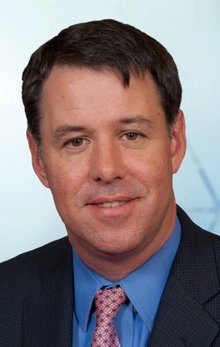
Chris Seiple
Vice Chairman, Energy Transition and Power and Renewables