Oil spills have the potential to have devastating effects on the environment.
The oil can coat feathers and fur of wildlife, poison marine life and destroy sensitive habitats like coral reefs and mangroves.
Different types of technology can be used to prevent and treat oil spills, helping to protect ecosystems and recover as much oil as possible.
Energy Digital has ranked 10 of the top oil spill response technologies.
10. Autonomous surface vessels
Leading company: Sea Machines Robotics
Founder & CEO: Michael G. Johnson
HQ: Boston, Massachusetts, US

In 2019, Sea Machines Robotics successfully deployed the industry’s first autonomous spill-response vessel.
The autonomous systems are placed on skimmer boats and can be controlled remotely to deploy on-board booms, skimmer belts and other equipment.
It can be operated in an unmanned autonomous mode, allowing operators to respond to spill events without exposing crewmembers to challenging weather or toxic fumes.
The vessel has the potential to increase the safety, productivity and predictability of response for marine oil spill operations.
9. Drones and aerial surveillance
Leading company: Chevron
CEO: Mike Wirth
HQ: Houston, Texas, US
A remotely monitored drone – called an AiRanger – can help inspect oil and gas pipelines.
Chevron, working together with American Aerospace Technologies, Inc. (AATI), became the first companies permitted to use these uncrewed aircrafts by the Federal Aviation Administration (FAA).
The AiRanger has a wingspan of 18 feet, making it larger than a traditional drone but smaller than a piloted plane.
It can fly for 12 hours which is more than twice as long as other types of aircraft, providing real-time reports of any threats and risks in Chevron’s pipelines which could lead to spills.
8. X-band radar-based detection
Leading company: Petrobras
CEO: Magda Chambriard
HQ: Rio de Janeiro, Brazil

Brazil’s environmental agency reached an agreement with Petrobras in 2018, encouraging the company to expand its oil spill detection operations in the Campos Basin near Rio de Janeiro.
Ocean monitoring company Miros Group provided Petrobras with oil spill surveillance technology.
The system provides continuous automatic oil spill detection using x-band radar, thermal imaging, vessel tracking and infrared cameras.
It can help to accurately detect oil spills early on, allowing Petrobras to respond to the spills and recover as much oil as possible.
7. Satellite monitoring technology
Leading company: Saudi Aramco
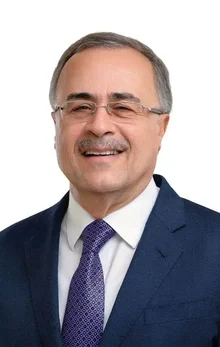
CEO: Amin H. Nasser
HQ: Dhahran, Saudi Arabia
Petroleum and natural gas company Saudi Aramco has introduced satellite technology to help detect marine oil spills.
This is to help protect coral reefs, due to the threat oil spills pose to the economy and the environment.
The satellite features Synthetic Aperture Radar sensors (SAR) that provide high-resolution images that allow oil slicks to be identified due to disrupted ocean backscatter.
Aramco’s technology can help make informed decisions to safeguard people, assets and the natural environment.
It provides advantages including rapid spill identification, real-time imagery for spill impact management and threat assessments.
6. Sorbents
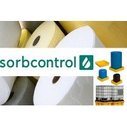
Leading company: Sorbcontrol
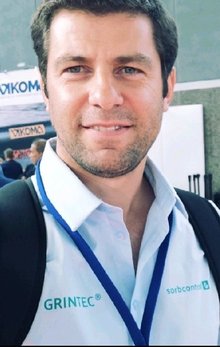
General Manager: Juan Francisco Pozzi
HQ: Barcelona, Spain
Sorbents are materials that soak up oil while repelling water, removing the last traces of oil that mechanical methods usually miss.
Sorbcontrol specialises in designing and producing a variety of oil spill solutions, including sorbents. The company says it has worked with businesses including Repsol.
It provides sorbents that can treat both marine and industrial spills, with sorbents that can absorb only hydrocarbons or those that absorb all liquids, including chemicals and water.
Juan Francisco Pozzi, General Manager at Sorbcontrol, said on LinkedIn: “Seeing our solutions in action reinforces our commitment to helping teams tackle environmental challenges head-on and protect our oceans.”
5. Subsea containment and recovery systems
Leading company: Ambipar
CEO: Tercio Borlenghi Jr.
HQ: London, UK
Offshore containment aims to capture and collect oil directly from the source of the leak, before sending it to surface vessels for removal.
If successfully deployed, offshore containment can prevent the majority of leaking oil from reaching the environment.
Companies like Ambipar offer equipment that can be rented out to tackle oil spills.
Its containment package includes a 10 foot container, offshore boom and hydraulic hoses, while its recovery package includes an offshore skimmer and a transfer pump.
4. Capping stacks
Leading company: Shell
CEO: Wael Sawan
HQ: London, UK

The Marine Well Containment Company (MWCC) was founded by Shell and other global oil and gas leaders to better prepare the industry for deepwater well control incidents.
This initiative is designed for subsea well containment, featuring equipment including capping stacks.
A capping stack is placed over a well to shut it in and stop the flow of oil and gas, containing any spills and mitigating environmental damage.
The equipment is designed to be quickly transported to an incident site and lowered to the well, where its valves can be closed to contain oil.
3. Chemical dispersants
Leading company: bp
CEO: Murray Auchincloss
HQ: London, UK
bp extensively used dispersants during the Deepwater Horizon incident in 2010, which was one of the biggest oil spills in history.
Chemical dispersants are used to mitigate the impact of an oil spill from coating shorelines and harming coastal wildlife.
During the incident, bp applied chemical dispersants on the surface of the water using aircrafts and directly into the well at the source of the spill.
Dispersants work by breaking down oil into smaller drops that can more easily mix with the water, which helps remove it from the surface of the ocean.
To be fully effective, chemical dispersants must be added into the water quickly after an oil spill has taken place.
2. Oil skimmers
Leading company: Enbridge
CEO: Gregory Ebel
HQ: Calgary, Canada

Enbridge uses different types of oil skimmers for both industrial cleaning and emergency oil spill response.
One type of skimmer is an oleophilic (oil-attracting) skimmer, which is used to lift oil from the surface of the water.
These can be belt skimmers which use a continuous belt and wiper blessed to scrape oil into a container, or mop skimmers which use a series of mops to blot oil from the water.
Enbridge also employs tube skimmers, using a floating horizontal tube to collect oil which is then stripped off and drained into a collection vessel.
Despite having strict oil spill response measures, the company says it believes that all incidents can be prevented.
It aims to limit the environmental impact of spills by working to contain the oil, prevent further damage and protect nearby wildlife.
1. Containment booms
Leading company: ExxonMobil
CEO: Darren Woods
HQ: Houston, Texas, US
The Valdez oil spill took place in 1989 and was one of the biggest learning experiences in ExxonMobil’s history.
The company took immediate responsibility for the spill and worked to clean it up using technology like containment booms.
Containment booms are temporary floating barriers used to contain oil on the surface of water to prevent it from spreading.
In the oil spill, ExxonMobil first focused on protecting nearby salmon hatcheries by deploying booms between the oil and the salmon streams.
After oil was contained by the booms, it was removed by skimmers and other treatments.
Containment booms are very commonly used to treat oil spills thanks to their high effectiveness in various weather conditions including wind and storms.
Darren Woods, CEO and Chairman of ExxonMobil, says: “We have a philosophy to be the most responsible operator in our industry.
“For as long as there’s a demand for oil and gas, you want the most responsible companies producing that.”
Company portals



Executives
Amin H. Nasser
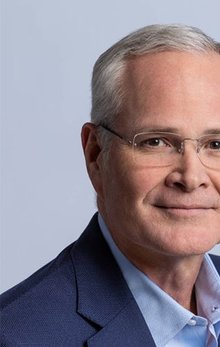
Darren Woods
CEO
Gregory Ebel
Chief Executive Officer
Juan Francisco Pozzi
General Manager
Magda Chambriard
CEO
Michael G. Johnson
Founder & CEO
Mike Wirth
Chairman of the Board and CEO
Murray Auchincloss
Chief Executive Officer

Tercio Borlenghi Jr
CEO
Wael Sawan
Chief Executive Officer