TotalEnergies, bp & Chevron Pull Methane 'Emergency Brake'
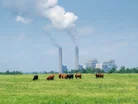
If carbon dioxide is the marathon runner of climate change, methane is its sprinter.
While CO2 lingers for centuries, methane is a fleeting visitor, persisting in our atmosphere for only about a decade. However, while it does not linger, methane is incredibly intense.
It has a Global Warming Potential over 80 times higher than that of CO2 over a 20-year horizon. This makes it responsible for roughly 30% of global temperature increases since the Industrial Revolution.
All of which means that, despite belching cows being partly responsible, it is not a laughing matter for businesses or scientists.
The sources of leaking methane
Methane (aka CH4) is primarily from three major sectors: agriculture, energy and waste.
In agriculture, it comes through enteric fermentation – the aforementioned belching cows – and flooded rice paddies. In the energy sector, "fugitive emissions" leak from poorly maintained oil and gas infrastructure, alongside methane venting from coal mines.
The waste sector contributes via decomposing organic matter in massive landfills and wastewater systems.
The International Energy Agency (IEA) reports that the fossil fuel sector is responsible for nearly one-third of methane emissions from human activity today. Despite the growth of the green economy, record production of oil, gas and coal – combined with sporadic mitigation efforts – has kept global emissions above 120 million tonnes (Mt) annually.
In its May 2025 report, the IEA’s Global Methane Tracker included abandoned wells and mines for the first time, revealing they contributed around 8 Mt to the 2024 total. Bioenergy production and consumption add another 20 Mt, largely from the incomplete combustion of traditional biomass used for cooking and heating in developing economies.

Pulling the emergency brake
While CO2 grabs most of the headlines, as a huge and hard to abate contributor to global warming, reducing methane is the fastest way to slow the process. The IEA highlights that fossil fuel supply offers the greatest potential for immediate reductions.
Solutions to lower these emissions to near zero already exist and could be deployed today at little – or even negative – cost. Currently, around 5% of global oil and gas production meets a near-zero emissions standard, representing nearly 3 million barrels of oil and 130 billion cubic metres of natural gas per day.
While many countries and companies have set targets for 2030, real implementation remains the primary hurdle. However, momentum is building. The Global Methane Pledge now includes over 150 countries committed to a 30% reduction by 2030.
High-tech solutions like MethaneSAT are now tracking super-emitters from orbit in near real-time, while oil giants implement mandatory Leak Detection and Repair (LDAR) protocols. In agriculture, farmers are trialling seaweed-based feed additives to curb bovine emissions at the source.
Industry leaders setting the pace
In the oil and gas industry, 11 of the biggest hitters – including Aramco, Equinor, Shell and TotalEnergies – make up the Oil and Gas Climate Initiative (OGCI).
The group members demonstrated that rapid reduction is possible. They achieved their collective 2025 upstream methane intensity target of well below 0.20% as early as 2021. By 2024, their aggregate upstream operated methane intensity dropped to 0.12% – a 14% decrease year-on-year and a 62% decrease compared with 2017.
This reduction in intensity has translated into a 63% decrease in absolute upstream methane emissions since 2017, with total emissions for OGCI members standing at 0.73 million tonnes in 2024.
Their methodology, which measures methane emissions as a percentage of total gas marketed, is now used across the industry as a standard of best practice and underpins the Oil and Gas Decarbonization Charter’s near-zero ambitions for 2030.
By moving from monitoring to mending, the global community can use methane reduction to buy precious time in the fight against climate change. Addressing these leaks today represents our most immediate and cost-effective opportunity to protect the environment.
Hydra helps bp fix flaring
Since acquiring assets in the Permian Basin, bpx – bp’s US onshore business – has led implementation of advancing technology to reduce emissions and unlock long-term value.
At the centre of this effort is bp’s redesign of acquired well site facilities into “hydra” sites, a next-generation infrastructure model that flows production to centralised facilities.
Hydra sites are engineered by bpx to eliminate storage tanks, flares and onsite compression at new well sites.
Murray Auchincloss, CEO, said: “In the Permian, our bpx team has achieved its accelerated goal of zero routine flaring by 2025 and significantly reduced emissions through next-gen hydra sites – an innovation that’s reshaping how we design and operate. It’s a powerful step towards our aim to reach net zero operations by 2050 or sooner.”
For legacy well sites, bpx upgraded key equipment, replacing gas-driven pneumatics with air systems to eliminate intermittent methane emissions and expanded vapour recovery to capture more gas that would otherwise be lost.
Flaring has been reduced by 99% and bpx eliminated routine flaring. The company has set a strict standard: no new bpx well is brought online unless it is connected to a gas pipeline from startup.
TotalEnergies: drone-based detection
To help accelerate action to reduce methane emissions to near zero by 2030, TotalEnergies is sharing its cutting-edge drone-based methane emissions detection and measurement system AUSEA (Airborne Ultralight Spectrometer for Environmental Applications) with companies on three continents.
TotalEnergies has signed cooperation agreements with the Nigerian National Petroleum Company, India’s Oil and Natural Gas Corporation, Oil India Ltd, Petrobras in Brazil, SOCAR in Azerbaijan and Sonangol in Angola.
The agreements allow them to use AUSEA to better understand and abate methane emissions at their operations.
Patrick Pouyanné, Chairman & CEO, says: “Cutting methane emissions from operations is a priority as technologies are available. The first step is to measure emissions, asset by asset.
“By making our AUSEA technology available to our partners, TotalEnergies is taking a concrete step to encourage the whole industry, including national companies, to aim for zero methane emissions.”
The AUSEA gas analyser, developed by TotalEnergies and its research and development partners, has a dual sensor that can pinpoint the presence and the source of methane and CO2 emissions.
Chevron: reduced flaring and retrofitting
From 2016 to 2024, Chevron reduced its methane intensity by over 50%.
To manage methane intensity, it uses facility design, operating practices and advancing technology.
In 2024, Chevron completed its largest methane emissions reduction project in Colorado, carrying out more than 250 facility retrofits to reduce methane emissions.
The facilities were converted to operate pneumatic devices with nitrogen, instead of field natural gas, which helps keep methane in the pipe.
This project started as a pilot to trial technology on three facilities and was quickly scaled up.
The same technology is being considered for a pilot in the Permian Basin.
Chevron says it believes an important first step in mitigating emissions is improving methane detection.
Mike Wirth, Chairman & CEO, says: “Chevron remains focused on lowering the carbon intensity of our operations through energy efficiency, methane management and flaring reduction.
“Our Colorado facility retrofits exemplify these efforts. We collaborate with organisations like OGCI to advance understanding and share best practices across the industry.”
Since 2016, Chevron has trialled over 20 methane detection technologies and incorporates solutions into its methane detection campaign.
Chevron says combining operational data with detection information enhances its understanding of methane emissions.




Executives
Mike Wirth
Chairman of the Board and CEO
Murray Auchincloss
Chief Executive Officer
Patrick Pouyanné
Chairman and CEO