IEA Report: 2025 Energy Investments Set to Hit $3.3tn
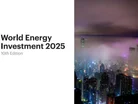
The International Energy Agency (IEA) projects that global energy investment will rise to US$3.3tn in 2025, with clean technologies taking a dominant share of US$2.2tn.
This steady growth in clean energy spending reflects a shift away from fossil fuels, yet the agency points to underlying weaknesses in grid infrastructure and a lack of progress across developing economies.
Clean energy outpaces fossil fuels
The IEA report makes it clear: clean energy investment is set to double that of fossil fuels in 2025.
The US$2.2tn forecast includes renewables such as solar and wind, nuclear power, electricity grids, battery storage, energy efficiency measures, electrification and low-emissions fuels.
Fossil fuels will account for around US$1.1tn.
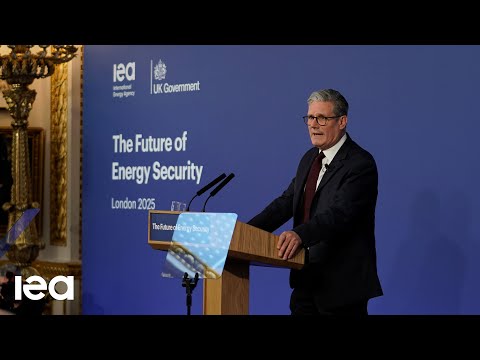
Fatih Birol, Executive Director of the IEA, says: “Amid the geopolitical and economic uncertainties that are clouding the outlook for the energy world, we see energy security coming through as a key driver of the growth in global investment this year to a record US$3.3tn as countries and companies seek to insulate themselves from a wide range of risks.
“The fast-evolving economic and trade picture means that some investors are adopting a wait-and-see approach to new energy project approvals, but in most areas we have yet to see significant implications for existing projects.”
While some investors delay new approvals due to market uncertainties, Fatih notes that existing projects are mostly unaffected.
The share of clean energy investment has steadily grown over five years, supported by climate targets, post-pandemic economic recovery and industrial policy.
Electric mobility is a major growth area. In markets like China, electric vehicles (EVs) are now price-competitive with petrol-powered alternatives.
Electrification of transport is seen as a key route to emissions reduction.
Around 70% of the global growth in clean energy investment has come from countries that rely heavily on fossil fuel imports — including China, India and European nations.
In the United States, the push is also strategic, as competition with China shapes policy around clean tech supply chains.
Electricity sector investment alone is expected to hit US$1.5tn in 2025, which is 50% more than what will be spent on all fossil fuel supply.
Frederic Godemel, EVP of Energy Management at Schneider Electric, says: “It’s encouraging to see growing global investment in the energy transition. We’re getting closer to the US$3.5tn annual capital needed between now and 2050 to achieve net zero, but there’s still more to be done.”
“We cannot let geopolitical uncertainty or economic headwinds derail our progress, after all the climate crisis doesn’t abide by our political or economic cycles.
“We must move beyond cautious optimism. With many clean energy projects still stalling, we need to double down on demand-side solutions, which are half of the solution to net zero.
"We have the technologies to decarbonise today, now it’s about scaling Electricity 4.0 – the combination of electric and digital – to drive immediate progress.”
Solar, nuclear and coal jostle for space
Power generation from low emissions sources is gaining traction.
Investment in solar photovoltaic (PV) technology is projected at US$450bn in 2025, making it the top investment area globally.
Battery storage, critical for grid flexibility, will attract US$66bn.
China continues to expand its solar influence.
Pakistan alone imported 19 GW of solar modules in 2024, nearly half its entire grid-connected capacity.
Nuclear power is also on the rise, with spending set to exceed $70bn in 2025 — up 50% over five years.
Small modular reactors are drawing interest, and new gas-fired capacity is being added in the US and Middle East.
However, the fossil fuel sector presents a mixed picture.
While upstream oil investment is expected to fall by 6% — the largest drop since 2016 — coal activity is rising.
China and India approved nearly 115 GW of new coal power in 2024, the highest since 2015.
In contrast, no new coal-fired steam turbines were ordered in advanced economies, a first.
Fatih recalls: “When the IEA published the first ever edition of its World Energy Investment report nearly ten years ago, it showed energy investment in China in 2015 just edging ahead of that of the United States.
"Today, China is by far the largest energy investor globally, spending twice as much on energy as the European Union and almost as much as the EU and United States combined.”
Grids and global inequalities hinder progress
While clean generation grows, electricity grids are lagging. Current annual grid investment sits at US$400bn — less than half of what is spent on generation assets.
This creates a bottleneck for renewables.
The IEA points to lengthy permitting, shortages in key components like transformers and cables, and financially weak utilities in developing nations.
Low-emissions fuel investment is projected to exceed US$30bn in 2025, and carbon capture, utilisation and storage (CCUS) could see a tenfold increase by 2027 if planned projects go ahead.
Hydrogen investment is expected to reach US$8bn in 2025, nearly double the previous year, although some schemes have been cancelled or delayed.
China, Europe and the US lead global clean energy investment.
Developing nations continue to struggle with the scale needed to meet climate targets.
Africa, Southeast Asia and Latin America remain behind, hampered by weak infrastructure and limited finance.
Although climate policies remain important, other motivations now shape investment decisions — particularly energy security, geopolitical tensions and industrial strategy.
These are especially important in sectors like clean tech manufacturing and domestic energy supply chains.
The IEA’s forecast confirms that clean energy is the top destination for investment, thanks to falling costs, supportive policy and higher electricity demand.
But the rise of coal in Asia, underinvestment in grids and poor support for developing countries challenge the transition.
To meet global targets, investment must be both higher and better distributed.
Building stronger infrastructure, unlocking financing and adopting a fairer global approach are essential next steps.
Explore the latest edition of Energy Digital Magazine and be part of the conversation at our global conference series, Sustainability LIVE.
Discover all our upcoming events and secure your tickets today.
Energy Digital is a BizClik brand