From the water wheels and mills of ancient civilisations to the gigantic hydroelectric turbines of today, hydropower is one of humanity's oldest and most enduring energy sources.
As the world moves further away from fossil fuels, hydropower is experiencing a remarkable renaissance – and for good reason.
Hydropower now accounts for the largest share of renewable electricity globally, with its contribution to the energy mix growing year on year.
In this month’s Top 10, Energy Digital takes a look at 10 of the companies leading the charge in harnessing the extraordinary power of water.
10. Statkraft
Founded: 1895
HQ: Oslo, Norway
CEO: Birgitte Ringstad Vartdal
Employees: 6,500
Installed capacity: 14.4GW
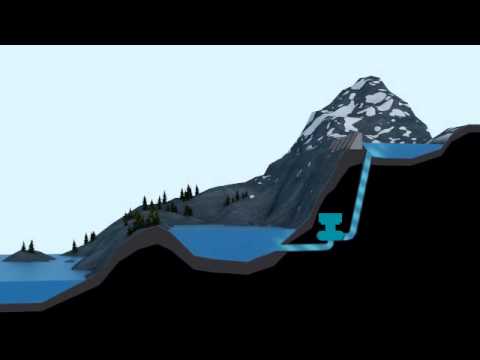
Statkraft is as close as the sector gets to a pure hydro pedigree with modern strategic reach.
Its reservoirs and river assets remain the core of the business, even as it expands across broader renewables markets.
Remarkably, Statkraft's Norwegian hydro plants can ramp up output within seconds, making them one of the fastest-response balancing tools on the continent.
In a European power system defined by intermittency and energy security concerns, that gives Statkraft an enduring edge.
9. EDF
Founded: 1946
HQ: Paris, France
CEO: Bernard Fontana
Employees: 197,363
Installed capacity: 22.7GW
EDF’s hydropower business is an important pillar of a much larger generation portfolio.
In France, hydro gives the company flexibility, fast-response capacity and a useful complement to its nuclear-heavy system.
EDF operates more than 400 hydroelectric plants across France alone, a network so extensive it functions almost as a national water-management system as much as an energy one.
That matters more than ever as Europe looks for cleaner firm power and greater grid stability.
8. State Power Investment Corporation
Founded: 2015
HQ: Beijing, China
CEO: Liu Mingsheng
Employees: 140,000
Installed capacity: 26.5GW
SPIC is one of China’s major state-backed power groups and a sizeable hydropower player in its own right.
Its scale matters because hydro is not treated as a niche asset, but as part of a national strategy for power security, decarbonisation and grid support.
It was also the first Chinese state energy enterprise to achieve a clean energy capacity majority, with renewables now accounting for more than half of its total installed base.
7. Enel
Founded: 1962
HQ: Rome, Italy
CEO: Flavio Cattaneo
Employees: 60,000
Installed capacity: 27.5GW
Enel Green Power has helped turn Enel into one of the world’s best-known renewable energy names.
Hydropower has been central to that story, as it brings flexibility to a portfolio that also leans heavily on wind and solar.
Enel's hydro heritage stretches back to the very origins of Italian electrification, with some of its plants having operated continuously for over a century.
The diversity of its portfolio makes it a hugely influential player in Europe today.
6. China Huaneng Group
Founded: 1985
HQ: Beijing, China
CEO: Wen Shugang
Employees: 130,000
Installed capacity: 29.6GW
China Huaneng Group is a heavyweight in the country’s power sector, and its portfolio of hydroelectric installations is part of a much broader national generation system.
The company’s Lancang River cascade in Yunnan province is one of the most ambitious run-of-river hydropower developments in Asia, threading multiple large dams through some of the continent's most complex terrain.
Huaneng’s importance lies not just in capacity, though, but in the reliability it offers China’s energy system as a whole.
5. RusHydro
Founded: 2004
HQ: Krasnoyarsk, Russia
CEO: Viktor Khmarin
Employees: 70,000
Installed capacity: 31GW
RusHydro is one of the biggest hydro specialists on the planet and has been a key player in Russia’s electricity system for years.
It operates facilities spanning eleven different time zones, including plants in the Russian Far East that are the sole source of electricity for entire remote communities.
Its value lies in its ability to provide large-scale renewable generation across a vast geography, often in regions where alternatives are limited.
4. China Huadian Corporation
Founded: 2002
HQ: Beijing, China
CEO: Xiao Min
Employees: 100,000
Installed capacity: 31GW
When governments want dependable, low-carbon electricity, it is difficult to look past hydropower.
No company embodies this notion more than China Huadian Corporation, which has helped reshape China into the modern superpower we know today.
The company's Laxiwa hydropower station on the Yellow River, with its 250-metre arch dam, ranks among the tallest of its kind in the world and stands as a marker of Huadian's engineering prowess.
3. Hydro-Québec
Founded: 1944
HQ: Montreal, Quebec, Canada
CEO: Claudine Bouchard
Employees: 22,806
Installed capacity: 37GW
Hydro-Québec is a hydropower giant in the most literal sense.
Its vast system gives it the ability to supply reliable, low-carbon electricity at a scale that few utilities anywhere in the world can match.
The firm’s James Bay complex, built across the boreal wilderness of northern Quebec, is one of the largest hydroelectric systems ever constructed.
What’s more, its story is one of engineering and environmental negotiation that has reshaped how the world thinks about mega-projects.
2. Eletrobras
Founded: 1962
HQ: Rio de Janeiro, Brazil
CEO: Ivan Monteiro
Employees: 8,300
Installed capacity: 44.6GW
Eletrobras sits at the centre of Brazil's power system and is one of the most influential hydropower-heavy utilities anywhere in the world.
Its scale gives it a structural role in a country where water power has long formed the backbone of electricity supply, helping to support both reliability and decarbonisation.
What makes Eletrobras particularly impressive is its importance to Brazil’s wider energy system. It helps balance a grid that has to serve a vast geography, changing demand patterns and an increasingly complex energy mix.
The Itaipu dam, co-owned with Paraguay and long counted among Eletrobras's key assets, held the record as the world's largest operational hydropower plant for decades – a symbol of just how central water power has been to Brazil's development story.
As Brazil becomes more involved in conversations of the energy transition, Eletrobras is likely to be one of the key institutions shaping how hydropower, transmission and system stability work together.
1. China Three Gorges Corporation
Founded: 1993
HQ: Beijing, China
CEO: Lu Chun
Employees: 46,000
Installed capacity: 78GW
China Three Gorges Corporation takes first place because of its synonymity with the very idea of hydropower.
The Three Gorges Dam is known all over the world, and it remains the single largest power station ever built by installed capacity, capable of generating more electricity in a year than many mid-sized countries consume in total.
That said, the company does much more than operate and maintain the project.
It is a vast developer, builder and manager of hydro assets across China and overseas, with a role that extends well beyond generation.
For years now, CTG has helped to deliver low-carbon power at an enormous scale, while also supporting grid stability in one of the world's largest electricity systems.