Power grids the world over are currently undergoing major renovations. And while grids have always needed repairs and improvements, it has never before happened at such scale or speed.
One of the main reasons why energy infrastructure is under redevelopment right now is the rise of renewables.
All traditional power grids were designed for the steady, predictable flow of fossil fuels, but they often struggle to cope with the intermittent generation of renewable energy, which often comes in peaks and troughs, surges and droughts.
Speaking with Energy Digital recently, Mateusz Zając, Sustainability Leader at ABB, summarised the issue with grids well.
“Think of the electrical grid as a three-lane motorway,” he says. “A lot of it was built decades ago and it's aged well because it's been well maintained. But in many countries, demand has tripled since it was designed.
“Imagine suddenly having three times as many cars on the motorway. And then imagine some of those cars starting to drive the wrong way – that's what distributed energy resources feeding back into the grid feels like.”
Making piecemeal adjustments to national grids answers this challenge, but another solution has started to demand attention in recent years too: microgrids.
A microgrid is a localised energy system capable of operating either in conjunction with, or completely independently of, the main grid. These systems combine energy sources like solar panels and wind turbines with battery storage and intelligent control software, meaning they can balance supply and demand in real time.
The global microgrid market was valued at almost US$100bn by Grand View Research, which demonstrates just how important these technologies are becoming.
In the near term, falling battery costs, maturing control systems and growing policy support across North America, Europe and Asia are all kicking the sector on to new heights.
This week, we look at 10 of the companies that are leading the charge to establish a new paradigm in energy infrastructure.
10. Honeywell
Founded: 1906
Based in: North Carolina, USA
CEO: Vimal Kapur
Notable feature: Forge Energy Optimisation software with AI-driven demand management and predictive analytics

Honeywell may be best known for its industrial automation and aerospace divisions, but its microgrid credentials are increasingly hard to overlook.
The company's Forge Energy Optimisation software platform brings AI-driven demand management and predictive analytics to sites ranging from hospitals to military installations.
What sets Honeywell apart is its ability to integrate seamlessly with its wider building management and security ecosystem, giving operators a truly unified view of their facilities.
With a growing portfolio of grid-connected and islanded deployments across commercial and critical-infrastructure sectors, Honeywell is proving a formidable and often underrated force in the microgrid market.
9. Eaton
Founded: 1911
Based in: Dublin, Ireland
CEO: Paulo Ruiz Sternadt
Notable feature: Intelligent Power Manager platform enabling seamless switching between grid-tied and islanded operation
Founded more than a century ago, Eaton has reinvented itself as a pivotal player in the clean energy transition.
Its microgrid solutions span power management hardware, advanced grid controllers and sophisticated energy automation software, all united under the Intelligent Power Manager platform.
Eaton's particular strength lies in its ability to serve data centres, manufacturing plants and utility customers simultaneously – sectors all facing mounting pressure to guarantee uptime.
The company has also identified electric vehicles as a future cornerstone of microgrid architecture, positioning its technology to exploit EV batteries as distributed storage assets.
The August 2024 launch of a new AI-powered smart grid management system further underscored Eaton's determination to remain at the cutting edge of distributed energy.
8. GE Vernova
Founded: 2024 (General Electric founded 1892)
Based in: Massachusetts, USA
CEO: Scott Strazik
Notable feature: Digital twin technology enabling predictive maintenance and real-time optimisation of microgrid assets

Spun out of General Electric in 2023, GE Vernova carries the formidable legacy of one of the world's most storied industrial companies into the energy transition era.
Its microgrid portfolio draws on decades of grid management expertise, blending distributed energy resource integration with IoT-enabled controllers and advanced analytics.
The company's standout differentiator is its application of digital twin technology – creating virtual replicas of physical microgrid assets to enable predictive maintenance and real-time performance optimisation.
With a vast global service network and deep relationships with utilities across dozens of countries, GE Vernova is exceptionally well placed to capitalise on the surging global demand for resilient distributed energy infrastructure.
7. ABB
Founded: 1988
Based in: Zurich, Switzerland
CEO: Morten Wierod
Notable feature: Real-time microgrid controllers supporting both islanded and grid-connected modes across more than 100 countries

ABB is a genuine titan of the electrification and automation world and its microgrid credentials are correspondingly impressive.
The Swiss group's modular and scalable microgrid designs can serve everything from remote industrial sites to urban utility networks, with real-time controllers renowned for their grid synchronisation capabilities.
ABB's deep intellectual property portfolio in energy distribution – and a global presence spanning more than 100 countries – gives it an unrivalled ability to deliver bespoke solutions across diverse regulatory environments.
A US$120m investment in American transformer manufacturing announced in early 2025 highlighted the company's continued ambition to scale its energy infrastructure business aggressively in the world's most competitive market.
6. Siemens
Founded: 1847
Based in: Munich, Germany
CEO: Roland Busch
Notable feature: SICAM Microgrid Suite delivering fully integrated digital control, automation and IoT management

Few names carry as much weight in industrial technology as Siemens – and the German giant's microgrid arm is no exception.
Its SICAM Microgrid Suite delivers comprehensive digital control, automation and IoT integration, making it a natural choice for smart city projects, transportation networks and large industrial complexes.
Siemens has been particularly active in the European market, where ambitious decarbonisation targets and supportive regulatory frameworks have created fertile ground for distributed energy systems.
The company's willingness to invest heavily in research and development – combined with an unmatched global engineering workforce and more than 170 years of technical heritage – means it consistently delivers innovations that push the boundaries of what microgrids can achieve.
5. Hitachi Energy
Founded: 2020 (formed from Hitachi/ABB Power Grids combination, heritage from 1910)
Based in: Zurich, Switzerland
CEO: Andreas Schierenbeck
Notable feature: TropOS wireless networking platform providing resilient communications for remote and mission-critical microgrid deployments

Formed from the combination of Hitachi's power business and ABB's former Power Grids division in 2020, Hitachi Energy has rapidly established itself as a significant force in the microgrid space.
Its end-to-end systems leverage proprietary digital platforms and predictive maintenance analytics to serve smart cities, railways and industrial complexes worldwide.
The company's TropOS wireless networking technology provides a resilient communications backbone that keeps microgrid components connected even in the most demanding environments.
Hitachi Energy's particular strength in the Asia-Pacific region – where rapid urbanisation and persistent energy access challenges demand innovative localised solutions – gives it a geographic breadth that few competitors can match and a growing pipeline of high-value projects.
4. Scale Microgrid Solutions
Founded: 2017
Based in: New Jersey, USA
CEO: Ryan Goodman
Notable feature: Fully-financed Microgrid-as-a-Service model requiring zero upfront capital from customers

Scale Microgrid Solutions has carved out a compelling niche by removing the single biggest barrier to microgrid adoption: upfront cost.
Its Microgrid-as-a-Service model finances, designs, builds and operates distributed energy projects on behalf of customers, who pay only for the energy they consume.
Modular designs allow for rapid deployment and easy scalability, making Scale an attractive partner for businesses that need grid independence quickly.
With a growing North American portfolio and major institutional backing, Scale represents one of the most exciting pure-play microgrid propositions currently available to commercial energy buyers.
3. Bloom Energy
Founded: 2001
Based in: California, USA
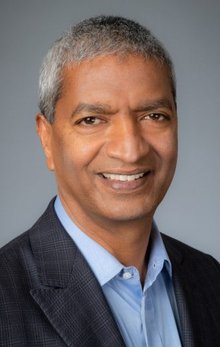
CEO: KR Sridhar
Notable feature: Solid oxide fuel cell platform delivering always-on clean power without combustion or grid dependency

Bloom occupies a unique position in the microgrid market, offering a technology proposition genuinely unlike anything else in the sector.
Its solid oxide fuel cell platform generates electricity through an electrochemical process rather than combustion, producing power that is highly efficient, low in carbon and entirely independent of the main grid.
The AlwaysON Microgrid Solution has proved especially compelling in California, where public safety power shutoffs have repeatedly cut power to millions of customers.
More recently, Bloom has positioned its fuel cells as the ideal power source for AI data centres, signing a US$5bn agreement with Brookfield Asset Management to build capacity at hyperscale facilities.
With hydrogen-capable technology in development, the long-term outlook is looking promising.
2. Schneider Electric
Founded: 1836
Based in: Paris, France
CEO: Olivier Blum
Notable feature: EcoStruxure open architecture platform enabling end-to-end microgrid management across buildings, campuses and entire districts
Schneider Electric's runner-up position reflects both the breadth of its microgrid portfolio and the scale of its global operations.
The EcoStruxure open architecture platform provides a unified system for monitoring, controlling and optimising energy from individual buildings to large industrial districts.
A genuinely multi-local business model allows Schneider to tailor solutions to the regulatory and commercial conditions of each market – a key advantage in an industry shaped by local policy.
In March 2025, the company announced plans to invest over US$700m in its US operations by 2027, its largest ever domestic capital commitment.
With its armfuls of accolades for its sustainability, Schneider Electric is arguably the most complete and versatile operator in the industry today.
1. S&C Electric
Founded: 1911
Based in: Illinois, USA
CEO: Anders Sjoelin
Notable feature: PureWave microgrid controller with sub-quarter-second islanding – among the fastest seamless grid-disconnect capabilities in the industry

While the technology giants elsewhere on this list offer microgrid capability as part of a vast, diversified portfolio, S&C Electric has spent more than a century doing one thing extraordinarily well: keeping power flowing when everything else fails.
The proudly employee-owned Chicago firm is the world's foremost specialist in power switching and protection and its PureWave microgrid controller achieves islanding – seamlessly disconnecting from the main grid to operate autonomously – in under a quarter of a second, a speed most rivals cannot match.
Trusted by utilities, military installations, hospitals and universities across North America, S&C has also been a consistent champion of community microgrids, recognising that the technology's greatest social value lies in protecting entire neighbourhoods, not just corporate campuses.
Its singular focus on resilience makes it, in the view of many specialists, the most important microgrid company in the world today.
Company portals







Executives

Anders Sjoelin
President and CEO
Andreas Schierenbeck
Chief Executive Officer of Hitachi Energy
KR Sridhar
CEO
Morten Wierod
CEO

Olivier Blum
Chief Executive Officer
Paulo Ruiz Sternadt
CEO
Roland Busch
President and CEO of Siemens AG
Ryan Goodman
Chief Executive Officer, Board Member
Scott Strazik
Chief Executive Officer
Vimal Kapur
Chairman and Chief Executive Officer