
Airbus & OMV: Biomass for Sustainability in Aviation
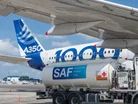
There are many promising technologies that could decarbonise aviation, but most of these are not yet feasible.
SAF, however, is already being used around the world.
This fuel option can work with existing aircraft engines and can reduce greenhouse gas emissions by up to 80% compared to traditional jet fuel.

Most SAF originates from biomass resources, including repurposed cooking oil and waste from wood mills.
Airbus has signed a memorandum of understanding with OMV to advance sustainable aviation fuel (SAF).
The companies aim to explore solutions to broaden voluntary access to SAF for a variety of different customer groups, aimed at stimulating new demand for the fuel.
"The transition to sustainable aviation requires strong cross-industry collaboration,” says Julie Kitcher, Chief Sustainability Officer & Communications at Airbus.
“Joining forces with OMV, a leading European energy partner, is another important step on our journey towards the production and deployment of sustainable aviation fuels at scale.
“This partnership fits perfectly with Airbus' ambition to enable a global net-zero aviation sector and we look forward to working with OMV to deliver on shared objectives.”
How OMV and Airbus will work together
The collaboration between Airbus and OMV extends beyond stimulating demand.
It hopes to explore expediting the processes to test, evaluate and grant approval to feedstocks and new production methods, designed to make SAF more quickly accessible.
Both partners have also committed to raising awareness and understanding of SAF.
Martijn van Koten, Member of the Executive Board and Executive Vice President Fuels and Feedstock at OMV, says: “Transformative partnerships across the aviation value chain are crucial for building a robust SAF industry and accelerating the transition to a more sustainable future.
“Our partnership with Airbus underscores OMV’s dedication to innovation, sustainability and excellence.
“We are proud to lead on this journey, driving progress and creating a lasting positive impact on both the aviation industry and the environment.
"SAF is a cornerstone of OMV’s Strategy 2030 and our path to climate neutrality.”
Airbus' SAF initiatives
This partnership is not Airbus’ first venture into SAF.
At CES 2025, Airbus announced with Delta that it will join the Minnesota SAF Hub and Demand Consortium with a multi-year commitment to buy SAF.
Amelia DeLuca, Chief Sustainability Officer at Delta, says: “I am so excited for this work with Airbus — we know a sustainable future of flight is rooted in innovation and this partnership is going to take Delta’s journey to net zero to new heights.”
Launched in 2023, the Minnesota SAF Hub aims to make SAF cost competitive through a Demand Consortium that will purchase the first several million gallons of SAF each year starting in the second half of 2025.
Biomass beyond SAF
Biomass serves multiple roles beyond just aviation fuel.
“Airbus achieved a 42% reduction in Scope 1 and 2 CO₂ emissions in 2023 compared to 2015 – an achievement made possible by projects like our newly opened biomass boiler,” Julie explains.
“The biomass boiler now provides 86% of the thermal energy needs for our internal heating network, benefiting 21,000 employees across four Toulouse sites.
“In line with our Science Based Targets initiative-validated objectives, we remain committed to reducing Scope 1 and 2 emissions by 63% by 2030 compared to 2015. Projects like this one are critical steps toward achieving this goal.”
Explore the latest edition of Energy Digital Magazine and be part of the conversation at our global conference series, Sustainability LIVE.
Discover all our upcoming events and secure your tickets today.
Energy Digital is a BizClik brand