Google and Shell: Extending the Life of Offshore Wind Assets
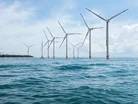
In a practical move focused on energy resilience and climate continuity, Google and Shell are collaborating to extend the operational life of the Netherlands' first offshore wind farm.
Through a corporate power purchase agreement (PPA), Google has agreed to buy 100% of the site’s 108 MW output.
This purchase unlocks a path for Shell to pursue the necessary permits and upgrades to keep the turbines spinning four years beyond their scheduled shutdown.

Keeping clean power online
This collaboration is the first time a corporate PPA has been used not to build new capacity, but to keep an existing offshore wind farm running.
Without this deal, the site would have faced decommissioning despite its ability to continue generating carbon-free electricity.
By intervening, Google and Shell are avoiding the premature loss of clean power.
This wind energy will now remain part of the Dutch grid.
"We have made significant progress against all of the targets we set out at our Capital Markets Day in 2023. Thanks to the outstanding efforts of our people, we are transforming Shell to become simpler, more resilient and more competitive," says Wael Sawan, CEO of Shell.
"We want to become the world’s leading integrated gas and LNG business and the most customer-focused energy marketer and trader, while sustaining a material level of liquids production.
“Today we are raising the bar across our key financial targets, investing where we have competitive strengths and delivering more for our shareholders."
Google’s involvement builds on a wider commitment.
Across the Netherlands, the company has already backed more than a gigawatt of clean capacity through similar agreements.
This long-term investment reflects a deliberate strategy: strengthen local grids and advance energy innovation while helping decarbonise its own operations.
Strategic clean energy
For Google, the arrangement fits into its wider 2030 ambition to operate entirely on carbon-free energy, hourly and locally across all regions.
Instead of only funding new wind farms or solar arrays, the company is shaping the renewable market by ensuring that older, working assets are not scrapped before their time.
The PPA shows how companies can actively support clean energy infrastructure across its full lifecycle – not just at the point of installation.
The partnership underlines how thinking about the whole lifespan of a project can change how the energy sector operates.
As many wind and solar farms built over the last two decades approach retirement age, similar opportunities are expected to arise.
Repowering, refurbishment and regulatory support can all extend the clean value of existing projects if backed by demand from energy buyers like Google.
The deal also shows a new model for energy partnerships.
Rather than only launching new builds, tech and energy companies can combine to reinforce assets already contributing to national grids.
That kind of sustained value may become increasingly important as systems mature and capital budgets tighten.
Energy ambitions and compromises
Google has made climate a central goal, aiming for net zero emissions across its entire value chain by 2030.
In 2023, it matched all of its electricity consumption globally with renewable energy and it met 64% of that demand on an hourly basis with carbon-free local sources.
The company is also pursuing wider sustainability goals, pledging to replenish 120% of the water it consumes and phase out single-use plastics.
From smart climate tools to energy-efficient infrastructure, it continues to apply AI and digital systems to reduce its environmental footprint.
However, the growth of AI and cloud computing infrastructure drove a 13% increase in emissions in 2024.
Despite this, Google remains on track to halve its total Scope 1, 2 and 3 emissions by 2030.
Shell, meanwhile, continues to blend low-carbon progress with fossil fuel business models.
The company’s goal is to reach net-zero emissions by 2050, with current efforts including water stewardship, recycling and biodiversity protection.
Shell’s more visible activities include growing its offshore wind presence and pushing forward with carbon capture and storage (CCS) projects like Polaris and Atlas.
"Carbon capture and storage is a key technology to achieve the Paris Agreement climate goals," says Huibert Vigeveno, Shell’s Downstream, Renewable and Energy Solutions Director.
"The Polaris and Atlas projects are important steps in reducing emissions from our own operations."
However, Shell still commits the majority of its spending to fossil fuels.
Though oil production may fall slightly, the company plans a sharp expansion of its gas portfolio by 2030.
Its strategy focuses on cutting emissions intensity rather than absolute emissions, an approach that continues to face scrutiny for not aligning fully with climate science.
Even with different methods and motivations, Shell and Google’s collaboration shows what is possible when practical energy goals align.
Extending the lifespan of a legacy wind farm may not grab headlines like new construction, but it offers a clear example of climate-focused thinking that values efficiency and conservation.
The sector faces a growing reality: ageing clean energy assets need strategic attention if their value is to be preserved.
Explore the latest edition of Energy Digital Magazine and be part of the conversation at our global conference series, Sustainability LIVE.
Discover all our upcoming events and secure your tickets today.
Energy Digital is a BizClik brand