Offshore Wind: Why has Ørsted Scrapped Hornsea 4?
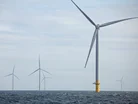
Ørsted has decided to scrap Hornsea 4, an offshore wind farm project proposed to sit 69km off the Yorkshire coast in England.
This was its fourth project planned for the Hornsea zone, expected to provide up to 2.4 GW of clean power.
Hornsea 4 was granted consent in July 2023 and received its contract for difference (CfD) in September 2024.
Rasmus Errboe, Group President and CEO of Ørsted, says: “Our capital allocation is based on a strict and value-focused approach, and after careful consideration, we’ve decided to discontinue the development of the Hornsea 4 project in its current form, well ahead of the planned Final Investment Decision later this year.
“I’d like to emphasise that Ørsted continues to firmly believe in the long-term fundamentals of and value perspectives for offshore wind in the UK.
“We’ll keep the project rights for the Hornsea 4 project in our development portfolio, and we’ll seek to develop the project later in a way that is more value-creating for us and our shareholders.”
Cost and risk increases
Ørsted says that since the CfD award, Hornsea 4 has seen several adverse developments.
These relate to the continued increase of supply chain costs, higher interest rates and an increase in the risk to construct and operate the project on the planned timeline.
In combination, Ørsted says these developments have increased the execution risk and deteriorated the value creation of Hornsea 4.

This cancellation is despite its 15 year CfD with the UK Government, guaranteeing to sell power at an agreed price.
The company has continuing seabed rights, grid connection agreement and Development Consent Order.
Ørsted’s finances
The cancellation of Hornsea 4 was announced with Ørsted’s Q1 earnings report.
With the completion of Gode Wind 3 in Germany, the company reached a total of 10 GW of offshore wind capacity.
Despite the wind power industry facing headwinds and lower than normal wind speeds, Ørsted achieved an EBITDA of US$1.3bn – an 18% increase from US$1.1bn in the same period last year.
Since 2021, the company’s market value has fallen by around 80% from its peak.
The cancellation of Hornsea 4 will see the company face break-away costs between US$529m and US$681m in 2025.
It expects the EBITDA impact of this to be between US$454m and US$529m.
Difficulties in offshore wind
This is not Ørsted’s first cancellation in recent years.
In October 2023, it announced it was to cease development of US offshore projects Ocean Wind 1 and 2.
Ørsted said this cancellation was a consequence of supplier delays impacting the project schedule and the business case deteriorating through increases to US interest rates.

Other companies have faced similar challenges.
Vattenfall announced in July 2023 it would stop work on the Norfolk Boreas offshore wind farm in England.
It said costs had risen by 40% due to an increase in global gas prices impacting the cost of manufacturing.
“Higher inflation and capital costs are affecting the entire energy sector, but the geopolitical situation has made offshore wind and its supply chain particularly vulnerable,” said Anna Borg, Vattenfall’s CEO.
Vattenfall sold the Norfolk Boreas to RWE that has continued to develop the project.
Explore the latest edition of Energy Digital Magazine and be part of the conversation at our global conference series, Sustainability LIVE.
Discover all our upcoming events and secure your tickets today.
Energy Digital is a BizClik brand