
Pavilion Energy Acquisition: Why is Shell Investing in LNG?
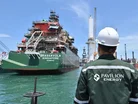
Shell has completed its acquisition of liquified natural gas (LNG) trading business Pavilion Energy.
The Singapore-headquartered company has a contracted supply volume of around 6.5 million tonnes per annum.
This acquisition includes its portfolio of LNG offtake and supply contracts, regasification capacity and LNG bunkering business.
In a statement, Shell said: “This acquisition helps to deliver on Shell’s ambition to solidify its leading position in liquified natural gas by growing sales by 4-5% per year through to 2030.”
About Pavilion Energy
Pavilion’s operations include natural gas supply and marketing activities in Southeast Asia and Europe. The global LNG trading, shipping and optimisation will run alongside energy hedging and financial solutions.
It also describes itself as a “pioneer” in LNG bunkering for the maritime industry.
The company promotes greenhouse gas reduction and carbon offsetting in the LNG value chain. It advocates LNG and natural gas as a transition fuel.
Its Group Chief Executive Officer is Alan Heng.
Shell's focus on LNG
LNG is natural gas that has been cooled to a liquid state, reducing its volume by around 600 times.
In its liquid state LNG does not ignite, making it safer and easier to store and transport.
While still a fossil fuel, it is a lower-carbon alternative to others like oil and coal.
When burned, natural gas emits around 50% less CO₂ than coal and 30% less than oil alongside producing fewer air pollutants like nitrogen oxides and sulphur oxides.

Carbon capture, utilisation and storage (CCUS) can reduce emissions by up to 90% during LNG production and using renewable energy to power this process can cut its carbon footprint further.
LNG can back up intermittent renewables like solar and wind to ensure a stable supply of power and support hydrogen production.
Shell said in March 2025 that it aims to boost investor returns through 2030 by reinforcing its position in LNG.
Wael Sawan, CEO at Shell, said: “‘We want to become the world’s leading integrated gas and LNG business and the most customer-focused energy marketer and trader, while sustaining a material level of liquids production.
“Today we are raising the bar across our key financial targets, investing where we have competitive strengths and delivering more for our shareholders.’’
Shell’s statement said that the company “will continue to deliver more value with less emissions, growing in areas where we have competitive strengths and providing a compelling investment case for our shareholders, now and into the future”.
Shell’s LNG projects
The company has LNG supply projects in 10 countries and major interests in three regasification plants.
It also has long-term access to capacity in plants across Europe, the Middle East and North America.
Shell says it has access to around 40 million tonnes of own capacity from 12 liquefaction plants in addition to sourcing third-party LNG from its global trading capabilities.
Its acquisition of Pavilion adds more than 9% to Shell’s LNG portfolio and builds on its investment in LNG Canada and its stake in the Ruwais LNG project in the UAE.
Explore the latest edition of Energy Digital Magazine and be part of the conversation at our global conference series, Sustainability LIVE.
Discover all our upcoming events and secure your tickets today.
Energy Digital is a BizClik brand