Why are Amazon, Google & Meta Backing Nuclear?
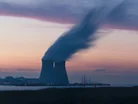
The world’s electricity consumption is growing at its fastest ever pace, set to increase at close to 4% annually according to the International Energy Agency (IEA).
In a lot of industries, reliability is crucial and battery technology is not ready to support the fluctuating outputs of renewable sources like wind and solar.
Nuclear power is the answer according to the World Nuclear Association and nearly 200 companies, including Amazon, Google, Meta and Dow.
This cross-industry coalition has signed a pledge supporting the goal of at least tripling global nuclear capacity by 2050.
Sama Bilbao y Leon, Director General of the World Nuclear Association, said: “The unprecedented support announced today by some of the world’s most influential companies to at least triple global nuclear capacity by 2050 sends a clear signal to accelerate policy, finance and regulatory changes that enable the rapid expansion of nuclear power.
“The global shift towards more nuclear highlights this is the only way we’ll deliver the abundant firm clean energy required to power growth and innovation in technology, a host of other industries and the entire economy.”
Why are tech giants supporting nuclear power?
Data centres are the beating hearts of many technologies that support modern life.
Artificial intelligence, machine learning, ecommerce and even emails rely on them.
These facilities require power 24/7 alongside cooling and ventilation for computing equipment.

Today, they account for around 1% of global energy consumption – but their demand could increase by up to 300% by 2026, the IEA says.
Nuclear power provides a constant supply of low-carbon energy, suitable for the 24/7 power that data centres need.
Lucia Tian, Head of Clean Energy & Decarbonisation Technologies at Google, said: "We are proud to sign a pledge in support of tripling nuclear capacity by 2050, as nuclear power will be pivotal in building a reliable, secure and sustainable energy future.
“Google will continue to work alongside our partners to accelerate the commercialisation of advanced nuclear technologies that can provide the around-the-clock clean energy necessary to meet growing electricity demand around the world."
Urvi Parekh, Head of Global Energy at Meta, said: “As global economies expand, the need for a reliable, clean and resilient energy supply is paramount. Nuclear energy, with its ability to provide continuous power, can help meet this rising demand.
“We’re excited to join alongside this multi-organisational effort with the Tripling Nuclear Pledge to reiterate our commitment to nuclear energy.”
Brandon Oyer, Head of Americas Energy and Water at Amazon Web Services, said: “Accelerating nuclear energy development will be critical to strengthening our nation’s security, meeting future energy demands and addressing climate change.
“Amazon supports the World Nuclear Association’s pledge, and is proud to have invested more than US$1bn over the last year in nuclear energy projects and technologies, which is part of our broader Climate Pledge commitment to be net zero carbon by 2040.”

Nuclear energy across industries
It’s not just data centres – as global economies continue to expand, the demand for energy will increase across industries.
From technology as big as manufacturing equipment to the smallest quantum computing chips, energy will continue to sit at the heart of industries.
Edward Stones, Business Vice President for Dow Energy & Climate, said: “Energy is the lifeblood of global manufacturing and therefore investing and expanding access to clean, reliable, cost-competitive nuclear energy is critical to industrial progress.
“Dow considers nuclear energy, especially the promising technology of advanced small modular nuclear, to be a long-term competitive source of safe, firm and clean energy.”
Laurent Odeh, Chief Commercial Officer at Urenco, said: “It will be a lot harder to address environmental concerns while facilitating economic development in the world without the reliable, 24/7 baseload power nuclear energy provides.
“This support from large energy users is another sign for governments to enable new nuclear projects so we can accelerate construction and meet the energy needs of both industry and the public.”
Explore the latest edition of Energy Digital Magazine and be part of the conversation at our global conference series, Sustainability LIVE.
Discover all our upcoming events and secure your tickets today.
Energy Digital is a BizClik brand