Great British Energy: Building a Publicly-Owned Utility
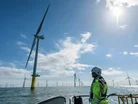
The establishment of Great British Energy is now official, after a bill was passed through the House of Commons this morning on 15 May 2025.
This publicly owned venture is set to enhance Britain's clean energy transition, driven by a £8.3bn ($10.4bn) financial commitment from the government.
This initiative was unveiled following the Labour government’s election in July 2024, with a prime focus on boosting the nation's sustainable energy efforts.
Great British Energy aims to channel a considerable portion of these funds into clean energy projects nationwide.
This legislation garnered unanimous agreement from Scotland, Wales and Northern Ireland, a first for this parliament.
"Great British Energy comes from a simple idea: British people should own and benefit from our own natural resources," said Energy Secretary Ed Miliband, during a visit to a Hull hospital powered by solar energy.
"We are giving people a stake in clean energy and delivering profits for the British people.”
Inside Great British Energy's investment strategy
At Innovation Zero in April 2025, Dan McGrail, interim CEO of Great British Energy, outlined several of the company's key investment focuses on stage during a Q&A.
One key tenet of the firm's strategy will be a proactive investor in innovative projects of all sizes.
"We want to enter the market as a developer — it's a very important part of the mandate we've received," Dan explained.
Dan revealed the company's plans to invest in offshore wind and long-duration energy storage in the coming years.
"Pumped hydro is the obvious one, that's pretty mature. Liquid air energy storage is a relatively new, very scalable modular technology," he said regarding energy storage technologies.
“We see compressed air energy storage which is built around some of the geological features of the UK where projects have been in development for a long time but have never quite been able to get over the line.”
The second strategic area, ‘GB Local’, targets community energy projects, promoting small-scale power facilities, whilst the third priority is supply chain investments, which will support the company's primary operations.
Several community-focused programmes have now been initiated, such as Scotland’s energy fund supported by £4m (US$5m) from Great British Energy, earmarked for local clean projects.
Welsh communities will gain from approximately £3m (US$3.8m) for similar renewable ventures.
A collaborative approach with the private sector
Dan explained that Great British Energy is designed to complement, not compete with, existing private sector entities.
"We are looking to come into the energy industry as a new organisation which is there to work alongside the private sector," he says.
“We're not here to compete with the private sector, we're here to stimulate investment.”
For now, Great British Energy only intends to hold minority stakes in renewable energy projects, but Dan is optimistic about the working relationship the firm will have with the private sector.
"One of the things I've learned in the first five weeks in this job is that the appetite for GB Energy to come to life and to bring capital to projects to co-invest with companies is actually really high."
Strategic supply chain investments
The company has allocated an initial £300m (US$377m) for offshore wind supply chains to support Britain's engineers, technicians and manufacturing capabilities.
At Innovation Zero, Dan fielded questions regarding Great British Energy’s supply chains, with the company having recently outlawed the procurement of climate tech associated with modern slavery practices.
This amendment will affect the procurement of components for wind turbines made in China, which the UK is currently reliant on.
When asked about why Great British Energy did not already have a principle against modern slavery, Dan said: "The reason why it [the Modern Slavery Amendment] wasn't in there is ultimately because there is a law and there has been a law since 2015 which proscribes that, and ultimately GB Energy would comply with that law.”
“This amendment seeks to create additional oversight to ensure that GB Energy reaches those very high standards.”
Dan also explained that this amendment could help to prioritise climate technologies manufactured in the UK itself.

Industry reactions
Following on from Ed Miliband's statement that net zero is "the economic opportunity of the 21st century", the sustainability sector has responded positively.
Rachel Delacour, CEO of Sweep, a France-based carbon management platform, is particularly enthusiastic about this assertion and Great British Energy in general.
"It's reassuring to see the UK government reaffirm that clean power is central to economic growth," she says.
“Great British Energy has the potential to drive real change, but it must be backed by strong systems: rigorous data tracking, oversight of its environmental impact and clear guidance for businesses.”
For Rachel, though, government initiatives are only part of the picture.
"Initiatives like Great British Energy are only part of the puzzle in the UK's race to net zero. It must be paired with private-sector action to unlock real progress," she explains.
For those involved in Great British Energy, the company represents a revolution in public services, somewhat akin to the establishment of the NHS.
"Great British Energy was created to ensure British people reap the benefits of clean, secure, homegrown energy," says Juergen Maier, Chair of Great British Energy.
“We now have full backing to scale up the company, crowd in investment and back clean energy projects across the country."
Explore the latest edition of Energy Digital Magazine and be part of the conversation at our global conference series, Sustainability LIVE.
Discover all our upcoming events and secure your tickets today.
Energy Digital is a BizClik brand