Alternative Shipping Fuels: Rolls-Royce's Methanol Engine
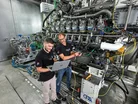
Rolls-Royce has completed successful trials at its demonstration site in Friedrichshafen, Germany of what could be the world's first high-speed marine engine operating solely on methanol fuel.
The development emerged from the meOHmare research project, which brought together Rolls-Royce, injection system specialist Woodward L'Orange and the WTZ Roßlau technology and research centre in a collaborative effort.
Funding for the project came from the German Federal Ministry for Economic Affairs and Energy, with the initiative set up to deliver a complete concept for a CO₂-neutral marine engine running on green methanol by the end of 2025.

Engineers can face distinct challenges with methanol compared to traditional fuels such as diesel.
Diesel differs from methanol in combustion behaviour, as liquid methanol lacks the property of spontaneous ignition. This means that that an entirely new form of injection technology had to be developed.
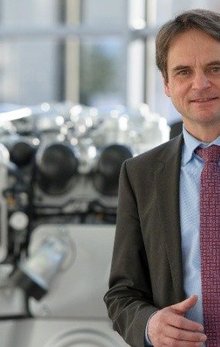
"We have fundamentally redesigned the combustion process, the turbocharging and the engine control system – and even adapted our test bench infrastructure," explains Dr. Johannes Kech, Head of Methanol Engine Development in the Power Systems division at Rolls-Royce.
"Initial tests show that the engine is running smoothly – now it's time for fine-tuning."
Market potential for methanol engines
Operators of ferries, yachts and supply vessels looking to lower their carbon footprint represent the target market for the single-fuel methanol engine.
The International Maritime Organization's Net Zero Framework would look to transition global shipping to green fuels if approved and could apply financial penalties where emissions reductions are not met.
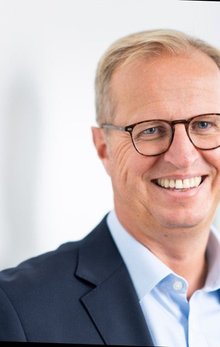
"With this successful test run, we are sending a clear signal: green methanol is a future-oriented fuel – and the technology for it is here," says Denise Kurtulus, Senior Vice President Global Marine at Rolls-Royce.
Denise says that the team's task now is to create the conditions for a wider use of the technology.
A dual-fuel concept capable of operating on both methanol and diesel is being developed by Rolls-Royce in parallel, designed as a transitional technology whilst green methanol infrastructure becomes more established.
Rolls-Royce's decarbonisation strategy
The initiative aligns with Rolls-Royce's 'lower carbon' strategic pillar, which sits within its multi-year transformation programme.
Dr. Jörg Stratmann, who is CEO of Rolls-Royce Power Systems AG, believes that the development represents a genuine world first in engineering.
"To date, there is no other high-speed engine in this performance class that runs purely on methanol," he says.
"We are investing specifically in future technologies in order to open up efficient ways for our customers to reduce CO₂ emissions and further expand our leading role in sustainable propulsion systems."
Green methanol in shipping
Production of green methanol uses electricity from renewable energies through a power-to-X process, which could make its operation CO₂-neutral.
Compared with other sustainable fuels, methanol offers genuine practical benefits, being both biodegradable and straightforward to store.
Renewable energy has long faced storage challenges, meaning a low-carbon fuel that can be stored in bottles or canisters could ease the transition away from gas or oil.
"For us, methanol is the fuel of the future in shipping – clean, efficient and climate-friendly," Denise explains.
"It burns with significantly lower emissions than fossil fuels and has a high energy density compared to other sustainable energy sources."
Whilst still in early stages, this development could represent an important milestone in the maritime sector's decarbonisation journey.
Widespread adoption of green methanol may depend on infrastructure availability and accessibility, alongside the government regulations and incentives that emerge.
Company portals

Executives
Denise Kurtulus
Senior Vice President Global Marine & Mining Business
Dr. Johannes Kech
Head of Methanol Engine Development in the Power Systems division
Dr. Jörg Stratmann
CEO & Board Chairman of Rolls-Royce Power Systems AG, Member of Rolls-Royce Executive Management