Tesla’s Focus on Robots, Solar & Tech Sees EV Sales Drop
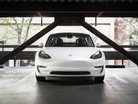
The second quarter of 2025 marked a notable decline in Tesla's electric vehicle (EV) deliveries, positioning the company in an interesting phase of its technological pursuits.
Despite falling short by nearly 3,000 vehicles to meet the anticipated delivery of 384,112 units, this situation hasn't dampened Tesla's stock performance. The firm's unrelenting strides into areas like robotaxis, humanoid robotics and solar energy solutions have sparked interest among investors and industry observers.
Shifting EV market dynamics
For years, Tesla has been a prominent figure in the US EV market, with a commanding share peaking at 75% in the first quarter of 2022.
However, the landscape has evolved dramatically, with Tesla's market share dipping to 43.5% by early 2025. Competitors such as General Motors are emerging as formidable rivals, thanks to an extensive array of EVs offered across its Chevrolet, Cadillac, GMC Hummer, and Buick brands.
Cassandra Garber, Chief Sustainability Officer at General Motors said: “We’re now the #2 EV company in the US, thanks to the dozen EV models we offer across the Chevrolet, Cadillac, GMC Hummer and Buick brands.
On the global stage, Tesla faces substantial competition from the likes of BYD, which captured 22.2% of the global EV market in 2024, leaving Tesla with a 10.3% share. Other manufacturers, including Wuling, BMW, and Li Auto, are steadily advancing in this competitive arena.
As Tesla juggles between maintaining its market foothold and diversifying its business model, industry experts are keenly watching how its ventures into energy and automation will impact its core vehicle business.
Solar and energy storage ventures
Expanding beyond automotive manufacturing, Tesla has made significant investments in the solar energy sector. It initially ventured into this domain by acquiring SolarCity in 2016 for $2.6 billion, with the objective of building a fully integrated sustainable energy enterprise.
Tesla not only constructs photovoltaic solar systems but also provides installations and associated services. The company's collaborations in this sphere are noteworthy, as demonstrated by its 15.3 GWh storage agreement with Intersect Power in 2024.

“Intersect continues to be an exceptional partner and their development expertise combined with the plug-and-play nature of Tesla’s vertically integrated technology enables the speed and scale needed to enhance grid resilience and support greater renewables integration,” said Mike Snyder, VP, Energy and Charging at Tesla.
Innovations in autonomous technology
Tesla is also making waves with its robotaxi innovations, which rely on camera-based systems rather than the radar and LiDAR technology utilised by competitors such as Waymo and Zoox.
While the use of cameras for autonomous navigation may present cost advantages, it also poses challenges, drawing both regulatory scrutiny and public attention. The US National Highway Traffic Safety Administration (NHTSA) has emphasized that it "does not pre-approve new technologies or vehicle systems," insisting that manufacturers adhere to safety standards as they self-certify their compliance and undergo investigation for potential safety concerns.
Tesla's launch of autonomous vehicles in June 2025 in Austin, Texas, faced scrutiny when online footage appeared to show robotaxis breaching traffic laws. This led the NHTSA to initiate contact with Tesla to address the matter, signifying ongoing regulatory dialogue as Tesla advances in automated driving technologies.
Exploration of robotics and AI
In another bold foray, Tesla is developing Optimus, a humanoid robot also known as Tesla Bot.
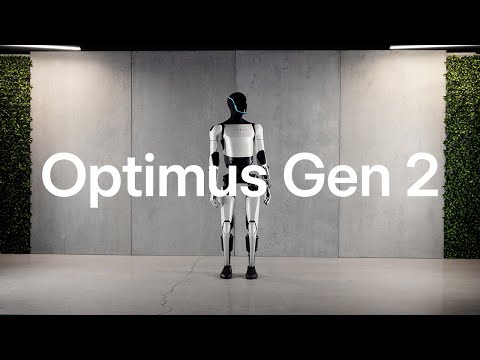
Although initially announced in 2021 with the claim of sharing its AI system with Tesla cars, the project has captured significant attention. Tesla's CEO Elon Musk indicated that these robots could eventually surpass the vehicle business in importance. According to Tesla, Optimus will handle tasks that are potentially hazardous, monotonous, or tedious, harnessing sophisticated artificial intelligence capabilities.
This diversification into different tech dimensions positions Tesla at a crucial juncture. As the company continues to explore these innovative areas, its future trajectory could have far-reaching implications for both the automotive industry and the broader landscape of energy and technology advancements.