
Baker Hughes and H&P Join Forces on US Geothermal Push

On paper, geothermal energy has the potential to completely transform the way power is generated. In reality, the International Energy Agency says that it currently accounts for less than 1% of the global energy mix.
Its upsides are undeniable. Geothermal plants can produce renewable, carbon-free electricity around the clock.
It works in a remarkably simple way too. A deep hole is drilled into the ground and the natural heat emissions from the Earth's core are used to spin turbines. This heat is constant, meaning geothermal energy is naturally reliable, unlike solar and wind which are intermittent.
Its potential is so great, in fact, that the IEA estimates that using thermal resources at a depth of 8km below the planet's surface can deliver geothermal capacity of just below 600TW. For context, the world's total energy consumption is currently around 20TW.
So, why is geothermal energy yet deliver on that promise? There are three main factors: money, technology and geography.
A new collaboration between energy stalwarts Baker Hughes and Helmerich & Payne (H&P) is attempting to overcome those barriers. The two companies have announced a partnership that will see them work together on geothermal exploration and development across the US.
The deal, announced on 20 May, centres on H&P providing a geothermal-capable land drilling rig dedicated exclusively to geothermal activity, while Baker Hughes will contribute its subsurface evaluation, well construction and energy systems expertise.

Drilling down into the details
The practical structure of the arrangement reflects how fragmented geothermal development has often been.
Operators have frequently had to stitch together contractors, equipment and technical expertise from different providers, each with their own competing priorities.
By contracting a dedicated rig and pairing it with Baker Hughes' subsurface capabilities, the collaboration is designed to give customers a more integrated pathway from project evaluation through to drilling and well completion.
The rig is expected to be deployed later this year, targeting key geothermal regions in the US, though neither company has specified which formations or states are in scope.
Amerino Gatti, Baker Hughes' Executive Vice President of Oilfield Services & Equipment, frames the move as a deliberate attempt to shift geothermal from ambition to execution.
"Geothermal energy plays a critical role in meeting growing power demand by providing clean, reliable baseload generation," he says.
"This collaboration reflects a deliberate step to move its development in the US from concept to reality.
"By working together, Baker Hughes and Helmerich & Payne are helping customers advance these critical energy projects with greater confidence and deliver reliable, sustainable power."
The benefits of geothermal power
The appeal of geothermal energy lies in what solar and wind cannot easily provide: power that runs continuously regardless of weather or time of day.
As data centre operators, industrial customers and utilities face pressure to decarbonise without sacrificing grid reliability, baseload renewables have attracted renewed attention from both developers and investors.
Baker Hughes and H&P are not the only companies eyeing the space, but the pairing of a major oilfield services firm with one of North America's largest drilling contractors does carry some weight.
H&P operates 202 land rigs in the United States alone, giving it the operational scale to support a broader geothermal push if demand materialises.
Trey Adams, H&P's President and CEO, says that the collaboration represents an extension of the company's existing capabilities rather than a departure from its core business.
"This agreement underscores Helmerich & Payne's commitment to supporting emerging energy opportunities through our drilling technologies and operational expertise," he explains.
"We are pleased to collaborate with Baker Hughes to support the advancement of geothermal development in the US."
Scaling up
Both companies have been careful to position the collaboration as scalable, suggesting this initial rig deployment is intended as a template for future projects rather than a one-off arrangement.
Whether the broader US geothermal sector develops quickly enough to justify that ambition remains to be seen.
Permitting timelines, subsurface uncertainty and the relative immaturity of geothermal project finance all continue to complicate development, even as political and commercial interest grows.
For now, the commitment of a dedicated drilling rig is a concrete step in a sector that has rarely been short of interest but has often struggled to convert it into operating wells.
Company portals


Executives
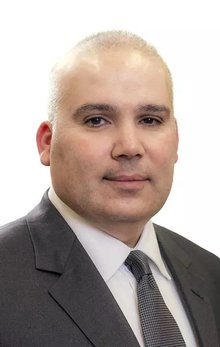
Amerino Gatti
Executive Vice President of Oilfield Services & Equipment

Trey Adams
President and CEO