How The Carbon Trust Captures Offshore Wind Potential

A core challenge since 2001 for the Carbon Trust has been de-risking and scaling emerging low-carbon technologies particularly those in the pre-commercial phase.
With almost a quarter-century of experience, the Carbon Trust is finding this challenge more manageable through its accelerator model.
This model combines government and corporate funding to invest in applied innovation reduce technology costs and overcome market barriers which enables wider commercial adoption.
Accelerating climate solutions through collaboration
Michael Rea, Chief Executive at the Carbon Trust, said on LinkedIn: “In the current geopolitical and economic environment, with business leaders under pressure to meet short-term needs while staying focused on long-term climate goals, we’ve found that accelerators and other industry collaboration programmes can be a powerful path forward."
Accelerators and industry collaboration programmes offer a practical route to sustainable solutions.
The Carbon Trust suggests that by sharing costs and risk, companies can build solutions that are more resilient, cost-effective and scalable.
This approach could promote sector-wide climate action while unlocking growth and economic opportunities.
The Offshore Wind Accelerator blueprint
The Carbon Trust’s Offshore Wind Accelerator (OWA) illustrates this model in practice.
Launched in 2008 with initial support from the UK government and leading corporate partners, it has since developed into a large-scale research development and demonstration programme.
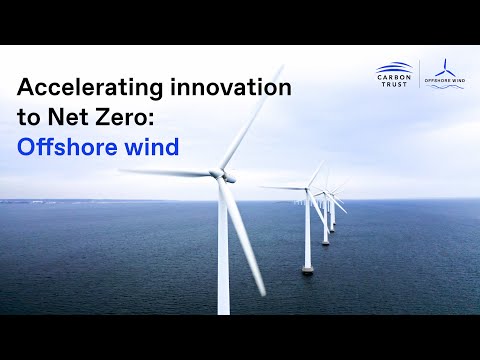
According to the Carbon Trust, it has invested more than US$100m in innovation to date helped cut the levelised cost of offshore wind by about 15% and is estimated to deliver US$34bn in savings against 2030 growth targets.
Three main factors contributed to its success starting with a clear commercial opportunity and a well-defined problem.
Partners saw the potential for offshore wind across the UK and EU due to the North Sea’s exceptional wind resource.
At the same time the government recognised a chance to position the UK as a global leader which would support growth, strengthen energy security and advance climate goals.
The challenge was straightforward: reduce the levelised cost of offshore wind to undercut gas. This clarity focused innovation and aligned stakeholders behind a single objective.
A model for market growth and innovation
Success also depended on aligning incentives policy support and pooled resources to speed up market growth while keeping sustainability at the core of the programme.
The pooled finance model meant every US$1 of public funding initially attracted US$2 from the private sector.
For industry partners, each US$1 invested ultimately leveraged US$13 of additional innovation funding across the accelerator.
A two-pot model balanced a shared applied R&D fund with a larger opt-in demonstration pot.
Long-term policy signals such as capacity commitments and evolving mechanisms like UK Contracts for Difference gave investors the confidence to commit capital at scale.
Government support was front-loaded to de-risk the early stages innovation priorities were defined jointly and demonstration funding enabled technologies to be proven in real-world conditions.
The model created a pathway for sector-wide change where innovators retained their IP accessed funding to build and deploy solutions and stimulated market-led participation.
It also catalysed further collaboration including the Integrator programme to maximise offshore wind’s role in a low-cost, predictable and low-carbon energy system.
The Carbon Trust’s OWA can be seen as an example of what is possible when business sectors collaborate on a shared goal.
Michael says: “Its success has been a catalyst for the development of other industry collaboration programmes we are currently working on for hydrogen coal transition energy access and a food and agriculture sector."
Company portals

Executives
Michael Rea
Chief Executive