Carlsberg's Annual Report: What are the Energy Headlines?

Carlsberg Group’s 2025 Annual Report highlights its continued push to decarbonise energy use across its brewing operations and supply chain. The beverage industry produces around 1.5 billion tonnes of CO₂e annually – about 3.8% of total global emissions – according to CDP.
Carlsberg’s climate and energy goals form a cornerstone of its broader ESG agenda, focusing on achieving a net zero value chain and transitioning to fully renewable energy sources.
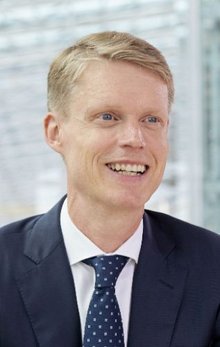
Henrik Poulsen, Chair of Carlsberg Group, says: “We’re strengthening Carlsberg for the long term, aligning our strategy around a broader portfolio, strong capabilities and rigorous execution.
“The Board is confident that this will make Carlsberg even more resilient, benefit our customers and consumers and deliver compounding earnings growth and value for our shareholders.”
Climate commitments and renewable energy targets
Carlsberg aims to achieve net zero across its entire value chain by 2040. A key pillar of the plan is transforming its energy mix – eliminating carbon emissions from brewing operations and sourcing electricity exclusively from new renewable projects.
By 2030, Carlsberg targets zero carbon emissions at its breweries and a 30% reduction in relative value chain emissions. These benchmarks depend on major clean energy transitions, improved process efficiency and wider adoption of renewable heat and power technologies.
The company is also embedding regenerative agriculture practices into its raw material supply chain, linking sustainable farming with energy and emissions performance across its global operations.
Simon Boas Hoffmeyer, VP, Global Head of Sustainability & ESG at Carlsberg Group, writes on LinkedIn: “ESG is a marathon, not a sprint – true progress comes from consistency and focus on day-to-day implementation.
“Looking back at 2025, I’m genuinely proud of what our teams across Carlsberg Group have achieved.
“Organically we have seen progress across the board. None of these results happen overnight; they come from thousands of small decisions, tough prioritisation and colleagues who care deeply about doing things the right way.”
Simon Boas Hoffmeyer has been ranked in Sustainability Magazine's Top 250 Leaders list. Read the full list here.
Powering breweries through innovation
Carlsberg’s climate transition plan, Together Towards ZERO and Beyond, outlines its roadmap to decarbonise production energy use. The company covers 92% of its 2015 baseline Scope 1 and 2 emissions through its operational boundary.
To replace fossil-based energy, Carlsberg is scaling electric and biomass boilers, introducing heat pumps and piloting biogas recovery at wastewater treatment plants. These technologies form the backbone of its strategy to move all sites toward renewable and circular energy systems.
The shift aligns with growing momentum in industrial energy efficiency, itself becoming a marker of corporate competitiveness across energy-intensive sectors like beverage manufacturing.
All sustainability, net zero and sustainable supply chain leaders should attend:
- Sustainability LIVE: The Net Zero Summit - QEII Centre, London, March 4-5
- Sustainability LIVE: The US Summit - Navy Pier, Chicago, April 21-22
- Co-located with Procurement & Supply Chain LIVE, the events unite ESG, sustainability and energy professionals to discuss how renewable transition and supply resilience are shaping corporate strategies.
Tickets can be booked online for The Net Zero Summit and The US Summit.

Circular packaging linked to energy savings
Carlsberg is also connecting material circularity with its energy objectives. By 2030, it aims for 100% recyclable, reusable or renewable packaging and a 90% global collection and recycling rate.
In 2025, 95% of its packaging already met those standards, thanks to improvements in PET design and recyclability. These changes contribute indirectly to energy efficiency by reducing demand for virgin materials and associated manufacturing emissions.
Through energy-efficient operations, renewable sourcing and circular resource use, Carlsberg is positioning its breweries as energy transition benchmarks within the global beverage industry.
Company portals

Executives
Henrik Poulsen
Chair

Simon Boas Hoffmeyer
VP, Global Head of Sustainability and ESG