CATL & CarbonScape Strike Deal on 'Biographite' EV Batteries
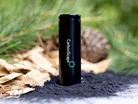
Contemporary Amperex Technology Co., Limited, more commonly known as CATL, is the world's largest EV battery manufacturer, accounting for 38% of the global market.
The company operates 15 battery manufacturing facilities worldwide, supplying battery technology to leading automotive brands including Tesla, BMW, Mercedes-Benz and Volkswagen.
It has entered a strategic investment partnership with CarbonScape, a company developing sustainable, bio-based graphite for battery applications.

Making sustainable batteries, sustainably
The partnership brings together CarbonScape's biographite technology with CATL's expertise in manufacturing, industrialisation and large-scale deployment.
As part of the agreement, CATL will take board representation and play a central role in supporting the commercial expansion of CarbonScape's technology.
The collaboration comes as demand grows for low-carbon, locally sourced and commercially competitive graphite to support battery manufacturing across the US and Europe, helping to build more resilient energy supply chains.
Oscar Luo, Executive President, Global Head of BD, Licensing and Venture Management at CATL, says: “Sustainable innovation across the battery value chain is essential to advancing the global energy transition.
“CarbonScape’s technology introduces a novel method for producing battery-grade graphite from renewable resources, embodying a true breakthrough in material science.
“We are excited to support this pioneering effort – one that aligns with the vision of a zero-carbon future by redefining how critical materials are sourced and produced.
“This is not just about scaling a process; it’s about catalysing a shift toward fundamentally cleaner and smarter energy solutions.”
Strengthening energy supply chains
The rapid expansion of electric mobility and stationary energy storage is expected to significantly increase global demand for battery-grade graphite in the coming years.
CarbonScape has developed a process that transforms forestry by-products into battery-grade graphite suitable for use in lithium-ion batteries, offering an alternative to conventional graphite production.
Under the partnership, CATL will provide expertise in manufacturing, process optimisation and commercialisation to help accelerate deployment.
Ivan Williams, CEO of CarbonScape, says: “This partnership is about far more than capital. It provides access to CATL’s unparalleled expertise in scaling and mass production, world-class facilities, global market reach and a clear pathway to gigafactory-scale deployment.
“It validates the strategic importance of biographite in the future of electrification and uniquely aligns technical de-risking with route-to-market readiness.
“Together, we aim to bring commercial biographite production online by the end of the decade.”
Supporting commercial deployment
The long-term collaboration includes both technical and commercial milestones designed to help bring CarbonScape's technology to industrial scale.
The companies will work together to validate the technology at demonstration scale using CATL facilities before preparing it for deployment at full-scale commercial plants.
Alongside Lochpine Capital, CATL has also become a strategic shareholder in CarbonScape and will provide ongoing strategic support as the company expands.
The investment will help finance technology de-risking and scale-up activities, strengthening CarbonScape's readiness for future commercial production.
The agreement also includes equity-based incentives linked to the successful commercial deployment of the company's technology.
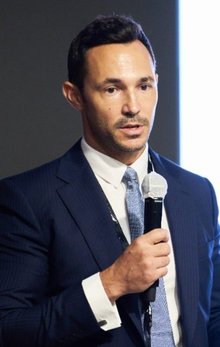
Vincent Ledoux-Pedailles, Chief Commercial Officer at CarbonScape, says: “Graphite is the forgotten giant of the battery supply chain – the single largest material in every EV battery by volume, yet the majority of that supply is oil-based.
“What we have built at CarbonScape is the only proven pathway to produce battery-grade graphite from forestry residues, at target cost parity with conventional graphite and with a carbon-negative footprint.
“CATL’s investment is the most powerful validation this technology could receive.”
Company portals


Executives
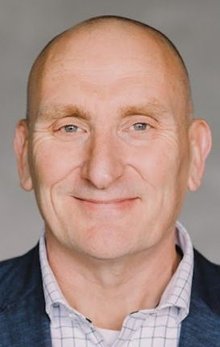
Ivan Williams
CEO
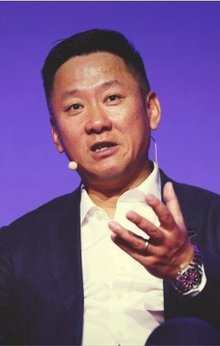
Oscar Luo
Executive President, Global Head of BD, Licensing and Venture Management
Vincent Ledoux Pedailles
Chief Commercial Officer