
How Chalmers Created the World's Most Powerful EV Battery

Scientists at Chalmers University of Technology in Sweden have unveiled what they describe as the “world’s strongest” battery – a carbon fibre composite design that could reshape how energy is stored and used in electric vehicles (EVs).
Built from carbon fibre that acts both as a structural material and an energy source, the research – led by Professor Leif Asp – could help make EVs lighter while significantly boosting performance.
“The major technological shifts and the green transition require world-class research and long-term capacity building,” says Martin Nilsson Jacobi, President of Chalmers University of Technology.
Structural energy storage comes of age
Structural or “massless” batteries blend energy storage directly into the body of vehicles and machines.
First explored in the late 2000s, these dual-purpose systems eliminate the heavy, space-consuming packs of conventional batteries, with the potential to transform mobility and energy efficiency from aircraft to consumer devices.
Early military research in 2008 examined lightweight energy storage for soldiers’ equipment. Two decades later, structural batteries could transform how EVs and even aircraft draw, store and distribute power.
Chalmers’ recent breakthrough could signal the start of large-scale application, although refinements are still needed to increase power output.
Unlike all-solid-state batteries, these carbon fibre designs use a porous composite soaked in a gel-like electrolyte, allowing fast ion flow while maintaining exceptional stiffness.
“Investing in light and energy-efficient vehicles is a matter of course if we are to economise on energy and think about future generations,” explains Leif Asp, who is a professor at the Department of Industrial and Materials Science at Chalmers and led the research.
"We have made calculations on electric cars that show that they could drive for up to 70% longer than today if they had competitive structural batteries."
A history of energy and innovation
Collaborative work between Chalmers and KTH in 2010 produced one of the first functional laminated structural batteries, pairing carbon fibre with glass fibre as a separator.
That early success inspired research groups worldwide – from Imperial College London’s “STORAGE” project under Professor Emile Greenhalgh to Volvo’s 2013 lightweight car boot lid capable of energy storage.
In 2017, Texas A&M’s Jodie Lutkenhaus demonstrated similar strength using aramid nanofibres and graphene, expanding the range of potential materials.
Then, in 2021, Chalmers refined its chemistry with LFP-coated aluminium foil before shifting towards carbon fibre to reduce weight in 2024.
Carbon fibre delivers energy density
The 2024 study at Chalmers revealed that carbon fibre functions both as a load-bearing structure and energy-storing electrode.
Carbon fibre coated with lithium iron phosphate (LFP) forms the positive side, while cellulose separates the layers and keeps the system from short-circuiting.
The layers are impregnated with liquid resin, cured to provide rigidity and left porous enough for ions to move through. The result is a robust, energy-dense cell achieving 46 W/kg and stability over 1,000 cycles.
Chalmers researcher Richa Chaudhary says: “We have succeeded in creating a battery made of carbon fibre composite that is as stiff as aluminium and energy-dense enough to be used commercially.
"Just like a human skeleton, the battery has several functions at the same time."

Energy safety and system resilience
Integrating batteries into a vehicle’s chassis introduces new safety challenges. A structural battery must serve as both power source and protective shell.
Researchers are analysing crash dynamics to understand how carbon fibre composites behave under impact and how to prevent electrical or thermal failures.
Because carbon fibre tends to fracture instead of bend, ensuring safety while maintaining performance remains crucial.
Repairability and system longevity will also determine whether this technology becomes viable beyond the laboratory.
Company portals


Executives
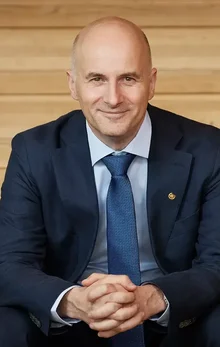
Martin Nilsson Jacobi
President