
Balfour Beatty: Constructing Net Zero Teesside
Energy production is responsible for 75.7% of greenhouse gas emissions according to the World Resources Institute.
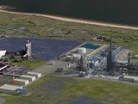
Net Zero Teesside Power is set to make a change to this in the UK as the world’s first gas-fired power station with carbon capture and storage technology, part of the country's first decarbonised industrial cluster.
Ian Hunter, Managing Director, Net Zero Teesside Power, said: “As the project progresses into the execution phase, we look forward to delivering on our ambition to create and support thousands of jobs whilst generating flexible, dispatchable low-carbon power for the UK.”

The plant is designed to produce low-carbon electricity and capture carbon emissions, using a combined cycle gas turbine to generate up to 742 MW of power, equivalent to the average electricity needs of more than a million UK homes.
UK Energy Secretary, Ed Miliband, said: “This investment launches a new era for clean energy in Britain – boosting energy security, backing industries and supporting thousands of highly skilled jobs in Teesside and the North East.
“This is the Government’s mission to make the UK a clean energy superpower in action- replacing Britain’s energy insecurity with homegrown clean power that rebuilds the strength of our industrial heartlands.”
Constructing sustainable power
Balfour Beatty, under a US$1.1bn contract from Technip Energies, has been appointed as the lead construction partner for the Net Zero Teesside Power project.
Collaborating with Technip Energies and GE Vernova alongside support from Shell Catalysts & Technologies, the team will bring to life a combined cycle gas-powered generation plant.
The Net Zero Teesside Power contract is part of a collaborative venture between BP and Equinor.
Leo Quinn, Balfour Beatty Group Chief Executive, says: “Net Zero Teesside Power is an ambitious scheme, forging the path towards the sustainable infrastructure of the future and positioning the UK as a leader in cleaner, greener energy consumption.”
“The scheme will not only be a critical driver in achieving net zero but will also play a key role in boosting regional economic growth in the North-East of England; generating thousands of employment opportunities both in the immediate term and in the future.”
Balfour Beatty has been contracted to build the post-combustion carbon capture system that is anticipated to capture up to two million tonnes of carbon dioxide per year.
The carbon dioxide will then be compressed and stored under the North Sea by the Northern Endurance Partnership.
When will work begin?
Construction is set to begin later in 2025 with completion anticipated by 2028.
This follows the UK Government's US$29.6bn commitment to similar initiatives targeting carbon emission reductions in energy, industrial and hydrogen sectors.
During construction, Balfour Beatty plans to employ 1,500 people at its peak, allocating at least 5% of the workforce to apprentices or graduates as part of its 5% club commitment.
Louise Kingham, Senior Vice President, Europe & Head of Country, UK at bp said: “The East Coast Cluster can play a critical role in the UK Government’s levelling up ambition, supporting thousands of jobs and investing in local communities.
“Teesside and the Humber were once the industrial heart of the UK, and we're paving the way for them to become the green heart of the country’s energy transition, shepherding in the next generation of industry and ways of working.”