How E.ON Is Driving Decarbonisation In The Energy Sector
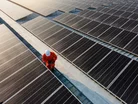
The energy sector is the largest single contributor to global greenhouse gas emissions, producing approximately 75% of the total.
In response, companies like E.ON are working to decarbonise the industry through the installation of solar panels and smart metres.
These technologies are crucial for building a cleaner energy future.
E.ON's efforts have been noted, with it placing 32nd in Sustainability Magazine's Top 250 World’s Most Sustainable Companies 2025.

E.ON's roadmap to net zero
E.ON has established a clear roadmap to reduce its environmental impact, setting a target to decrease its Scope 1, 2 and 3 emissions by at least 50% by 2030 from a 2019 baseline.
These scopes cover direct emissions from its own operations, indirect emissions from purchased energy, and all other indirect emissions from its value chain.
E.ON's ambitions extend further with an aim to cut Scope 1 and 2 emissions by 100% by 2040 and achieve a 100% reduction in Scope 3 emissions by 2050.
These objectives align with the Paris Agreement's goal of limiting global warming to 1.5°C above pre-industrial levels.
To reach these targets, E.ON is implementing changes across its operations including making all company buildings carbon neutral and transitioning its vehicle fleet to be 100% electric.
The strategy also extends to its value chain by encouraging employees to adopt sustainable transport options like cycling or electric cars.
E.ON also helps its customers transition to green power solutions such as heat pumps and solar panels.
Internally E.ON, has reduced single-use plastics at its offices and ensures only environmentally friendly cleaning products are used across its UK sites.
Leo Birnbaum, Chief Executive Officer at E.ON, says: “Sustainability is at the heart of our strategy and will be the benchmark for our actions in the future.
"As playmaker of the green transformation in Europe, the decarbonisation of the energy sector is a key focus to us.”
Developing renewable energy solutions
E.ON has been a participant in the renewable energy sector for over three decades.
E.ON began constructing its first UK wind farm in 1991 and has since invested more than £3.3bn in UK renewable projects.
Building on this experience, E.ON's focus is now on delivering smarter energy solutions directly to its consumers through the installation of smart metres, solar panels, EV chargers, and heat pumps.
As of 2024, E.ON has fitted solar panels on more than 16,000 homes, aiding consumers in their move towards cleaner energy sources.
In 2019, E.ON adjusted its strategy to centre on its customers, empowering them to take climate action and embrace sustainability within their homes and local areas.
A wider commitment to sustainable communities
Beyond its environmental goals, E.ON demonstrates a commitment to social responsibility through its focus on diversity and inclusion.
E.ON has been featured in The Inclusive Top 50 UK Employers List for six consecutive years.
As a Disability Confident employer since 2017, E.ON ensures that candidates with disabilities are provided with reasonable adjustments during the application process and throughout their employment.
E.ON also supports colleague-led inclusivity networks which offer a supportive space for areas such as racial inclusion, gender equality, LGBTQ+, menopause and mental health.
Chris Norbury, CEO of E.ON UK, says: “For all of us at E.ON a better energy future isn’t only about cutting carbon and taking action for climate.
“It’s also about our wider commitment and contribution to the lives of our customers our colleagues and our communities.”
Company portals

Executives

Chris Norbury
Chief Executive Officer at E.ON UK
Leo Birnbaum
Chief Executive Officer and Chairman of the Board of Management