Elon Musk at the WEF: What Did He Say About Global Energy?
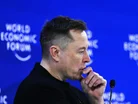
Elon Musk, the world's richest man and potential the first-ever trillionaire, made a surprise appearance at the World Economic Forum's Annual Meeting this week in Davos, Switzerland.
As the CEO of Tesla, one of the global economy's most influential EV manufacturers and climate technology companies, Musk's appearance served to place the spotlight squarely on the energy transition, as well as artificial intelligence.
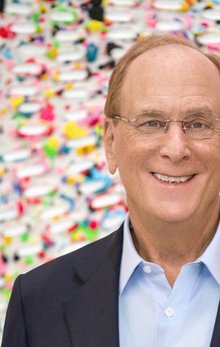
Speaking with BlackRock CEO Larry Fink, Musk used the high-profile event to outline his latest vision for a future powered by renewable and autonomous technologies.
Musk, who once criticised the WEF as an “elitist” forum, framed his ambition as a simple goal: to "maximise the probability that civilisation has a great future".
Autonomous transport and the energy economy
Musk reaffirmed his confidence in the kind of self-driving technology that Tesla is producing, describing it as "essentially a solved problem".
Tesla’s Cybercab and robotaxi network have encountered early challenges in the US, with federal investigations into safety compliance, yet Musk said rollout continues apace.
He announced Tesla is pursuing regulatory approval for "supervised full self driving" in both Europe and China, adding that global adoption is a near-term objective.
Widespread electrified autonomy, he suggested, would significantly cut transport-related emissions while shifting vehicle energy demand further towards renewable supply.
Solar power still hampered by tariffs
Turning to the generation side of the energy equation, Musk described solar energy as the linchpin of the world’s clean-power potential. He told the audience that the US could meet its national electricity needs using only a small portion of land in the Southwest.
"You could take a small corner of Utah, Nevada or New Mexico... to generate all of the electricity that the US uses," he said.
Yet he warned that "tariff barriers for solar are extremely high," a structural issue that “makes the economics of deploying solar artificially high”.
He linked these barriers to the surging power requirements of AI data centres, cautioning that current policy risks slowing deployment of the clean energy infrastructure those systems will depend on.

Musk's differences with Trump
The conversation with Fink also underscored Musk’s policy split from US President Donald Trump on renewables.
While Trump has backed oil and gas resurgence, Musk’s comments defended solar power as critical to national resilience.
He stressed that securing enough electricity to fuel AI and automation is “critical”, aligning energy security with innovation.
The remarks deepen an ongoing debate about whether US energy strategy should prioritise fossil stability or renewable independence.
AI, robotics and renewable integration
Musk predicted that artificial intelligence would soon surpass human capability, describing 2026–27 as a potential tipping point.
He linked this AI surge to massive new energy demands – a feedback loop in which smarter systems both require and help optimise renewable networks.
He also spoke of robotics as part of "the path to abundance for all", suggesting that a future economy led by intelligent machines will need sustainable, consistent energy supplies to function reliably.

Tesla’s Optimus and the power demand of automation
Tesla’s Optimus humanoid robot is moving from prototype to production, with factory trials evolving into consumer-ready models by next year.
"By the end of this year, I think they will be doing more complex tasks, and probably by the end of next year, I think we'd be selling humanoid robots to the public," he said.
The rise of such energy-intensive devices points to greater electricity consumption in homes and workplaces alike, placing further emphasis on building robust renewable generation and storage systems.
Safeguarding the future of intelligent energy
While optimistic about technological progress, Musk urged caution.
"We need to be very careful with robotics. We don't want to find ourselves in a James Cameron movie," he said, alluding to the dystopian risk of unchecked AI development.
These comments comes as xAI, his own AI firm, faces regulatory pressure over explicit image generation via its Grok chatbot.
Musk closed his Davos address with a more philosophical note, describing ageing as “a very solvable problem” and joking about his personal ambitions beyond Earth: "People ask me ‘do I want to die on Mars? and I'm like: 'yes, but not on impact'."



Executives
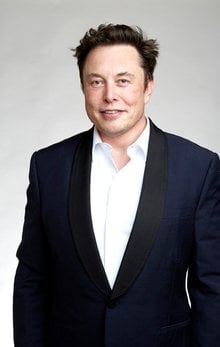
Elon Musk
Tesla CEO
Larry Fink
Chairman and Chief Executive Officer