
Elon Musk: Is Energy the New Currency of the AI Era?
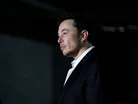
Elon Musk expects that developments in AI and robotics will bring in an era where employment becomes a matter of choice rather than necessity.
During a conversation with Nikhil Kamath, the Chief Executive of Tesla and SpaceX proposed that society could be heading towards an age of plenty where "if you can think it, you can have it".
"In a future where anyone can have anything, you no longer need money as a database for labour allocation," Elon said.
"If AI and robotics are big enough to satisfy all human needs, then the relevance of money declines rapidly, I'm not sure we will have it."
He suggests this transformation could materialise by approximately 2045, with work becoming more like a hobby.
His projection depends on AI and robotics delivering extraordinary quantities of goods and services, potentially creating what he describes as a "Universal High Income Society".
What is transformative AI?
Research from the National Bureau of Economics Research titled "A Research Agenda for the Economics of Transformative AI" characterises Transformative AI (TAI) as "AI that enables a sustained increase in total factor productivity growth of at least 3 to 5 times historical averages".
Dario Amodei, Chief Executive of Anthropic, has conceptualised this form of "powerful AI" as "a country of geniuses in a data centre".
Elon has previously said that the introduction of humanoid robots could trigger substantial growth in goods and services production, potentially generating unprecedented abundance.
TAI that exceeds human cognitive capabilities might forge connections across different fields that specialists confined to individual domains cannot achieve, dramatically accelerating innovation rates.
Nevertheless, some academic work cautions that benefits from automation could concentrate amongst capital holders rather than workers, unless technological progress is steered to enhance rather than eliminate human labour.
Elon contends, however, that amassing riches in such an economy would serve no purpose.
"If you are stranded on a desert island with a trillion dollars, it will be pointless because there is no labour to allocate," Elon said.
Energy as currency
Following Elon's hypothesis, in an abundance-driven economy where traditional currency loses meaning, he proposes "energy will be the true currency".
Should AI and robotics begin manufacturing semiconductors and solar technology whilst extracting natural resources to sustain AI systems and robotic infrastructure, this could create a self-sustaining energy loop.
"Once that cycle is complete," Elon claims, "we decouple from the monetary system".
This transition would fundamentally reshape economic structures, with energy production and distribution becoming the primary measure of wealth and power.

In such a system, access to renewable energy sources and the technology to harness them efficiently would determine prosperity rather than traditional financial instruments.
Beyond this point, he suggests society might face an existential challenge centred on the question "If AI can do things better than you, what is the point of doing things?".
Obstacles to achieving abundance
While Elon's projection appears optimistic, a number of barriers could prevent reaching this economic ideal.
Development constraints related to energy availability and technological limitations might decelerate progress towards abundance.
Research from the International Monetary Fund (IMF) indicates that AI implementation could vary significantly between countries with different levels of infrastructure maturity, potentially advantaging developed nations over emerging economies.
Such disparities could amplify the wealth divide between prosperous and disadvantaged populations, worsening international income gaps.
Dario addressed these inequality concerns in his essay Machines of Loving Grace: "Ideally, powerful AI should help the developing world catch up to the developed world, even as it revolutionises the latter.
"I am not as confident that AI can address inequality and economic growth as I am that it can invent fundamental technologies, because technology has such obvious high returns to intelligence, whereas the economy involves a lot of constraints from humans, as well as a large dose of intrinsic complexity."



Executives

Dario Amodei
CEO and Co-Founder
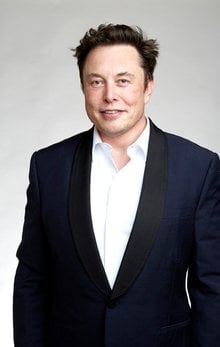
Elon Musk
Tesla CEO