Energy Bills Top of UK Agenda as New PM Cuts Electricity VAT
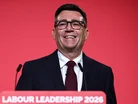
Andy Burnham has announced that one of his first policies as the UK's new Prime Minister will be to cut VAT, or value added tax, on energy bills this winter.
From the start of October, households across England, Scotland and Wales will pay no VAT on their electricity bills for six months, reducing the cost of power during the winter period when demand for heating and electricity reaches its highest point.
The move is expected to cut around £45 (US$60) from the annual bill of the average household, based on Ofgem's current price cap. All in, the policy is expected to cost the Treasury around £850m (US$1.1bn) this financial year.
The measure should provide immediate relief to consumers struggling with energy bills, the cost of which has been inflated by two global energy crises in the past four years.
Burnham described the policy as a way of putting "more money in people's pockets", while Business Secretary Jonathan Reynolds said it would give households some much-needed "breathing space" ahead of winter.
Electricity versus gas
Unlike previous interventions, the VAT cut applies only to electricity rather than gas, reflecting the Government's ambition to accelerate the UK's transition towards electrification.
That means households using technologies such as heat pumps and electric vehicles stand to benefit the most, alongside those that rely entirely on electricity for heating.
In the UK, electricity is more expensive than gas – which is not the case in many European nations – because of the green levies the government places on low-carbon energy. This move to cut VAT will bring the costs closer, but gas will still be the cheaper option when it comes to heating homes.
But how exactly will the tax cut be applied?
Customers on both standard variable and fixed-rate tariffs will receive the reduction automatically, as VAT is applied to the final bill regardless of tariff type.
The policy will not apply in Northern Ireland because post-Brexit arrangements require EU VAT rules to remain in place for electricity. Instead, the Government will provide equivalent funding to the Northern Ireland Executive to deliver alternative cost of living support.
The decision also extends to eligible charities, residential care homes and smaller businesses that already qualify for reduced-rate domestic energy VAT.

Energy prices continue to rise
While the tax cut has been widely welcomed, analysts have warned that many households may see little overall reduction in what they pay this winter.
Energy consultancy Cornwall Insight expects Ofgem's next energy price cap, due to take effect on the same day as the VAT cut, to increase as wholesale gas prices remain under pressure following conflict in the Middle East.
That means the tax saving could largely offset higher electricity prices rather than produce a noticeable fall in bills.
Consumer finance expert Martin Lewis described the measure as "a good totemic step and very welcomed", but cautioned that its practical impact may be limited.
He noted that forecast increases to the October price cap could outweigh much of the saving over the six-month period, although households would still pay less than they otherwise would have done.
The industry reaction
Despite questions over the immediate financial impact, many in the energy sector have welcomed the Government's decision to focus specifically on electricity.
Camilla Born, CEO of the industry-backed campaign Electrify Britain, said the move recognised the need to encourage consumers to switch away from fossil fuels.
She argued that reducing electricity costs supports the UK's clean energy ambitions by making electric heating, transport and industrial processes more affordable, helping reduce dependence on volatile international gas markets.
Richard Neudegg, Director of Regulation at Uswitch, added that removing VAT would soften the impact of any increase in the October price cap while encouraging consumers to consider fixed tariffs that remain below current standard rates.
Meanwhile, Nigel Pocklington, CEO of Good Energy, is enthusiastic about the policy but urges the new Prime Minister to double down in an effort to help the UK economy.
"Any step that helps lower energy bills is welcome, particularly ahead of winter when many households will be facing higher heating bills," Nigel says.
"Removing VAT from electricity bills will provide some immediate relief, and it's a positive sign that bringing down energy costs is one of Andy Burnham's first announcements.
"It's also important to recognise that today's measures will do little for many businesses, which continue to face high energy costs that hold back investment and growth.
"Supporting British businesses through lower, more stable energy prices must be an equally important part of the Government's growth agenda."
Calls for deeper reform
Charities and campaign groups have welcomed the announcement but argue it does not address the deeper structural problems facing the UK's energy market.
The End Fuel Poverty Coalition said millions of households continue to spend an unaffordable proportion of their income on energy, while the industry body Energy UK estimates consumers now owe suppliers a record £5.5bn (US$7.35bn) in unpaid bills.
National Energy Action also pointed out that the biggest beneficiaries will be households with higher electricity consumption, whereas many lower-income families continue to rely on gas heating and are unable to afford the upfront costs of technologies such as solar panels, batteries or heat pumps.
Think tank Nesta has meanwhile urged ministers to go further by reforming the way electricity costs are recovered from consumers, arguing broader changes could reduce average household bills by around £130 (US$174) a year.
For now, Burnham's VAT cut represents an early signal of the new Government's energy priorities. While its immediate financial impact may prove modest for many households, the decision also points towards a longer-term strategy centred on cheaper electricity, greater electrification and reducing Britain's reliance on fossil fuels.
Patrick Sullivan, CEO of Parliament Street, a British think tank, echoes these sentiments, saying that this must be backed up by a more holistic energy plan.
"Giveaways are always popular," he explains, "but we need a much more comprehensive strategy incorporating AI, solar and digital technology to save costs.”
Company portals




Executives
Camilla Born MBE
Chief Executive Officer
Nigel Pocklington
Chief Executive Officer
Richard Neudegg
Director of Regulation