Behind Ford's Electrification Strategy for its European Wing
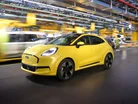
Ford Motor Company has revealed a bold new course for its European arm – one it hopes can make it a more agile and profitable business ready for the next era of mobility.
The strategy revolves around three key priorities:
Bolstering Ford Pro
Launching a new generation of electrified passenger vehicles
Optimising manufacturing to improve scale and reduce costs
Ford says the roadmap reflects its determination to remain profitable as Europe undergoes one of the largest transitions in automotive history, shifting gradually but decidedly to EVs.
Jim Farley, President and CEO of Ford Motor Company, sees this as an essential step in the company's evolution: “As an American company, we see Europe as the frontline in the global transformation of our industry. How we compete here – how we innovate, partner and invest – will write the playbook for the next generation.”
Sharper direction for Ford's European operations
At the centre of Ford’s new push is a major product rollout from 2028, based on affordability, flexibility and design true to the brand’s DNA.
The firm says these vehicles are intended to “support consumer choice, enabling customers to adopt electrification at their own pace while maintaining competitiveness in a fast-shifting marketplace".
While electrification remains essential to the motor sector's future, Ford has deliberately prioritised affordability, production scale and unique product design over an all-electric-only approach. According to Ford, this balance is vital in a region where strict regulations have accelerated faster than consumer adoption.
The company points to data showing:
EVs account for just 16.1% of the European car market
A 25% EV share is needed by 2025 to meet regional goals
Only 8% of new vans are electric
SMEs make up more than half of Europe’s GDP

Ford Pro evolves through intelligence
Ford Pro continues to play a lead role in the company’s European commercial success. Now, it is evolving beyond vehicles into a hub for digital, connected productivity.
Its integrated offering includes telematics, maintenance and fleet management systems, with the FORDLiive Uptime platform giving European operators an estimated 820,000 extra days of vehicle use in 2024.
By translating vast datasets into actionable fleet intelligence, Ford says the division is becoming an indispensable operational ecosystem for businesses reliant on constant vehicle uptime.
Redefining the passenger offering
Alongside its commercial strength, Ford is set to re-energise its passenger vehicle portfolio with “distinctive, affordable and design-driven products”.
Jim Baumbick, President of Ford Europe, explains: “Our plan is about unleashing the Blue Oval. We are leveraging strategic partnerships to ensure competitiveness, but we are obsessing over the product.
“These will be fun-to-drive, fully-connected vehicles that stand out from the crowd.”
The fresh range – launching in 2028 – will be built on flexible, multi-energy platforms designed to adapt to how consumers embrace electrification across European markets.
Manufacturing for flexibility and efficiency
Ford is also refocusing its European manufacturing footprint to enhance cost efficiency and streamline its EV supply chain.
In the UK, the Halewood plant is producing electric drive units following a £380m (US$510m) investment, while Dagenham remains a centre for advanced engine technology.
Both sites support Ford Otosan, the joint venture with Koç Holding, which anchors the company’s commercial vehicle production. EV production will also take place at the newly-established Electric Vehicle Centre in Cologne, Germany.
Policy alignment and pragmatic regulation
Alongside its pledge to invest in Europe, Ford is also calling for regulatory support that aligns environmental goals with real-world market conditions.
The company urges European policymakers to establish a more balanced regulatory environment, with three central actions:
Align EV mandates with consumer readiness
Incentivise EV adoption beyond major cities
Shield small businesses reliant on light commercials
Ford's argument is that current CO₂ targets disproportionately impact small operators who face high operating costs and limited charging access.
“European manufacturers have invested hundreds of billions in EVs," Ford states. "Governments must match that commitment with consistent purchase incentives and a charging infrastructure that extends beyond wealthy urban centres into the rural heartland.”
According to Ford, penalising light commercial fleets amounts to an “economic tax on the backbone of Europe”.

Strengthening through strategic partnerships
Ford’s renewed plan builds upon its proven track record of collaboration. Its partnership with Volkswagen has already yielded results, with VW’s MEB platform powering Ford’s new EVs produced in Cologne.
The recently-announced alliance with Renault Group deepens this strategy, focusing on shared EV technologies and potential co-development of light commercial vehicles to drive efficiency gains.
As François Provost, CEO of Renault Group, puts it: “Combining our strengths with Ford will make us more innovative and more responsive in a fast-changing European automotive market.”
Choice at the heart of the transition
A distinctive feature of Ford’s approach is its emphasis on customer choice during the shift to electrification.
Rather than enforcing an all-electric switch, Ford intends to keep offering both hybrid and fully-electric powertrains to reflect regional demand.
Jim notes: “We need to enable everyone to benefit from electrification and letting customers choose – whether that’s fully-electric or hybrid vehicles. It is about making the transition more attractive and more affordable for all consumers and businesses, stimulating demand rather than stifling it.”
Company portals


Executives
Francois PROVOST
CEO
Jim Farley
Chief Executive Officer