Hitachi: Reaching Net Zero Emissions With Energy Solutions
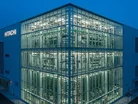
Hitachi is pursuing net zero emissions across its operations, with its Green Energy & Mobility division playing a central role alongside Digital Systems & Services and Connective Industries.
The global technology conglomerate, which employs more than 280,000 people worldwide, is leveraging its energy sector expertise to drive decarbonisation efforts across IT, healthcare and digital innovation.
The Tokyo-based firm's environmentally conscious operations have earned it 61st place in Sustainability Magazine's Top 250 World's Most Sustainable Companies 2025, reflecting its commitment to energy transition and sustainable practices.

Decarbonisation through energy innovation
Hitachi's most critical environmental targets centre on achieving carbon neutrality by 2030 in its own factories and offices, with net zero planned by 2050 across its global value chain.
The energy-focused approach underpinning these goals could demonstrate how large-scale industrial operations can transform their power consumption and generation.
The company is targeting a 52% reduction in greenhouse gas emissions in the value chain by 2030.
In 2024, Hitachi reduced its CO₂ emissions across its sites by 81% compared to a 2010 baseline, during which time it also achieved a 30% reduction in waste intensity and a 43% reduction in water use intensity.
To reduce its greenhouse gas emissions, Hitachi is implementing energy saving measures and installing renewable energy systems in its facilities, as well as leveraging power purchase agreements.
These energy procurement strategies could provide a roadmap for other multinational corporations seeking to transition away from fossil fuel dependency.
The company's renewable energy installations span solar panels, wind turbines and other clean energy technologies across its global manufacturing footprint.
By combining on-site generation with strategic power purchase agreements, Hitachi is creating a diversified energy portfolio that reduces reliance on grid-supplied electricity whilst maintaining operational reliability.
Energy solutions for customers
Beyond its own operations, the firm aims to contribute to the decarbonisation of society by offering energy-efficient products and services with minimal environmental impact.
Hitachi is promoting solutions to its customers that reduce emissions, positioning its Green Energy & Mobility division as a key driver of societal transition.
Toshiaki Tokunga, President and CEO of Hitachi, says: "For the Hitachi Group, our purpose lies in the founding philosophy articulated by our founder, Namihei Odaira: 'Contribute to society through the development of superior, original technology and products'.
"To continue fulfilling this purpose into the future, I believe that we must transform Hitachi into a digital-centric company and achieve sustainable growth."
The Green Energy & Mobility division encompasses railway systems, power grids and energy storage solutions that enable customers to reduce their carbon footprint.
Through digital integration and smart energy management systems, Hitachi is helping industries optimise their energy consumption whilst maintaining productivity and competitiveness in an increasingly carbon-conscious marketplace.
PLEDGES strategy and energy priorities
In 2025, Hitachi launched its group sustainability strategy PLEDGES, comprising seven pillars:
- Planet
- Leadership
- Empowerment
- Diverse perspectives
- Governance
- Engagement
- Sustainability for all.
Each pillar is designed to help Hitachi build towards a sustainable society while growing its business.
The strategy encompasses sustainability themes including decarbonisation, inclusivity, sustainable procurement, AI governance and circularity, with energy transition embedded throughout.
Hitachi aims to create a sustainable value chain by addressing environmental and human rights issues and collaborating with stakeholders throughout the chain, especially upstream.
Its 2027 target is to have more than 6,000 of its procurement partners taking action on environment and human rights, which is 1.5 times the number taking action in 2024.
Lorena Dellagiovanna, Chief Sustainability Officer at Hitachi, says: "We all share responsibility to shape a sustainable future.
"At Hitachi, as a climate change innovator we combine deep industry expertise with cutting-edge digital technologies to accelerate sustainable transformation, helping industries reduce their environmental impact and create long-term value for society."
Circular economy and resource efficiency
Circularity represents another main focus for Hitachi's energy-conscious approach, as it aims to achieve a circular transformation of resources and business by 2050.
The company plans to embed circularity into its product design by making environmentally conscious design assessments and life cycle assessments for new products.
Hitachi aims to reduce waste by standardising parts, extending service life, using recycled materials and designing for recyclability, while considering resource circulation across the supply chain.
These measures could reduce the energy intensity associated with raw material extraction and processing.
The company is also working on improving its manufacturing process by sharing its initiatives which are helping it target zero waste at its manufacturing sites.
These initiatives include optimising production volume based on supply and demand, implementing paperless designs, reducing packaging materials and defective products through quality control and improvements.
By adopting circular economy principles, Hitachi is addressing the full lifecycle energy footprint of its products.
The transition from linear to circular business models reduces the demand for energy-intensive virgin materials whilst creating new opportunities for product-as-a-service offerings that prioritise longevity and resource efficiency over disposable consumption patterns.
"By combining our spirit of innovation with domain knowledge and AI-powered technologies, we strengthen our business and support a harmonised society in which environment, wellbeing and economic growth are in balance," Lorena says.
The company continues to work with partners who share its commitment to advancing society and delivering sustainability through energy innovation.
Company portals

Executives
Lorena Dellagiovanna
Group Chief Sustainability officer, CHRO at Hitachi , Ltd
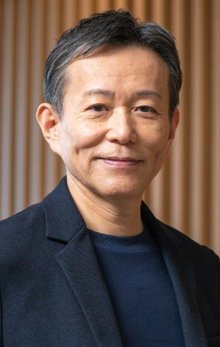
Toshiaki Tokunaga
President & CEO