How Aerospace Firm Boom Became an In-Demand Energy Provider
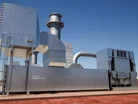
Boom Supersonic, the US company behind the Overture supersonic jet, is fast becoming a serious player in the American energy market.
While the firm is primarily known for its innovations in the aerospace industry, it made its first foray into the world of energy in December 2025.
Its first major energy contract is with digital infrastructure provider Crusoe, for which Boom has been asked to deliver large-scale energy capacity for AI data centres.
The 'Superpower' natural gas turbine, which can be found in Boom's high-end aircraft, is at the heart of both this project and the company's commercial strategy for the energy sector going forward. Crusoe has ordered 29 Superpower units in total, which together can produce 1.21GW of energy.
Already, Boom has reported having an order backlog exceeding US$1.25bn, with much of that demand coming from the tech sector.
With its new-age energy system, Boom is promising to meet the surging energy needs of AI operators seeking fast, dependable sources of generation.
Advanced turbine technology built for ai demand
So, what exactly makes Boom's supersonic technology so well-suited for energy generation?
The Denver-based firm says that its Superpower turbines can produce 42MW of natural gas-fired generation, designed for the sustained, high-load requirements of AI data centres.
The turbine’s architecture allows for continuous operation at rated capacity even in extreme ambient temperatures above 110°F, an advantage over traditional aeroderivative turbines that typically derate under heat stress.
Boom also highlights the system’s water-free operation – a key differentiator for energy infrastructure in regions facing water scarcity or high evaporation rates.
This efficiency, combined with rapid deployment capability, makes Superpower well suited to energy-hungry digital infrastructure.
Blake Scholl, Founder and CEO of Boom Supersonic, says: “Supersonic technology is an accelerant – of course for faster flight, but now for artificial intelligence as well.
“With this financing and our first order for Superpower, Boom is funded to deliver both our engine and our airliner.”
Each modular system, comparable in footprint to a shipping container, delivers ISO-rated 42MW power output. It can operate on clean natural gas with a diesel backup, ensuring resilience for mission-critical AI workloads requiring uninterrupted energy flows.
What are Crusoe's priorities?
Crusoe’s order underscores its energy-first approach to infrastructure development.
By investing in the Superpower technology, the company aims to overcome grid interconnection delays and deliver faster energy availability for new AI projects.
Chase Lochmiller, Co-Founder and CEO of Crusoe, says: “Boom’s innovative approach to power turbine technology builds on the company’s impressive breakthroughs in supersonic flight.

“At Crusoe we are continuously searching for new approaches to increase real-world performance and accelerate time-to-power across our portfolio of energy assets and operations.
“We’re proud to be partnering closely with Boom as the launch customer for Superpower, an initiative that aligns perfectly with Crusoe’s energy-first approach to building the AI infrastructure of the future.”
Boom projects that production capacity for Superpower will scale beyond four gigawatts annually by 2030, positioning the business among the fast-growing suppliers of decentralised power solutions for data centres and other high-intensity operations.
Funding fuels turbine production and energy innovation
The latest funding round, led by Darsana Capital Partners, with support from Altimeter Capital, ARK Invest, Bessemer Venture Partners, Robinhood Ventures and Y Combinator, underwrites the full development of Boom’s Symphony jet engine while enabling rapid expansion of turbine manufacturing capacity.
Darsana Capital views the turbine business as a capital-efficient pathway into large-scale generation for the AI era.
Steve Friedman, Partner at Darsana Capital, says: “Darsana looks forward to partnering with Boom to help develop state-of-the-art energy generation to power America’s AI revolution – all at supersonic speeds.
“Boom has assembled an incredible team and executed with impressive discipline. Their focus on first delivering supersonic technology to create a high-performance power turbine business reflects a smart, capital-efficient path to building the next great American industrial company.”
With 95% of its Symphony engine core components already in manufacturing and testing due to begin in 2026 at Boom’s Colorado facility, the company’s dual focus on aviation and energy places it at the heart of both sectors’ decarbonisation and efficiency agendas.
By bridging aerospace technology with high-output energy solutions, Boom Supersonic is positioning itself as a key enabler of power innovation for the AI-driven economy.
Company portals


Executives
Blake Scholl
Founder/CEO
Chase Lochmiller
Co-Founder and Chief Executive Officer