
Honeywell’s Ionic Battery Powers Smarter Renewable Storage
As renewable energy sources such as solar and wind continue to expand globally, the demand for effective energy storage solutions becomes increasingly critical, according to research from the National Grid.
The integration of these renewable sources is essential for transitioning towards a sustainable net zero future.
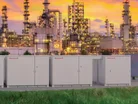
Honeywell has launched its latest innovation, the Ionic Modular All-in-One battery storage system, aimed at assimilating renewable energy into the grid.
This new system has been designed to optimise energy efficiency and handle fluctuations in energy demand, ensuring reliable backup power when required.
The company said on Linkedin: “Today we introduced Honeywell Ionic Modular All-in-One, a modular battery energy storage enclosure and automation platform for commercial and industrial operations.
“The new solution helps optimise energy costs, absorb energy demand fluctuations and can provide backup power when needed.”
Honeywell's energy storage solution explained
The Ionic storage system integrates lithium-ion battery technology to deliver power capacity ranging from 250 kWh to 5 MWh.
Such a range is intended to make energy storage scalable to industrial levels, making it an attractive option for large-scale operations.
Honeywell provides customers with a choice of integrated energy storage solutions coupled with agreements allowing the company to manage operations through its remote centre.
This approach aims to deliver state-of-the-art analytical tools for enhanced site-specific control and personalisation.
Additional features include integrated liquid cooling to stabilise temperatures during charge and discharge cycles, therefore prolonging battery life and promoting conversion efficiency.
The inclusion of advanced control software not only ensures efficient operations but also protects against potential cybersecurity threats.

Advantages of the ionic energy system
The new Honeywell system claims several benefits, including cost optimisation and a reliable backup power supply.
Its combination of flexible battery storage with advanced control systems is posited to address several common issues:
- Ensures consistent uptime during high power costs or outages
- Lowers power expenses without disrupting production processes
- Enhances the efficiency of renewable energy production
- Facilitates the achievement of sustainability objectives
- Complements traditional power generation assets, increasing return on investment while reducing fuel and maintenance costs
- Supports participation in energy and power markets
“Today organisations of all sizes are under increasing pressure to use energy more effectively while simultaneously ensuring reliability and cost-effectiveness,” said Jim Masso, President of Honeywell Process Solutions.
“Honeywell Ionic enables businesses to navigate these challenges while meeting their energy goals by delivering a complete energy automation system built on the latest lithium-ion technology.
“Adopting autonomous solutions can be crucial for companies to manage energy costs, better integrate renewables and ultimately optimize energy consumption.”
The necessity of storing renewable energy
Battery storage is crucial for accelerating the shift from fossil fuels to renewable energy, as articulated by the National Grid.
It allows for the capture and storage of electricity generated by solar or wind sources, releasing it when the need arises.
This technology ensures the continued availability of green energy even at times when renewable sources are inactive, such as at night for solar power.
Honeywell posits that, aside from enhancing sustainability, battery energy storage can facilitate the reduction of electricity bills by drawing on stored energy during peak times when generation is more expensive.
Moreover, Honeywell indicates that battery storage strengthens grid resilience, enabling load balancing and prolonging the life of existing infrastructure.
The strategic rollout of these advanced storage systems could prove transformative in supporting a resilient and sustainable energy future.