How is Australian Mining Giant Fortescue Decarbonising?
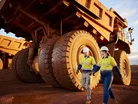
Fortescue has unveiled a major step forward in electrified transport, commissioning two battery electric locomotives that will play a pivotal role in cutting diesel use across its iron ore operations.
The move forms part of its Real Zero strategy, designed to eliminate fossil fuels and create fully renewable mining logistics.
Electrifying the supply chain
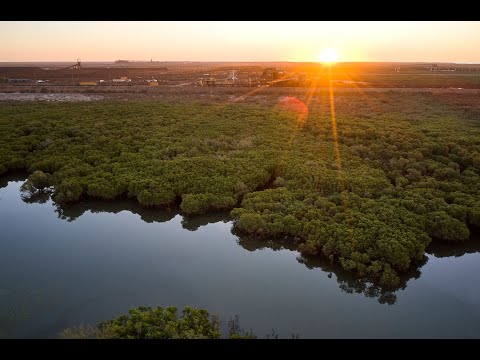
As a global metals producer, Fortescue is accelerating the energy transition across one of the world’s most energy-intensive sectors. The company is harnessing technology and sustainable design to decarbonise its vast logistics network, which links three mining hubs across 760km of rail in Western Australia.
Fortescue ships more than 190 million tonnes of iron ore each year, and the electrification of its transport network marks a meaningful reduction in both emissions and fuel dependency.
The new battery electric locomotives, delivered by Progress Rail, will each hold a 14.5MWh battery and recover up to 60% of energy through regenerative braking.
This recovered power can then be stored and reused, improving overall system efficiency.
Renewable power generated through the Pilbara Energy Connect program will sustain the locomotives’ operations, showcasing how clean energy can reliably power heavy-haul transport.
“Real Zero is about transforming the way we power our assets, move our materials and run our operations, not offsetting emissions but eliminating them," explains Dino Otranto, Chief Executive Officer of Fortescue Metals and Operations.
Renewable systems at an industrial scale
Dino emphasises that reliable clean energy is crucial to the company’s decarbonisation efforts.
“Decarbonising our rail network is a critical part of that task and the commissioning of these battery electric locomotives demonstrates that heavy-haul rail can operate reliably without fossil fuels," he says.
“For a mining operation of this scale, decarbonisation only works if renewable energy is firm, reliable and available 24/7. That’s why we’re building an integrated system combining large-scale solar and wind generation, battery storage and transmission infrastructure," he adds.
To realise that ambition, Fortescue has already installed over 480 kilometres of high-voltage transmission lines through Pilbara Energy Connect, linking its renewable generation assets directly to operational and transport infrastructure. This integration allows renewable electricity to flow seamlessly across its network in place of gas and diesel.
Moving beyond net zero
Fortescue’s Real Zero goal goes further than traditional offset-based decarbonisation strategies. The company aims to achieve absolute zero Scope 1 and 2 terrestrial emissions by 2030, supported by a series of energy-driven technology projects.
Among these is Project Roadrunner, a battery-powered haul truck using a 1.4MWh battery system that can recharge in just 30 minutes. The same technology ethos is being applied to rail, advancing the idea of mine-to-port electrification.
“Our relationship with Fortescue reflects what is possible when two organisations share a commitment to advancing the future of rail," says John Newman, Progress Rail President and Chief Executive Officer.
Building a more sustainable energy ecosystem
Fortescue already operates a 100MW solar farm at North Star Junction, supported by a 250MWh battery energy storage system capable of delivering 50MW for up to five hours. These systems stabilise renewable supply across operations and highlight how grid-scale storage underpins decarbonised mining.
The company is also progressing with its 190MW Cloudbreak Solar Farm and several other renewable projects across the Pilbara, embedding storage and smart energy management at the core of its network.
“Battery storage is the backbone of a renewable-powered mining system," adds Agustin Pichot, CEO of Growth and Energy at Fortescue. “By integrating Fortescue Zero’s Elysia battery intelligence and management software, we’re able to optimise performance, extend battery life and intelligently balance energy across the network in real time.
“This technology ensures the right power is available at the right time – whether that’s supporting rail operations, smoothing solar output or maximising the value of stored energy.”
The company’s electrification program also includes 12 electric excavators and an electric drill deployed across its Pilbara operations. Each project signals Fortescue’s evolving role not just as a mining giant but as a major clean energy operator developing end-to-end renewable ecosystems across the supply chain.
Company portals

Executives
Agustin Pichot
Chief Executive Officer Growth & Energy
Dino Otranto
Chief Executive Officer
John G. Newman
Chief Executive Officer