How SAP's Technology is Driving the Energy Transition

SAP has once again earned a place on Corporate Knights’ Global 100 list for 2026, recognised for its contribution to decarbonisation and sustainable business growth.
As global energy systems undergo rapid transformation, technology companies like SAP are helping industries track, reduce and report emissions using advanced digital platforms.
The company’s inclusion in the Global 100 highlights its success in linking climate action to business performance – an increasingly critical combination for the energy sector.
Many economies have managed to decouple emissions from economic growth, showing that sustainability and profitability can coexist.
SAP’s tools are part of this evolution, helping companies analyse energy use and carbon data to manage progress toward a net zero future.
Embedding climate intelligence into operations
SAP is recognised in the 2026 Global 100 not only for its emissions targets, but also for how it enables energy-intensive industries to become more efficient through data-driven systems.
Matthias Medert, Global Head of Sustainability at SAP, says on LinkedIn: "Sustainability is not a side initiative for us – it is a core pillar of SAP’s strategy and identity."
This recognition reflects the consistency of our efforts, our willingness to evolve as expectations rise and the tangible progress driven by teams across the company.
Being named among the world’s most sustainable companies reinforces our commitment to scale responsible innovation across the IT sector – from product design and operations to the solutions we deliver that help our customers advance their own sustainability transformations.”

Energy goals aligned with science
SAP has pledged to reach net zero emissions across its entire value chain by 2030, consistent with the 1.5°C pathway under the Paris Agreement.
The company aims to reduce gross greenhouse gas emissions by 90%, with no more than 10% offset through verified removal projects.
Until 2030, SAP is also financing energy efficiency and carbon removal initiatives that exceed the footprint of its own operations.
Its sustainability solutions use AI to transform emissions data into actionable insights, enabling companies to track their energy consumption, supply chain impacts and decarbonisation progress in real time.
“If sustainability is not part of the current AI conversation in your organisation, it risks getting left behind while strategy and budgets are open," says Sophia Mendelsohn, Chief Sustainability and Commercial Officer at SAP.
“Sustainability is emerging as one of the most impactful enterprise applications for AI.”
The metrics behind the recognition
Corporate Knights launched the Global 100 in 2005 to evaluate public companies earning at least US$1bn in revenue.
The 2026 ranking assessed firms across three main measures: sustainable investments, sustainable revenues and the Sustainable Revenue Momentum Score, which tracks growth in sustainable revenues from 2022 to 2024.
Western Europe led the rankings with 37 companies, while 20 from the US demonstrated how major players are still advancing low-carbon strategies amid policy uncertainty.
China’s presence – dominated by vehicle and battery manufacturers – shows the central role of clean energy innovation in global market leadership.
This year’s list also features leaders like Ørsted, Schneider Electric, Ecolab, Novo Nordisk and WSP, all driving energy transition across their sectors.
“Focusing on what matters most and on what can be assessed most transparently have been core ranking principles over the more than two decades we’ve been doing this work," says Toby Heaps, CEO of Corporate Knights.
"This year, we’ve focused exclusively on what portion of each business is actually making the world more sustainable.
"We put particular emphasis on momentum and speed of improvement, given the growing urgency around not just carbon emissions, but the many ways in which business activity is outstripping our planet’s carrying capacity."
Company portals

Executives
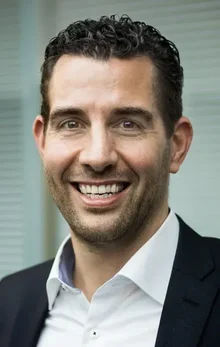
Matthias Medert
Global Head of Sustainability

Sophia Mendelsohn
Chief Sustainability and Commercial Officer and co-GM for SAP Sustainability
Toby Heaps
CEO