How Tesla is Reducing its Dependence on Imports from China
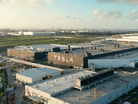
Tesla has reversed its earlier move to terminate its agreement with Syrah Resources, following successful production of compliant Active Anode Material at the company’s Vidalia facility in Louisiana.
The development highlights how securing reliable battery material supply is becoming more and more central to the energy transition, particularly as transport systems electrify.
This move suggests that Tesla is prioritising long-term energy security over short-term cost advantages, reinforcing the role of resilient supply chains in enabling low-carbon transport.
Syrah Resources operates the only vertically integrated graphite anode production facility of scale outside China, with the Vidalia site converting raw graphite from its Balama mine in Mozambique into battery-grade material within the US.

The global battery supply chain
Tesla initially issued its termination notice in July 2025, extending the remedy period four times before ultimately withdrawing it.
Under the terms of the 2021 agreement, Syrah Resources is set to supply 8,000 metric tonnes of anode material over four years.
Benchmark Mineral Intelligence estimates that China accounts for roughly 70% of global natural graphite production and more than 90% of anode manufacturing capacity.
Graphite remains essential to lithium ion batteries used in EVs.
This concentration of processing capability creates a structural risk for Western energy systems. Without domestic refining infrastructure, battery supply chains remain exposed to geopolitical disruption.
China’s export controls introduced in December 2024, targeting the US with little warning, underscored the fragility of relying on a single dominant supplier.
As a result, some industry experts, such as Group14 CEO Rick Luebbe, believe that reducing reliance on imports should be a priority for the global battery sector.
"By reducing dependence on graphite – most of which is exported from China – we’re reducing dependence on a single source of material and diversifying regional supply chains," he explains.
Building domestic energy infrastructure
Efforts to diversify supply have historically focused on mining, leaving processing and refining concentrated in China.
The Vidalia facility represents a critical shift, bringing the final stage of battery material production closer to end-use markets and strengthening domestic energy infrastructure.
At Vidalia, graphite sourced from Mozambique is processed into Active Anode Material ready for battery manufacturing.
The US Department of Energy has supported the project, approving deadline extensions for Tesla and providing federal funding as part of a wider push to localise battery supply chains.
Syrah Resources has now demonstrated its ability to produce conforming material, though final qualification with Tesla remains outstanding. The next challenge lies in sustaining output at commercial scale.
Balancing cost with energy security
Tesla’s decision to extend deadlines rather than exit the agreement reflects a broader shift in how energy supply chains are evaluated.
Despite lower-cost alternatives from Chinese suppliers, the company has continued to support Syrah Resources as it scales production.
According to Chalmers' research, its AI charging system could add up to 100,000 additional miles of life on a Tesla's battery. Credit: Tesla
This approach suggests that long-term energy resilience and supply diversification are being prioritised over immediate commercial savings.
China’s 2024 export restrictions exposed how quickly supply constraints can emerge, leaving companies without time to adapt or build reserves.
For energy systems increasingly reliant on electrification, consistent access to battery materials is fundamental. Any disruption to graphite supply could slow EV deployment and hinder emissions reduction targets across the transport sector.
Outlook for diversified battery supply
Developing a fully integrated graphite supply chain outside China has required sustained investment and policy support.
Syrah Resources has faced significant commercial and operational pressures, including a near breakdown in its relationship with Tesla.
Market conditions have also tightened since the original 2021 agreement, adding further complexity.
While final qualification is still pending, the Vidalia facility is now producing compliant material, Tesla remains engaged and US authorities continue to monitor progress.
For a supply chain that recently faced collapse, the current trajectory indicates that persistence and strategic investment can begin to reshape critical energy infrastructure.



Executives
Rick Luebbe
CEO and Co-Founder