
How the Energy Transition Drives Copeland's Tech Solutions
Copeland operates in more than 40 countries with over 18,000 employees worldwide.
The company provides compression technologies and control solutions for heating, cooling and refrigeration systems.
Its work focuses on accelerating the use of low-global warming potential and natural refrigerants.
This could help address some aspects of climate change through technology adoption.

Integrating sustainability across operations
Copeland develops solutions aimed at supporting energy transition efforts. The company also works on maintaining cold chain infrastructure for perishable food and healthcare products.
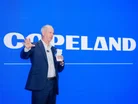
Ross B Shuster, Chief Executive Officer of Copeland, says: "Amidst an ever-changing world, our vision remains consistent: advancing sustainable solutions that improve lives and protect the planet today and for future generations.
"I am confident that this year's report will provide deeper insights into Copeland's sustainability efforts, as well as into the commitments and investments we continue to make in our colleagues and into the communities where we live and operate.
“It also offers insights into the processes, governance and companywide culture that underpin these efforts, commitments and investments.”
Emission reduction targets and progress
According to Copeland, its sustainability roadmap includes science-based targets to reduce absolute greenhouse gas emissions by 55% for Scope 1 and 2 and 32.5% for Scope 3 by FY33. The Science Based Targets initiative validated these targets in FY25.
According to Copeland, the company reduced Scope 1 and 2 emissions by 20% in FY25 compared to FY24. Scope 3 emissions decreased by 1% over the same period.
The company has introduced several measures to meet its targets. These include energy efficiency improvements, adoption of lower-global warming potential refrigerants and natural refrigerants and renewable energy investments.
Tracy Reiter, Chief Transformation and Sustainability Officer at Copeland, says: "True environmental impact is realised when sustainability is woven into both our daily operations and our collaborative product engineering.
“While our validated SBTi targets set our long-term trajectory, the near-term wins come from applying the rigour of the Copeland Business System to our shared value chain.
“Connecting our operational discipline with environmental performance allows us to deliver next-generation solutions that directly advance our customers’ efficiency goals.”
Cooling technologies for data centres
According to Copeland, its product range includes compressors, drives, heat pumps, controls, power electronics and thermostats. These products support decarbonisation and electrification efforts.
The company has more than 15,000 MW of connected energy under its control across residential and commercial markets. Copeland works with utility companies on demand management, which could contribute to grid stability.
Cooling systems can account for up to 40% of a data centre's energy consumption. Copeland is developing cooling, flow control, power management and heat recovery technologies for this sector.
These technologies are designed to improve efficiency, optimise power usage effectiveness and reduce energy consumption. The aim is to maintain system uptime whilst supporting sustainability objectives.
Ross says: "As our company continues to evolve and grow, we remain committed to our focus on sustainability, accountability and transparency.
“We are confident that through our focus on innovation, operational efficiency and collaboration, we will continue our progress toward our sustainability goals, and, very importantly, further strengthen our contributions to creating a better world, today and for future generations.”
Company portals

Executives

Ross B. Shuster
CEO

Tracy Reiter
Chief Transformation and Sustainability Officer