
Why the UK&I's Ageing Grids Wasted 10TWh of Energy in 2025
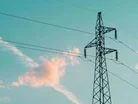
According to a new report from Norwegian energy insights firm Montel, the UK and Ireland experienced widespread energy grid bottlenecks in 2025.
In total, the UK and Ireland were unable to deliver around 10TWh of clean electricity to consumers because of delays in transmission and distribution. In Ireland, it is thought that 2.1TWh of renewable generation went unused.

Montel’s study, Curtailed Renewables in GB and Ireland in 2025, highlights that outdated transmission infrastructure remains one of the most significant constraints on the renewable energy transition for the British Isles and beyond.
The research suggests that, while renewable production continues to surge, electricity networks often struggle to carry power from remote wind and solar sites to urban demand centres.
The report shows that Northern Scotland was the biggest hotspot for congestion, with 8.8TWh of wind generation curtailed last year – enough to meet all Scottish domestic demand for 12 months.
Transmission limits between Scotland and England have reached critical capacity, preventing power exports to southern regions.
Montel’s analysis finds "only 61% of the energy which could have been generated in the [Northern Scotland] region made it to the grid," emphasising the fact that physical infrastructure must be upgraded in order to match the pace of the rollout of renewables.
Curtailment up, despite improvements in efficiency
The report shows that 98% of Great Britain’s curtailed renewable volumes occurred in Scotland.
When wind farms are instructed to reduce output, they still receive curtailment payments, while gas plants and storage systems are paid to fill the supply gap. This creates what Montel describes as a “double burden” on consumers.
Even though curtailment payments in Great Britain fell by 10% to £363m (US$497m) in 2025, the total cost of replacing this lost power exceeded £1bn (US$1.37bn) – a year-on-year increase of 20%.
Lower contract prices from new offshore projects like Moray West have reduced the per-megawatt cost of curtailment but not the overall financial impact, as constraint actions become more frequent.
Shadow Energy Secretary Claire Coutinho criticised her in-government counterpart Ed Miliband’s renewable rollout, saying: "We are paying more than ever before to pay wind farms to switch off when the wind blows.
"Costs are set to triple by 2030 as he approves more wind farms than ever before. He cares far more about his own Clean Power 2030 target than looking after consumers."
Meanwhile, Octopus Energy, the country's leading household energy provider, estimated that curtailment costs could add £8bn (US$11bn) to consumer bills by 2030 without major grid reinforcements.
Network investment timeline
To relieve these constraints, Ofgem has authorised the UK’s three main transmission operators – National Grid, Scottish Power and SSE – to invest up to £90bn (US$123bn) in new high-voltage lines and substations.
However, construction timelines mean most projects will not be operational for at least five years, leaving networks under pressure as new renewable capacity continues to come online through the mid-2020s.
A bright spot appeared in 2025 with the commercial start of the Greenlink interconnector between Wales and Ireland, which helped reduce wind curtailment in Northern Ireland from 30% in 2024 to 24% last year by adding an additional export route alongside the older Moyle interconnector.
Yet, even with these improvements, almost a quarter of available wind energy in Northern Ireland was still curtailed.
Why solar is facing growing constraints
While solar curtailment remains low compared with wind, Montel notes that associated costs rose to £252,000 (US$345,371) in 2025 – up sharply from negligible levels the year before.
Solar curtailment in Ireland increased fourfold, hinting that transmission congestion is beginning to affect multiple clean energy technologies as installations accelerate.
Combined, 12.1TWh of renewable electricity was curtailed across Great Britain and Ireland in 2025, reflecting the widening gap between generation and transmission readiness.
As renewable energy scales faster than the infrastructure built to connect it, the UK and Ireland risk undermining the financial and environmental gains of their clean-energy transition.
Company portals






Executives
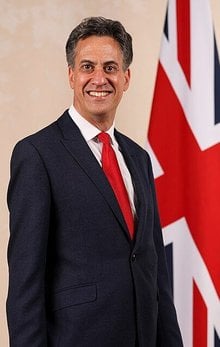
Ed Miliband
Energy Secretary