Doosan Enerbility Gas Turbines to Power US Data Centres
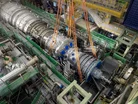
Doosan Enerbility has signed a contract to supply seven large-scale gas turbines to a data centre project in the United States, strengthening its position in the global energy infrastructure market.
The South Korea-based energy equipment manufacturer confirmed that, under the deal, Doosan will deliver seven units of its 380MW gas turbine together with matching generators to a US client building a data centre campus.
Deliveries are scheduled to begin in May 2029, with one turbine and one generator supplied each month. The equipment will provide a significant portion of the facility’s power capacity as it comes online.
The contract brings the total number of gas turbines Doosan Enerbility has agreed to supply to US customers to 12.

Energy demand from digital infrastructure
Data centres are becoming some of the most energy-intensive industrial facilities as cloud services, AI workloads and high-density computing environments expand.
To support these operations, operators are increasingly deploying dedicated power infrastructure capable of delivering stable and scalable electricity supply. Gas turbines are commonly used within these environments, either supporting grid-connected systems or forming part of hybrid power solutions.
For equipment suppliers, this growth in digital infrastructure is creating new demand for large-scale energy generation systems designed to deliver high output and consistent performance.
Doosan Enerbility said its expansion in the US market has been driven by the reliability of its gas turbine technology and its ability to deliver equipment within competitive timelines.
Developing large-scale turbine technology
The company began manufacturing large-scale industrial gas turbines in 2019, marking an important step in strengthening its position in global energy equipment markets.
Following the launch of its turbine platform, the company conducted more than 17,000 hours of demonstration operation to validate performance and reliability.
The 380MW-class turbine developed by Doosan is designed for high output industrial applications, making it suitable for projects that require substantial and dependable energy capacity.
As demand for digital infrastructure increases, energy providers and equipment manufacturers are exploring ways to deliver power systems that can scale alongside growing electricity requirements.
Expanding presence in North America
The latest contract forms part of Doosan Enerbility’s broader expansion in the North American energy market.
Globally, the company has secured orders for a total of 23 gas turbine units. The new agreement increases the number of turbines destined for US projects to 12.
A key factor supporting this growth is the presence of Doosan Turbomachinery Services, the company’s Houston-based subsidiary. The organisation provides maintenance and operational services to support turbine deployments across the US.
Local service capabilities are increasingly important for projects such as data centres, where uptime and reliability are essential. Maintenance support and rapid response services help ensure energy infrastructure continues operating without disruption.
Seungwoo Sohn, CEO of Doosan Enerbility’s Power Services Business Group, says: “Counting this contract, we will now be supplying a total of 12 gas turbines to the United States, effectively solidifying our position as a global player.
“Doosan plans to continuously supply competitive gas turbines going forward to effectively respond to the rising demand at both home and abroad.”
Powering high-capacity computing
Large-scale data centre campuses – particularly those supporting AI training and high performance computing – increasingly require power capacities comparable to major industrial sites.
Gas turbines offer one way to meet these requirements by providing reliable generation capacity that can operate independently or alongside existing grid infrastructure.
The turbines scheduled for delivery to the US project from 2029 will support the data centre’s long-term energy requirements as additional computing capacity is deployed.