IEA: The Global State of Energy Efficiency in 2025
Global energy efficiency progress is set to improve by 1.8% in 2025, up from around 1% in 2024 according to the IEA’s Energy Efficiency 2025 report.
However, the rate of progress has fallen to 1.3% per year on average since 2019.
This is well below the COP28 target of a 4% annual improvement by 2030.
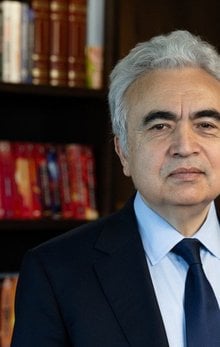
“The acceleration in global progress on energy efficiency that we’re seeing in 2025 is encouraging, including positive signs in some major emerging economies,” says Fatih Birol, Executive Director of the IEA.
“But our analysis shows that governments need to work even harder to ensure efficiency’s full range of benefits are enjoyed by as many people as possible
“Energy efficiency has the power to enhance people’s lives and livelihoods through greater energy security, more affordable bills, improved economic competitiveness and lower emissions.”

The economics of energy efficiency
The IEA’s report shows that sustainable technology is becoming the affordable choice, challenging the narrative that it can cost a premium.
While more efficient technologies can have a higher upfront price, they are often priced similarly and the cost benefits of using less energy over their lifetimes outweigh less efficient models.
In a 2025 IEA survey on industrial competitiveness, a majority of firms named energy efficiency as the first line of defence against price volatility.
Consumers purchasing efficient air conditioners are estimated to have saved up to 30% in energy costs in 2025, while paying similar upfront costs.
The IEA says that this also applies to retrofits that improve energy efficiency.
Since 2019, combined spending on building retrofits and envelopes in China, the US and the European Union increased more than 20% to around US$120bn in 2024.
A typical dwelling in the Netherlands could save US$300-500 per square metre in energy costs over a 20-year period, compared to the upfront costs of around US$40,000 for insulation and high-performance heat pumps.
The hidden impact of cooling
The report found that energy for space cooling has seen the fastest growth of any end-use in buildings since 2000, growing more than 4% per year.
This energy demand has been pushed up by increased access to air conditioners and higher living standards.
However, the IEA says this demand has been met with equipment that is not highly efficient.
If every air conditioner bought since 2019 had been the most efficient available, the world could have avoided electricity demand growth equivalent to the demand growth from data centres over the same period.
The IEA expects data centre electricity demand, driven by the AI boom, will likely grow even faster, doubling between 2025 and 2030 to around 945 TWh.
AI’s impact on energy efficiency
Data centres’ expected electricity demand is equivalent to the entire country of Japan in 2024.
While AI is contributing to this growth in demand, the IEA predicts it could unlock 8 EJ of energy savings by 2035.
This is roughly equivalent to the entire industrial demand of the European Union today, far above predicted data centre demand.
AI algorithms can detect inefficiencies or improve physical models of processes without requiring significant additional effort or investment.
It can also be applied for demand prediction, inventory management and route optimisation, potentially accelerating the deployment of hub-and-spoke distribution models.
Skills and workers for energy efficiency
The IEA says that digital infrastructure, access to a skilled workforce and a culture of trust can be a barrier for some companies to unlock AI energy optimisation, particularly for SMEs.
Beyond just AI, specific skills are needed to implement energy efficiency.
The report says nearly 18 million people were employed in energy efficiency in 2024 around the world.
Among energy efficiency employers, 72% report a shortage of workers.
Around 60% of these employers expect shortages to have a moderate to significant impact in 5 to 10 years and around 50% are already struggling to replace retiring workers.
Energy efficiency is not the only area in sustainability facing a skills shortage.
According to LinkedIn's 2025 Green Skills Report, the call for hiring sustainability experts is expanding almost twice as fast as the development of green skills among workers.


Executives
Fatih Birol
Executive Director