Intuit Powers Clean Energy Future with Solar Fund Initiative
Financial services provider Intuit serves approximately 100 million customers across eight countries globally.
The company's vision centres on powering prosperity worldwide, a mission that extends beyond financial success to encompass planetary health and workforce sustainability.
This commitment has earned Intuit the 50th position in Sustainability Magazine's Top 250 World's Most Sustainable Companies 2025.

Addressing energy transition challenges
Intuit's sustainability strategy includes multiple partnerships and programmes designed to create measurable environmental impact whilst supporting underserved communities.
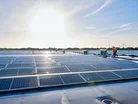
The Coalfield Solar Fund represents one initiative, launched in 2023 alongside partners Secure Solar Futures and The Need Project.
This multi-year incentive grant programme enables schools throughout Virginia and West Virginia to install solar panel systems without requiring upfront capital investment.
Beyond infrastructure, the programme incorporates workforce development components that prepare students for careers in emerging industries.
Through solar apprenticeships, practical training and direct engagement with clean energy, solar and STEM sectors, the initiative creates local workforce development pathways.
Matthew McFadden, Business Development Manager at Secure Solar Futures, says: "As we continue to shift away from fossil fuels, there's a need to build a bridge between our community and the fastest growing renewable energy source on the planet – solar energy.
"The Coalfield Solar Fund is not only about getting solar on rooftops and opening up new career pathways, it's about ensuring that our community can play a key part in the transition to 21st century energy technology."
Intuit acknowledges that climate change disproportionately affects populations already facing socioeconomic and environmental hardships.
The company has therefore concentrated its programmes, including the Coalfield Solar Fund, within these communities to deliver climate action alongside tangible benefits for underserved populations.
This approach reflects what Intuit characterises as holistic climate action, examining both internal operational impact and external influence extending beyond its value chain into the communities where it operates.
Science-based emissions reduction targets
The company has pledged to achieve net zero greenhouse gas emissions throughout its value chain by 2040, aligning with the Paris Agreement's objective of limiting global temperature increases to 1.5°C and reaching net zero global emissions before 2050.
Intuit's emissions reduction targets have received validation from the Science Based Targets initiative (SBTi), emphasising direct emissions reductions and neutralising remaining emissions according to SBTi criteria.
Near-term science-based objectives include reducing absolute Scope 1 and 2 emissions by 42% by 2030 from a 2022 baseline.
Looking towards 2040, Intuit targets a 90% reduction in Scope 1 and 2 emissions and a 97% reduction in Scope 3 emissions per million USD value added, measured against the same 2022 baseline.
Debbie Lizt, Head of Global Sustainability at Intuit, says: "Climate change impacts us all and the time to act is now.
"At Intuit, we've set science-based net zero targets to guide us as we decarbonise our operations and supply chain and we work with partners to reduce emissions in communities beyond our value chain.
"It's an exciting time as we strive to make a positive impact on climate change and inspire others to do the same."
Intuit's environmental commitments manifest in its physical operations through sustainable workplace practices.
Campus facilities feature sustainably sourced food options and waste diversion initiatives, whilst employee commuter programmes promote low-carbon transportation alternatives such as public transport over private vehicles.
In 2024, the company opened a LEED Platinum certified building at its Mountain View, California campus, incorporating energy efficiency features, onsite renewable energy generation and waste conservation systems.
Company portals


Executives

Debbie Lizt
Head of Global Sustainability
Matthew McFadden
Director of Business Development