
Will Oil Price Fall After Iran's Strait of Hormuz Opening?
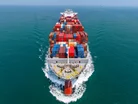
The partial reopening of the Strait of Hormuz to ‘non-hostile’ vessels marks a critical turning point for the global energy sector, offering a brief reprieve from weeks of disruption and fluctuating oil prices.
The decision has already stabilised markets, though risks remain high as geopolitical tensions linger between Iran, the United States and Israel.
The strait, which links the Persian Gulf to the Gulf of Oman, is the world’s most vital maritime corridor for oil and liquefied natural gas (LNG).
Around one fifth of global oil supply typically passes through its narrow channel each day, according to the US Energy Information Administration (EIA).
Since February 2026, military conflict in the region had severely restricted transit, forcing tankers and LNG carriers to anchor outside the strait.
The closure stalled roughly 20% of the world’s daily oil and LNG volumes, intensified price volatility, and raised insurance costs for energy transporters.
With Iranian authorities now permitting "non-hostile" vessels under coordinated conditions, energy markets are seeing early signs of renewed stability.

Geopolitical pressure and oil market response
News of a potential ceasefire proposal from US President Donald Trump, involving a 15-point plan to ease hostilities and curb Iran’s nuclear programme, prompted a surge in investor confidence.
Brent crude quickly dropped below US$100 a barrel – down 7% – while West Texas Intermediate hovered near US$87.
However, Iran continues to reject a deal “on US terms,” insisting that any settlement must respect its sovereignty. “Until it is our will, nothing will go back to the way it was,” said Ebrahim Zolfaghari, a spokesperson for Iran’s military.
The strategic concession to reopen the strait to certain ships may therefore reflect economic pragmatism rather than diplomatic progress. For energy traders and producers, it signals cautious optimism that key flows could soon resume.
Waiting for full confidence to return
Despite progress, the strait is still far from full operational capacity. Prior to the crisis, the waterway saw around 120 vessel transits each day. Recent data from MarineTraffic shows that an average of just nine have sailed the strait since.
An estimated 400 vessels remain at anchor outside the corridor, underscoring lingering uncertainty over safety and stability.
“Even if the Strait of Hormuz were to reopen, shipping lines would only resume using the route once they are satisfied that conditions are stable and secure," explains Jill Anstey, Associate Director of Sea Freight at Baxter Freight.
She adds that lessons from the Suez Canal illustrate how carriers avoid high-risk passages even when officially open.
With port access at Jebel Ali, Hamad, Manama and Dammam still restricted, many operators are diverting energy shipments via Jeddah on Saudi Arabia’s west coast, completing journeys by road.
Restoring some stability to the energy sector
While this phased reopening provides breathing room for global supply chains, energy markets remain delicate.
The Strait of Hormuz remains a chokepoint not just for oil and gas but for the confidence needed to move them freely.
As trust in the route’s security builds, analysts expect oil prices and shipping premiums to fall further.
This could deliver much-needed stability to global energy costs, supporting the return of resilient supply chains and smoothing the energy transition’s onward momentum.