
Iron-Air Batteries: Transforming Renewable Energy Storage
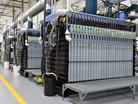
According to Mark Loveridge, Commercial Director of Renewable Exchange, the most exciting clean technology innovation of 2025 could be rust.
Professionals like Mark are becoming increasingly interested in how rust could contribute to climate change mitigation.
The challenge facing current renewable energy systems is that, unlike fossil fuels, renewable sources such as solar and wind are challenging to store in the volumes required.
This could mean that during periods when the sun isn't shining and the wind isn't blowing, energy supplies become limited.
Addressing renewable energy storage
For decades, lithium-ion cells have dominated the energy storage discussion, powering devices ranging from mobile phones to electric vehicles.
However, as 2025 nears its end, a chemically different alternative has progressed from laboratory research to electrical grid implementation.
"After decades of dominance by lithium-ion, 2025 is the potential turning point for long-duration energy storage (LDES), and iron-air batteries are leading the charge," Mark says.
These batteries utilise the process of reversible rusting.
During discharge, the battery absorbs oxygen from the air, which converts iron pellets into rust and releases energy.
To charge, an electrical current converts the rust back into metallic iron and the battery releases oxygen.

Iron-air battery capabilities
Lithium-ion technology's primary constraint is its duration.
While effective for short power bursts lasting between two and four hours, lithium-ion becomes economically unfeasible when attempting to bridge multi-day gaps in renewable generation.
This is where iron-air technology could find its application.
"They're capable of storing energy for over 100 hours - enabling wind and solar to keep the lights on, even when the sun doesn't shine or the wind doesn't blow," Mark explains.
By providing duration that is substantially longer than conventional batteries, iron-air systems could replace fossil fuel peaker plants.
"Ideal for grid-scale decarbonisation, especially during multi-day renewable lulls," Mark adds.
Transitioning to practical implementation
The technology has progressed rapidly from theoretical concepts to physical infrastructure this year.
"In 2025, Ore Energy in the Netherlands delivered the world's first grid-connected iron-air battery, and Form Energy in the US raised over US$400m to bring this tech to commercial scale," Mark says.
The Ore Energy pilot, connected to the grid in Delft in July 2025, could represent a significant proof of concept for the European market.
It demonstrates that these systems could be integrated safely into dense urban environments.
In the United States, Form Energy has operationalised its commercial-scale factory in Weirton, West Virginia, on the site of a former steel mill.
The company is currently fulfilling orders for major utilities, including Xcel Energy and Georgia Power, with projects expected to come online in the latter part of 2025 and 2026.
Geopolitical and environmental implications
Beyond technical specifications, the iron-air battery could offer a considerable geopolitical advantage.
The transition to clean energy has often meant exchanging a dependency on fossil fuels for a dependency on rare earth minerals such as lithium, cobalt and nickel, all of which are becoming scarcer and more contested.
Iron-air batteries could sidestep this scarcity challenge entirely as they are manufactured using only abundant, inexpensive materials: iron, air and water.
This abundance could translate to stability and security for national energy strategies, reducing conflict and streamlining supply chains.
Additionally, the environmental profile of these batteries aligns closely with circular economy principles because their active materials are non-toxic and easily recyclable at the end of the system's life.
It is important to note that these batteries are not designed for use in electric vehicles or smartphones.
They are also heavy, bulky and relatively inefficient compared to their lithium counterparts.
However, for a static asset positioned on a concrete pad adjacent to a wind farm, these batteries could be ideal.
The cost per kilowatt-hour is the deciding factor and iron-air targets a price point below US$20 per kWh, a fraction of lithium-ion's cost.
This economic efficiency could allow utilities to store substantial amounts of energy without straining grid finances.
Importantly, pivoting away from rare earth minerals could free those resources for use in climate technologies where alternatives don't exist.
As the energy sector evolves, the reliable, sustainable power grids being sought could be constructed using the most common metal on Earth.
"For those watching the future of energy: keep an eye on iron-air," Mark says.
"It is not just innovative, it is potentially transformative for the sector."
Company portals

Executives

Mark Loveridge
Commercial Director